


Why You Gain Weight in a Calorie Deficit
Introduction

The Frustration: When “Doing Everything Right” Isn’t Enough
It is incredibly frustrating when you have committed to a healthier lifestyle—tracking every bite, hitting the gym, and staying consistent—only to step on the scales and see the numbers rise. This disheartening moment often leads to a struggle with motivation. You feel like you are losing the battle against your own body, especially when you believe you are doing everything necessary to reach your goal. Many people find themselves in this scenario, wondering why am i gaining weight in a calorie deficit despite their hard work.
Table Of Content
- Introduction
- The Frustration: When “Doing Everything Right” Isn’t Enough
- Defining the Calorie Deficit: The CICO Principle
- The Thesis: Why Weight Loss Isn’t Linear
- The “False” Gain: When It’s Not Fat
- Water Retention & Sodium: The Fluid Balance
- Inflammation from New Workouts: The DOMS Effect
- Glycogen Storage: Fueling Your Muscles
- Muscle vs. Fat Density: Changing Body Composition
- Tracking Pitfalls: Are You Truly in a Deficit?
- “Portion Distortion”: The Danger of Eyeballing
- Sneaky Calories: Overlooked “Hidden Extras”
- Overestimating Exercise Burn: The Fitness Tracker Trap
- The Biological & Hormonal Blockers
- Metabolic Adaptation: The Reality of BMR
- Cortisol and Stress: The Silent Road Block
- Sleep Deprivation: Disrupting Hunger Hormones
- Medical Conditions: PCOS, Hypothyroidism, and Insulin Resistance
- Lifestyle Factors That Stall Progress
- Deep Dive Resource
- How to Tell if You’re Actually Making Progress
- Beyond the Scale: Measuring Real Change
- Trend Tracking: Why Consistency Beats Daily Fluctuations
- Actionable Strategies to Break the Plateau
- Re-calculating TDEE: Adjusting Your Needs
- The Power of Protein: Satiety and Muscle Preservation
- Strategic “Maintenance Breaks”: Resetting the System
- Conclusion
- Patience is Key: Trust the Process
- Summary: The Scale is Not the Only Metric
- Call to Action: When to Seek Expert Help
- Frequently Asked Questions (FAQs)
- 1. Can I eat out while dieting, and what is the healthiest fast food breakfast?
- 2. Why is the scale not moving if I’m exercising daily?
- 3. When should I consult a professional about my weight?
- 4. How does stress affect my weight loss journey?
- 5. Is it possible to be in a deficit and still gain weight?
- 6. How many hours of sleep do I need for fat loss?
- 7. Should I follow a very low-calorie diet (VLCD)?
Defining the Calorie Deficit: The CICO Principle
At its core, weight loss is often viewed as a simple mathematical equation: “Calories In vs. Calories Out” (CICO). This primary factor suggests that if your body burns more calories than you consume, you will lose fat. By maintaining a calorie deficit, you force your body to tap into stored glucose and fatty tissue (also known as adipose tissue) for energy. In a brilliant and effective world, this would mean a stable and consistently downward trend on the scale. However, your biological reality is much more complex than a basic calculator.
The Thesis: Why Weight Loss Isn’t Linear
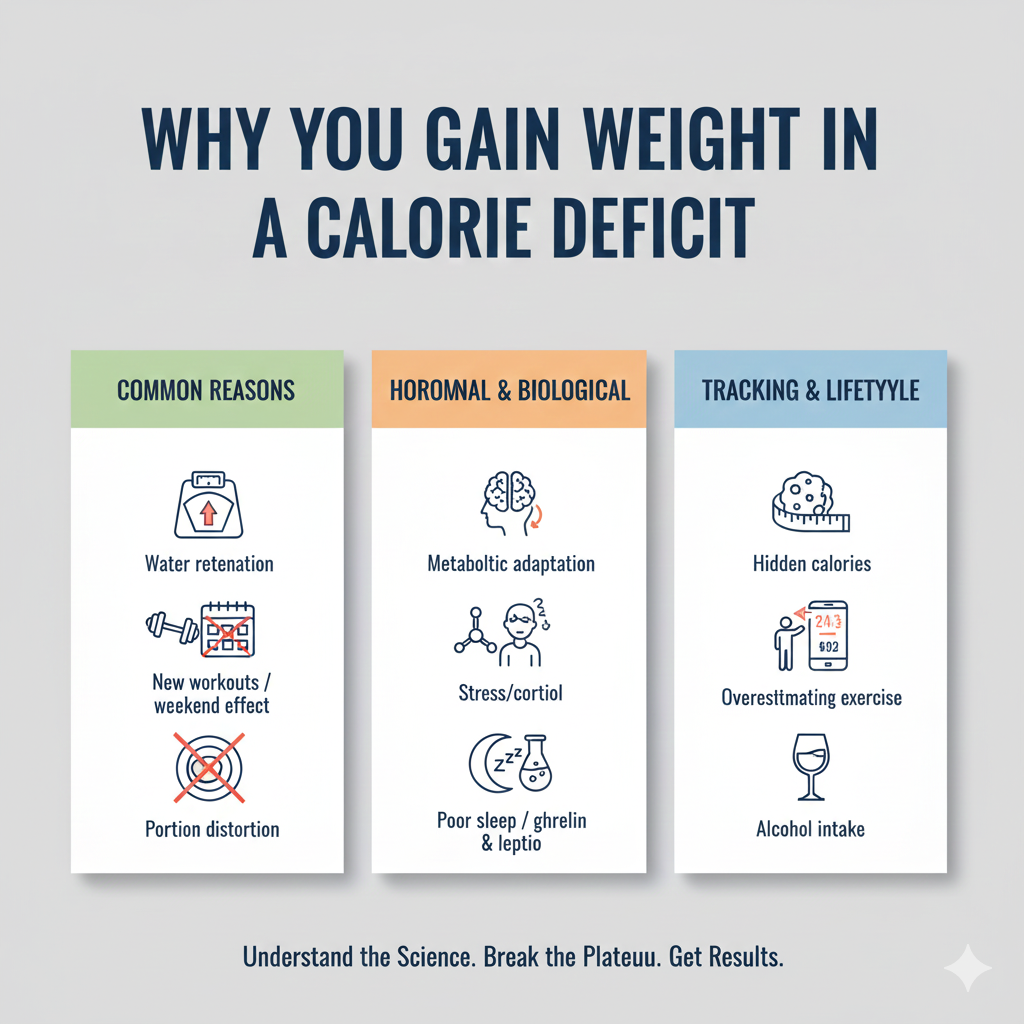
The truth is that Why You Gain Weight in a Calorie Deficit can be explained by several factors that have nothing to do with actual fat gain. Your weight is a composition of muscle, water, bone, and organs—not just fat. Factors like hormones, inflammation, and metabolic adaptation play a massive role in how your body burns fuel. From cortisol spikes to fluid retention, various biological processes can mask your progress. Understanding these hidden reasons will help you evaluate your strategy, stay patient, and eventually break through that annoying plateau.
The “False” Gain: When It’s Not Fat
Water Retention & Sodium: The Fluid Balance
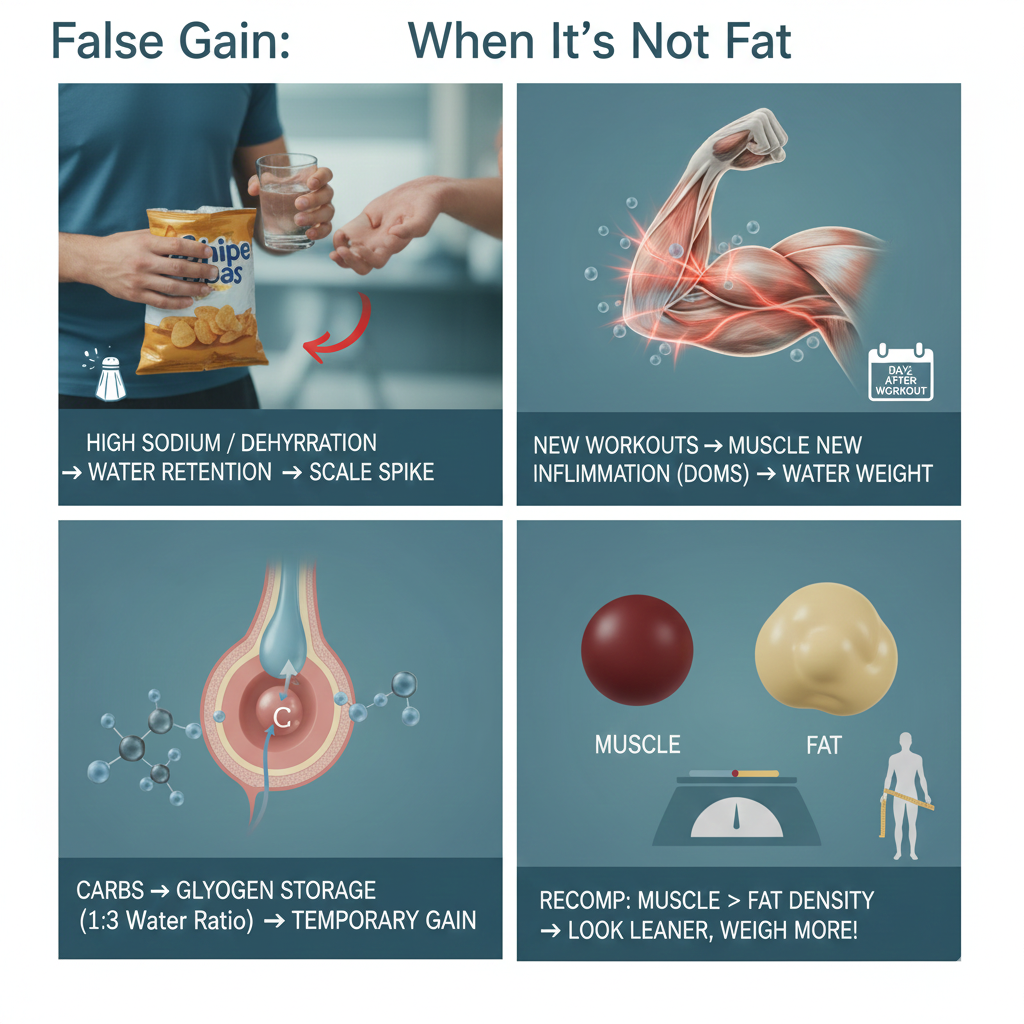
One of the most common reasons why you gain weight in a calorie deficit overnight is fluid retention. When you consume high levels of sodium, your body works to maintain a specific balance of electrolytes by holding onto water. Similarly, dehydration can actually cause the body to store more fluid as a survival mechanism. This temporary shift can lead to bloating and a higher number on the scales, even if your fat loss is on track.
Inflammation from New Workouts: The DOMS Effect
Starting a new exercise routine often leads to Delayed Onset Muscle Soreness (DOMS). This occurs because intense physical activity creates microscopic tears in the muscle fibers. To heal, the immune function triggers an inflammation response, which causes water to accumulate in the tissue for repair. While this inflammation is a healthy part of becoming toned, the added water weight can mask your true progress for several days.
Glycogen Storage: Fueling Your Muscles
When you eat carbs, your body converts them into glycogen, which is stored in the muscle and liver for energy. The interesting part is the 1:3 ratio; for every gram of glycogen your body stores, it also produces and stores about three to four grams of water. If you have a brilliant workout and fuel up afterward, your glycogen stores replenish, bringing extra water with them. This is a biological necessity for maintenance and performance, but it often looks like weight gain on the scale.
Muscle vs. Fat Density: Changing Body Composition
If you are strength training, you are likely changing your body composition. Muscle is much denser than fat, meaning it takes up less space. As you build lean mass and lose body fat, you might realise that you look leaner and your clothes fit better, even though you weigh the same or slightly more. Focusing specifically on the percentage of fat rather than just total weight is a more accurate way to measure your success.
Tracking Pitfalls: Are You Truly in a Deficit?
“Portion Distortion”: The Danger of Eyeballing
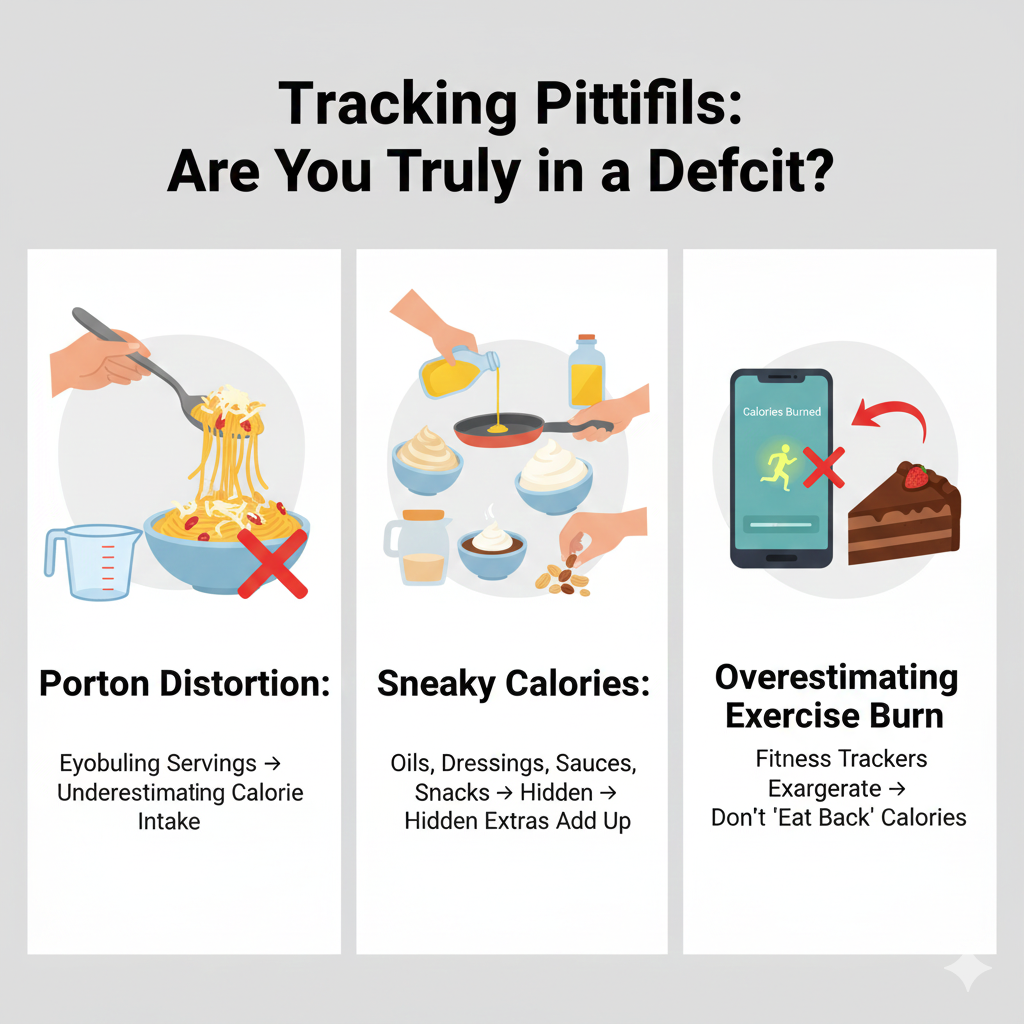
Even with the best intentions, underestimating how much we consume is a common road block. Many people fall into the trap of “eyeballing” their portion size instead of using a measure or a scale. This “Portion Distortion” can lead to a significant increase in daily intake without you even realizing it. To get a clear picture, precision is key. You must read labels carefully and weigh your foods to ensure your knowledge of your calorie intake matches reality. Without this discipline, you may misjudge your macros and accidentally stall your progress.
Sneaky Calories: Overlooked “Hidden Extras”
Sometimes, it’s not the main meal but the hidden extras that sneak into your diet. Sneaky calories from cooking oil in the pan, a splash of milk in your tea, or sauces and dressings can add up quickly. Even small bites of a child’s leftovers or a few nuts, seeds, and avocados—while healthy—are calorie-dense. These beverages, condiments, and “tastes” while cooking must be tracked precisely in your diary app. Being mindful of every seven gram of fat or hidden sugar regulation ensures you are truly in a deficit.
Overestimating Exercise Burn: The Fitness Tracker Trap
It is a brilliant feeling to finish a 30-minute jog, but don’t rely blindly on fitness trackers or smartwatches. These devices often exaggerate the calories burned during physical activity. For example, a single slice of cake can easily wipe out the progress of a hard exercise session. If you over-restricting your food and then “eat back” those estimated calories, you might find your weight maintenance staying stable instead of losing fat. Underestimating how hard it is to burn off excess calories is why many fail to reach their goals.
The Biological & Hormonal Blockers
Metabolic Adaptation: The Reality of BMR
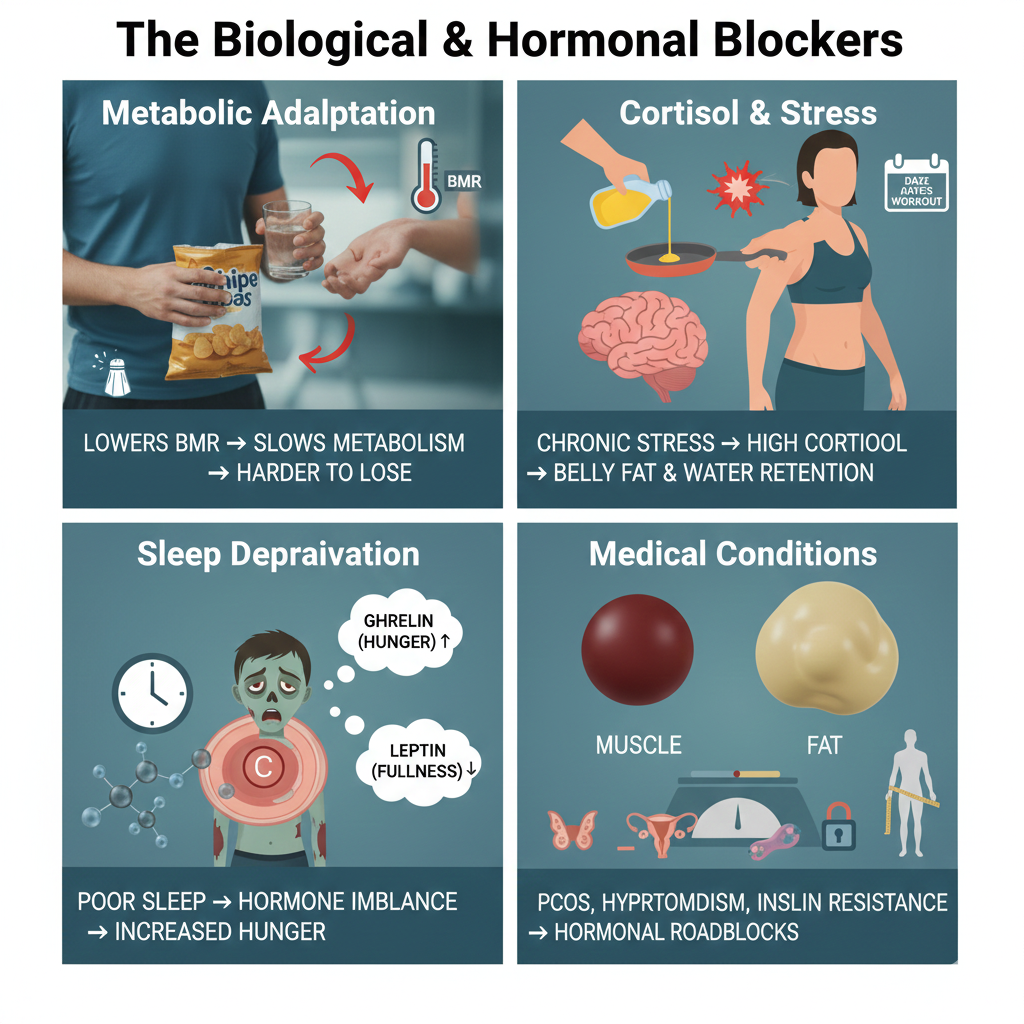
When you remain in an extreme or restrictive intake state for too long, your body undergoes Metabolic Adaptation. This is a survival mechanism where your Basal Metabolic Rate (BMR)—the energy required to keep you alive and perform basic functions like breathing and digestion—begins to lower. Your body becomes more efficient at functioning at a lower cost, effectively slowing down your metabolism to preserve energy. This is not “starvation mode,” but rather a biological shift that makes losing fat more difficult unless you reassess your strategy.
Cortisol and Stress: The Silent Road Block
Chronic stress triggers a persistent hormone response that can stall your progress. Cortisol, known as the stress hormone, is released by the adrenal glands. While it is essential for regulating blood pressure, immune function, and inflammation, consistently high levels can be problematic. Cortisol raises blood sugar by releasing stored glucose into the blood stream. This can lead to hyperglycemia, triggering an insulin state that promotes abdominal fat storage and fluid retention. In a medical setting, cortisol is often tested to see if it falls within normal ranges (typically 6 to 23 mcg/dl, or micrograms per deciliter). Because levels change throughout the day—being highest in the morning—managing stress through meditation, journaling, or breath work is imperative.
Sleep Deprivation: Disrupting Hunger Hormones
Lack of adequate, quality sleep can negatively affect your decision-making skills, but it also wreaks havoc on your hormones. Sleep disruptions interfere with Leptin and Ghrelin. Leptin, produced by adipose fatty tissue, is the hormone that tells your brain you are full and helps maintain energy balance. Ghrelin, on the other hand, aids in appetite signaling by telling you when you are hungry. When you get less than 7-9 hours nightly, ghrelin levels rise and leptin levels decrease, making you feel less satisfied and causing intense hunger for calorie-dense foods. Improving your bedtime routine and limiting screen time is key to proper hormonal control.
Medical Conditions: PCOS, Hypothyroidism, and Insulin Resistance
Sometimes, why you gain weight in a calorie deficit is linked to an underlying medical issue. Hypothyroidism, where the thyroid gland does not produce enough Thyroxine (T4) and Triiodothyronine (T3), plays a major role in slowing your energy expenditure. Symptoms often include fatigue, constipation, thinning hair, and depression. Similarly, Polycystic Ovary Syndrome (PCOS) and insulin resistance can cause darkening skin on the neck, skin tags, and increased thirst or urination. If you suspect a hormonal imbalance, you should share your concerns with a doctor or GP. They can run labs to check your T3, T4, and insulin ranges to see if medications are needed to help you get back on the road to your goals.
Lifestyle Factors That Stall Progress
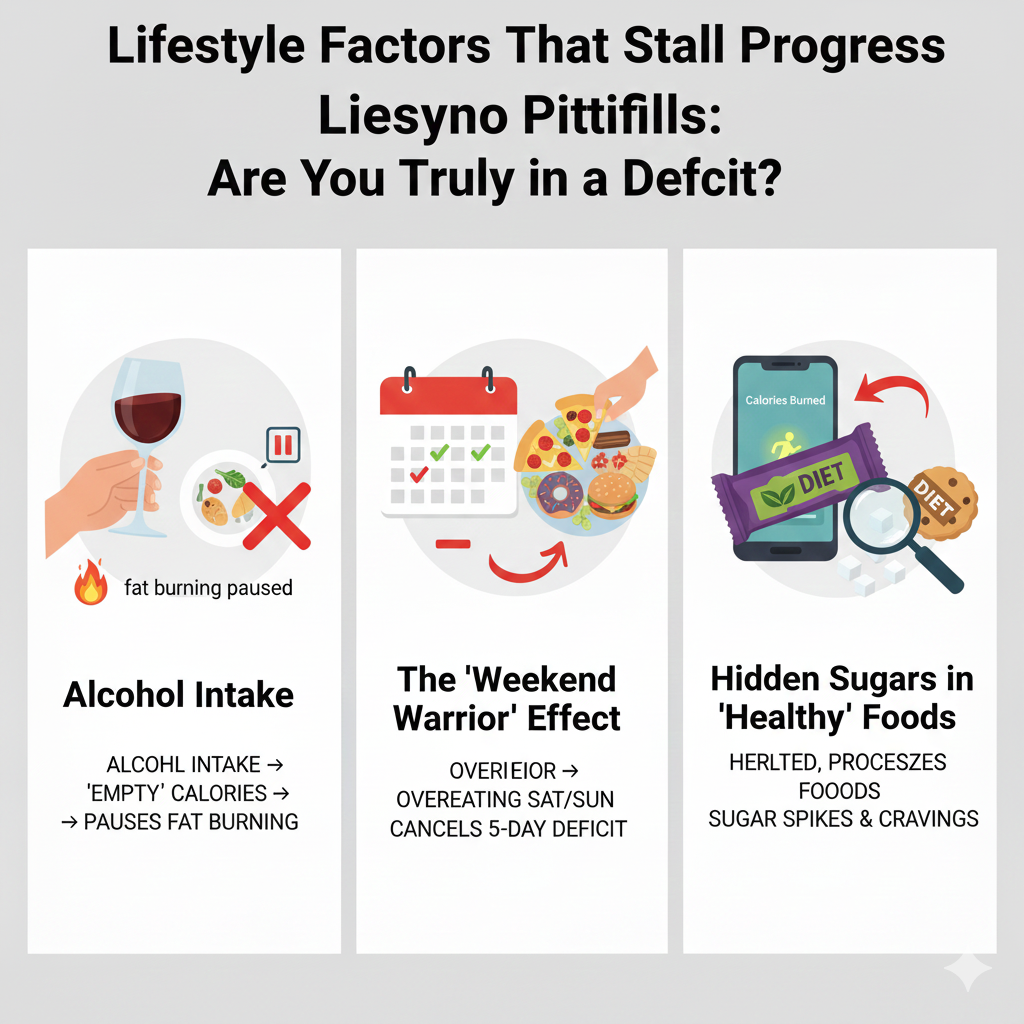
- Alcohol Intake: These are “empty” calories that offer no nutritional value. More importantly, alcohol pauses fat burning because the body prioritizes detoxifying the liver and processing the acetate from the drink over burning fat or carbs.
- The “Weekend Warrior” Effect: Consistency is key. Many people stay disciplined from Monday to Friday, but overeating on Saturdays and Sundays can easily create a caloric surplus that cancels out a five-day deficit.
- Hidden Sugars in “Healthy” Foods: Don’t let marketing fool you. Many “high-protein” bars and processed diet snacks are packed with sugar and artificial additives that spike insulin and trigger cravings.
Deep Dive Resource
For a more detailed scientific breakdown of how these habits (especially alcohol and sugar) impact your body’s ability to lose weight, check out this comprehensive guide: Harvard Health: Why your weight-loss progress might be stalling.
How to Tell if You’re Actually Making Progress
Beyond the Scale: Measuring Real Change
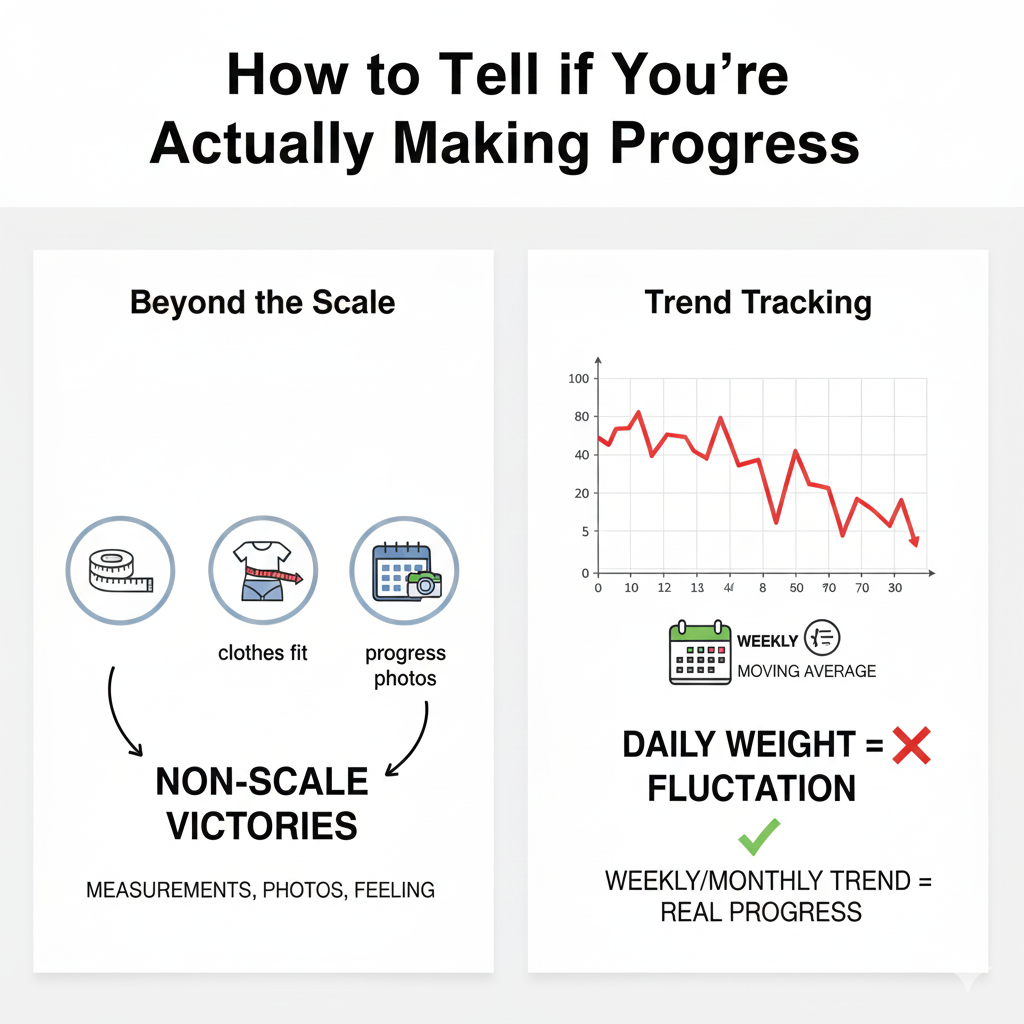
When you find yourself asking why am i gaining weight in a calorie deficit, it is time to look beyond the scale. The numbers you see are not the single source of truth. Instead, try using body measurements and progress photos to see how your composition is shifting. Many people experience “Non-Scale Victories” (NSVs), such as noticing how their clothes fit more comfortably or feeling a boost in energy levels. You might realise that while your weight is stable, you have actually lose specifically fat mass while becoming more toned.
Trend Tracking: Why Consistency Beats Daily Fluctuations
Stepping on the scales every single morning can be a mental struggle. Because of temporary factors like sodium intake, fluid retention, and glycogen storage, your weight can change drastically from one day to the next. Instead of obsessing over daily numbers, you should weigh yourself weekly or use a “moving average” to see the overall trend. This long-term picture helps you track your progress precisely without getting frustrating results from a single high-salt meal or a stressful nightly sleep.
Actionable Strategies to Break the Plateau
Re-calculating TDEE: Adjusting Your Needs
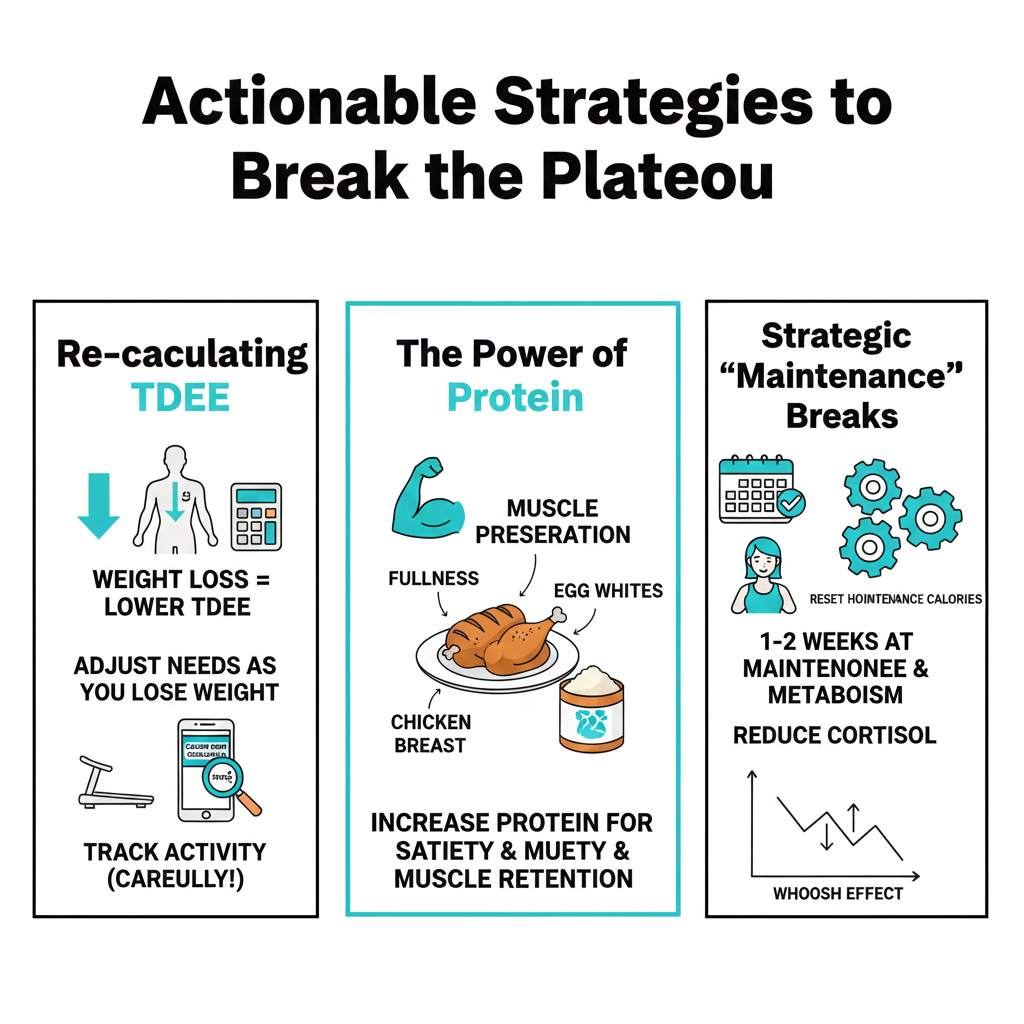
As you successfully lose weight, your body requires fewer calories to function. This is why you must periodically re-calculating your Total Daily Energy Expenditure (TDEE). If you are still eating the same amount as when you were 20 pounds heavier, you might find yourself in a maintenance phase rather than a deficit. To stay informed, use tools like a treadmill calorie burn calculator to get a better estimate of your activity expenditure, but remember that fitness trackers often exaggerate results. Keeping an accurate diary of your intake ensures your strategy stays effective.
The Power of Protein: Satiety and Muscle Preservation
Increasing your Protein intake is one of the most brilliant ways to break a plateau. A high-protein diet aids in muscle preservation, ensuring that the weight you lose is specifically fat rather than lean mass. Additionally, protein is highly thermic and improves satiety, making you feel full and satisfied for longer. This makes it easier to resist impulse eating or grabbing fast food. Even when you are on the road, choosing the best macro friendly fast food options—like grilled chicken or egg white bowls—can help you maintain your nutrition goals without over-restricting.
Strategic “Maintenance Breaks”: Resetting the System
Sometimes, the best way to move forward is to take a step back. A strategic “diet break” involves eating at maintenance calories for 1–2 weeks. This helps to balance and reset hormones like Leptin and Thyroid (T3/T4) that may have slowed down due to long-term restriction. By providing your body with adequate energy, you can lower cortisol and reduce water retention. This medically supported survival mechanism often results in a “whoosh” effect where the scales finally drop once you return to a moderate deficit.
Conclusion
Patience is Key: Trust the Process
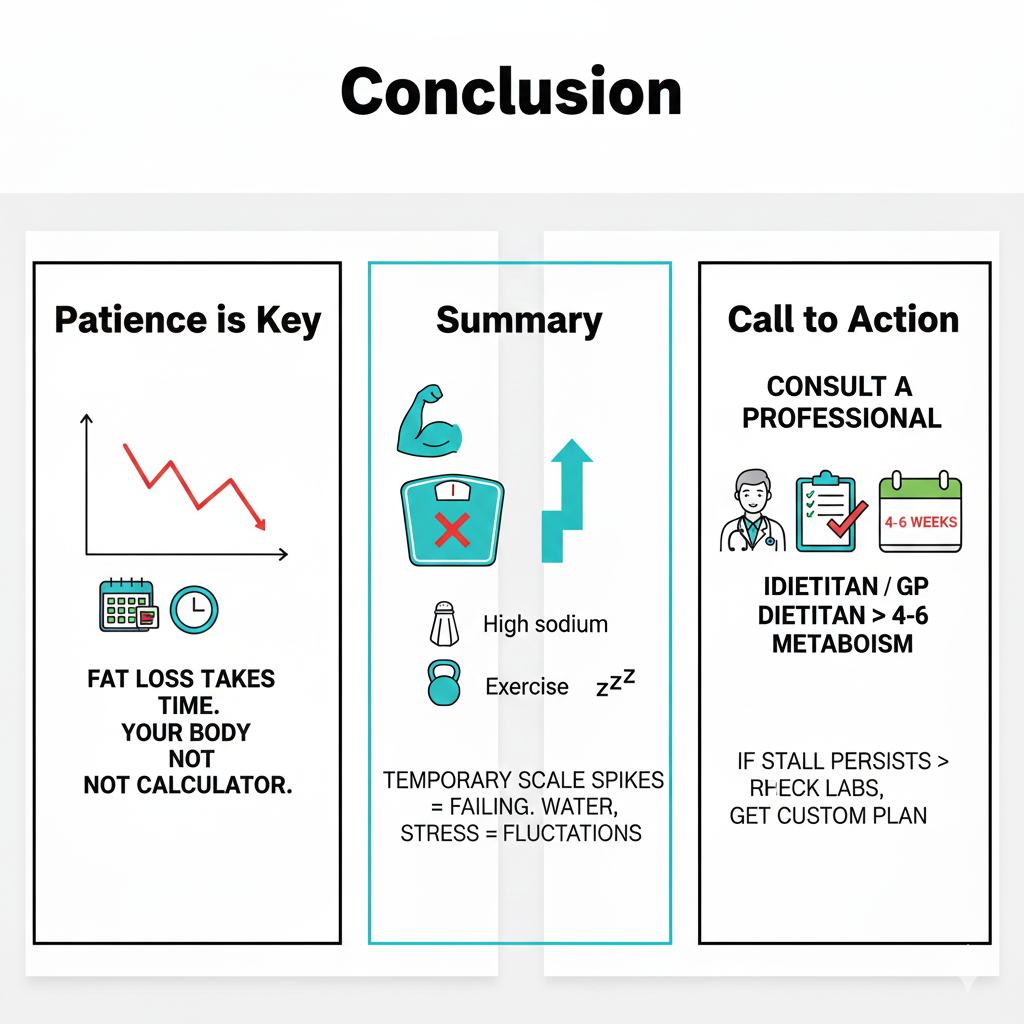
It is vital to remember that fat loss is rarely a linear journey; your body is a complex biological system, not a simple calculator. When you find yourself asking “why am i gaining weight in a calorie deficit,” remind yourself that patience is your greatest tool. True composition changes take time to reflect on the scales. If you are staying consistent with your nutrition and physical activity, you are likely moving in the right direction, even if fluid retention or muscle inflammation is masking the result today.
Summary: The Scale is Not the Only Metric
In summary, a temporary spike on the scale does not mean your plan has failed. As we have explored, everything from high sodium intake and glycogen replenishment to chronic stress and lack of quality sleep can cause the numbers to roll upward. These fluctuations are a normal part of functioning as a human being. Don’t let a disheartening morning weighing session lead to impulse eating or anxiety. Focus on long-term health and maintenance of healthy habits rather than daily stalls in progress.
Call to Action: When to Seek Expert Help
While most plateaus are a result of metabolic adaptation or underestimating hidden extras, some are rooted in medical issues. If your weight stall consistently persists for more than 4–6 weeks despite a moderate and stable deficit, it may be time to reassess with an expert. You can share your concerns with a doctor, GP, or Registered Dietitians to rule out hypothyroidism, PCOS, or hormonal imbalance. Whether you need labs to check T3/T4 ranges or 1:1 nutritional counseling, a healthcare professional can help you navigate the road block and build a sustainable, medically approved strategy.
Frequently Asked Questions (FAQs)
1. Can I eat out while dieting, and what is the healthiest fast food breakfast?
Yes, you can stay on track by making smart choices. The healthiest fast food breakfast usually involves high-protein options like egg whites or oatmeal. When you’re on the go, look for the best macro friendly fast food to ensure your Lipid levels and overall calories stay within your target range.
2. Why is the scale not moving if I’m exercising daily?
Weight loss isn’t just about the scale. You might be gaining muscle while losing fat. Activities like Yoga can improve flexibility and muscle tone, but they also cause temporary water retention for muscle repair. Focus on how your clothes fit instead of just the number.
3. When should I consult a professional about my weight?
If you have been in a consistent deficit for over 6 weeks with no change, consult a healthcare provider. Sources like 3Q Pharmacy or Fermanagh Travel Clinics recommend checking for hormonal issues. A doctor can check for PCOS symptoms, such as skin tags or irregular cycles, which might be stalling your progress.
4. How does stress affect my weight loss journey?
High stress levels trigger a deep physiological response in the body, increasing cortisol. This can cause your body to hold onto water and abdominal fat, making it look like you aren’t losing weight even when you are.
5. Is it possible to be in a deficit and still gain weight?
Yes, but it is usually “false” weight. High salt intake, new exercise routines, or hormonal shifts can cause temporary spikes. According to fitness experts like Fuadfit, consistency over months is more important than daily fluctuations.
6. How many hours of sleep do I need for fat loss?
You should aim for 7-9 hours of quality sleep nightly. Lack of sleep disrupts ghrelin and leptin, making you feel hungrier and less satisfied after meals.
7. Should I follow a very low-calorie diet (VLCD)?
Avoid extreme drops like going from 1,500 calories to 800-900 calories suddenly. This can trigger Metabolic Adaptation, where your BMR slows down to preserve energy, making long-term loss much harder.