



How to Start Cleaning Business in Australia: The Ultimate Guide
Introduction
The cleaning industry in Australia is currently experiencing a significant boom. From the busy streets of Melbourne to the suburban reaches of Queensland, the demand for both house cleaning services and commercial cleaning business operators is at an all-time high. For many aspiring entrepreneurs, a cleaning company represents more than just a service; it is a gateway to financial independence and a successful side hustle that can quickly scale into a full-time enterprise.
Table Of Content
- Introduction
- The Opportunity: Australia’s Growing Demand
- Why Choose the Cleaning Sector?
- Our Goal: Your Roadmap to Success
- Pre-Launch Phase: Is it Right for You?
- The “Cleaning” Mindset
- The Benefits of Your Own Business
- Realistic Expectations: Rates and Revenue
- Choosing Your Path: Franchise vs. Independent
- The Franchise Route
- Starting From Scratch
- Legal & Administrative Requirements (The “Australian” Essentials)
- Business Structure: Sole Trader, Partnership, or Company?
- Essential Registrations: ABN and TFN
- Insurance: Protecting Your Assets
- Police Checks & Clearances for Credibility
- Defining Your Niche & Services
- Residential Cleaning
- Commercial Cleaning
- Specialized Services
- Equipment, Supplies, and Transport
- The Essential Kit
- The Professional Edge: Color-Coding
- Vehicle Requirements
- Setting Your Pricing & Packages
- Hourly vs. Flat Rate: Choosing Your Model
- The Quote Process: Why Site Visits Matter
- Creating a Service Agreement
- Marketing & Building a Client Base
- Digital Presence: Your 24/7 Shopfront
- Local SEO: Dominating Your Suburbs
- Word of Mouth & Physical Marketing
- Portals: Finding Your Initial Jobs
- Operations & Maintaining Quality
- Checklists and Standard Operating Procedures (SOPs)
- Health & Safety: Safe Work Australia Guidelines
- Customer Feedback & Reputation Management
- Conclusion & Next Steps
- Summary of Key Takeaways
- Encouragement to Start Small and Scale
- Call to Action (CTA)
The Opportunity: Australia’s Growing Demand
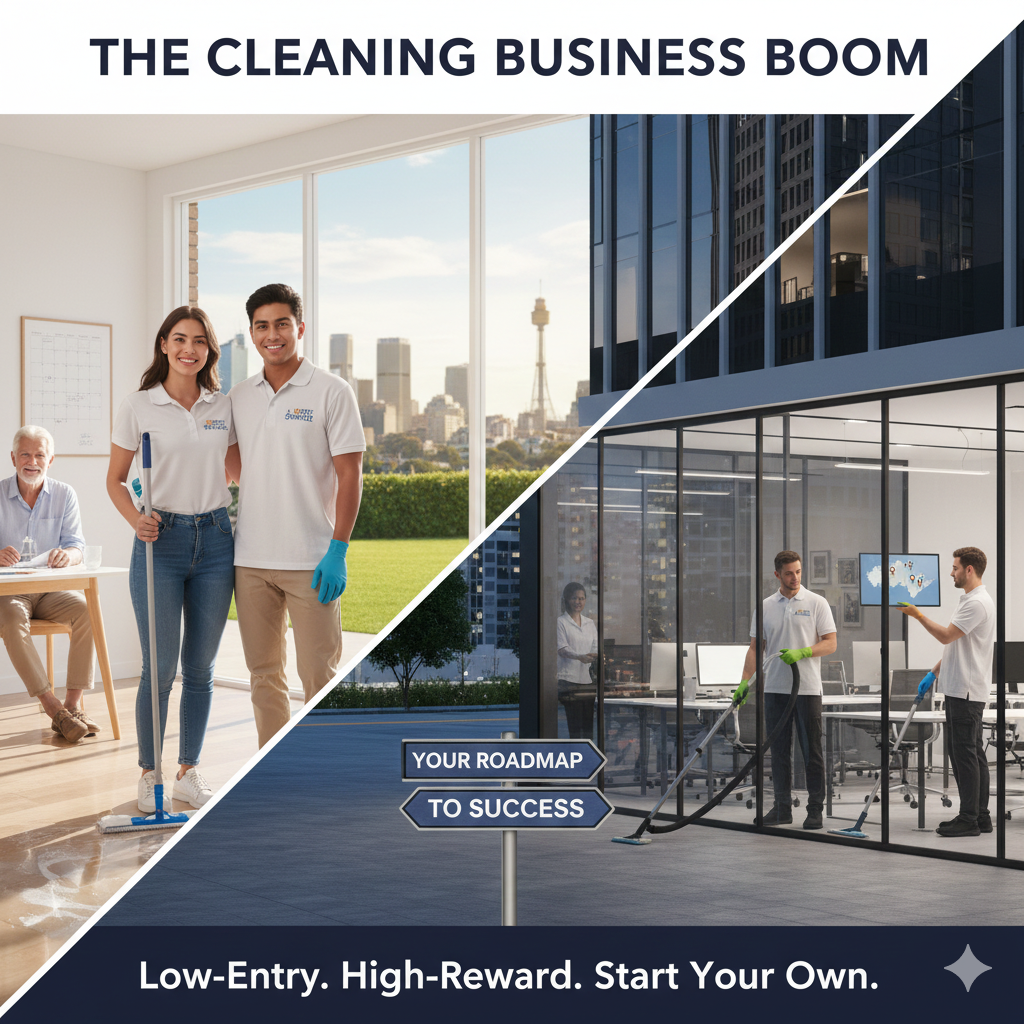
The home and commercial services market is thriving because modern Australians are increasingly time-poor. Whether it is a family looking for regular cleaning to reclaim their weekends or retail stores and medical facilities requiring specialized sanitization, the scope of work is vast. This high demand ensures a steady cash flow for those ready to put in the work.
Why Choose the Cleaning Sector?
Starting a venture in this field is attractive for several reasons. First, there is a relatively low barrier to entry. You don’t need a university degree to understand how to use a vacuum cleaner or apply purpose cleaners effectively. Secondly, the startup costs are manageable compared to other industries, often requiring only basic cleaning supplies and a reliable phone to get started.
Perhaps the most enticing feature is the recurring revenue model. Once a cleaning company secures new clients, the work often becomes repetitive—think weekly office cleaning or fortnightly residential visits—providing long-term stability. Furthermore, the scalability is impressive; you can start as a solo window cleaner and eventually hire employees to manage large-scale cleaning contracts.
Our Goal: Your Roadmap to Success
This article serves as a comprehensive roadmap. We will guide you through the initial research phase, help you define your business goals, and explain how to navigate the legalities of an Australian Business Number. Our objective is to take you from the planning stage all the way to landing your very first client. Whether you are interested in carpet cleaning, pressure washing, or upholstery cleaning, this guide will help you build a professional brand identity and a lasting online presence.

Pre-Launch Phase: Is it Right for You?
Before diving headfirst into Starting Your Business, a small business owner must evaluate if they possess the right temperament for the cleaning industry. It is a good idea to conduct an honest self-assessment of one’s physical and mental readiness. Launching your own cleaning business is not just about scrubbing surfaces; it is about building a successful business from the ground up through discipline and strategy.
The “Cleaning” Mindset
Success as a sole proprietor requires a specific set of traits. Primarily, potential customers look for extreme attention to detail. Whether you are performing regular cleaning or a meticulous deep cleaning, missing a single spot can affect your reputation. Furthermore, the physical stamina required for repetitive cleaning tasks cannot be understated.
Beyond the physical, people skills are vital. As you interact with potential clients, your ability to communicate clearly will define your professional brand identity. Building trust is the first step in securing long-term contracts, especially when entering private homes or sensitive commercial spaces.
The Benefits of Your Own Business
One of the most attractive aspects of being a small business owner is the flexibility. You can start this as a side hustle on weekends or dive in full-time to be your own boss. The startup capital required is relatively low, and the high ROI makes it a best way to achieve financial freedom. As your own business grows, you gain the ability to set your own schedule and eventually hire employees to handle the daily operations.
Realistic Expectations: Rates and Revenue
Setting business goals requires an understanding of the current Australian market. Generally, the hourly rate for a residential cleaning service ranges between $30–$50. However, for specialized cleaning work—such as carpet cleaning, window cleaning, or upholstery cleaning—rates can climb to $50–$100 per hour.
Managing your cash flow effectively from the start will ensure your profit margin remains healthy. While the high demand for cleaners ensures a steady stream of cleaning jobs, you must account for travel time and the cost of basic supplies when calculating your take-home pay.

Choosing Your Path: Franchise vs. Independent
Deciding on the right business model is a pivotal moment for any aspiring entrepreneur. In Australia, the choice usually boils down to joining an established cleaning franchise or building a new business from the ground up. Both paths offer unique advantages depending on your resources and long-term vision.
The Franchise Route
Choosing a franchise—referencing industry leaders like Jani-King or AMC—is often seen as a safer entry point into the commercial cleaning business. One of the primary benefits is the immediate association with an established brand, which provides instant credibility with commercial clients.
Franchisees receive comprehensive training and ongoing marketing strategy support, saving them the effort of designing business cards or a marketing plan from scratch. However, this convenience comes with startup costs in the form of initial purchase fees and ongoing royalties. For many, the tradeoff for guaranteed cleaning contracts and administrative support is well worth the investment.
Starting From Scratch
If you prefer total creative control, starting an independent cleaning company might be the best way forward. This path allows you to choose your own company name and build a unique brand identity without being restricted by corporate guidelines. You also keep 100% of your earnings, which can lead to a better profit margin over time since there are no royalty fees to pay.
The challenge, however, lies in building systems and potential customers from zero. Without a parent company, the small business owner must handle everything from sourcing cleaning supplies to establishing an online presence. While it requires more effort to land your first client, the independence of owning your own business completely is a significant draw for many.

Legal & Administrative Requirements (The “Australian” Essentials)
Navigating the legal landscape is the first step to ensuring your venture is compliant and professional. To register your business correctly, you must understand the foundational requirements set by the Australian government.
Business Structure: Sole Trader, Partnership, or Company?
Choosing the right business needs and structure is a critical decision that affects your tax, liability, and costs.
- Sole Trader: This is the simplest and most cost-effective business model for a new business. As a sole trader, you have full control, but you are also personally liable for all business needs and debts.
- Partnership: Ideal if two or more people are Starting Your Business together. Partners share both the workload and the personal liability for the business.
- Company (Pty Ltd): A more complex structure where the cleaning company is a separate legal entity. While it offers limited liability company protection for personal assets, it involves higher setup fees and stricter reporting.
Essential Registrations: ABN and TFN
Every own business in Australia must have an Australian Business Number (ABN). This unique 11-digit number identifies your cleaning service business to the government and other businesses, allowing you to claim GST credits and avoid extra tax on your income. Additionally, you will need a Tax File Number (TFN). While a sole proprietor can use their personal TFN, a partnership or company must apply for a separate one.
Insurance: Protecting Your Assets
Insurance is not just a good idea; it is often a requirement to win cleaning contracts.
- Public Liability Insurance: This is crucial for property damage or third-party injuries (like a client slipping on a wet floor). Most commercial spaces and real estate agents will not grant you access without a certificate of currency.
- Workers’ Compensation Insurance: This is mandatory if you hire employees to cover medical costs and lost wages if they are injured on the job.
- General Liability Insurance: Provides broader protection for various business needs and legal disputes.
Police Checks & Clearances for Credibility
To build a successful business based on trust, obtaining proper clearances is vital.
- Police Checks: Many potential clients will request a recent police check to ensure you have no history of theft or violence before allowing you into their office buildings or homes.
- Working with Children Checks (WWCC): This is mandatory if your cleaning work involves schools, medical facilities, or childcare centers. It provides peace of mind that every adult on-site is safe to be around vulnerable groups.
Defining Your Niche & Services
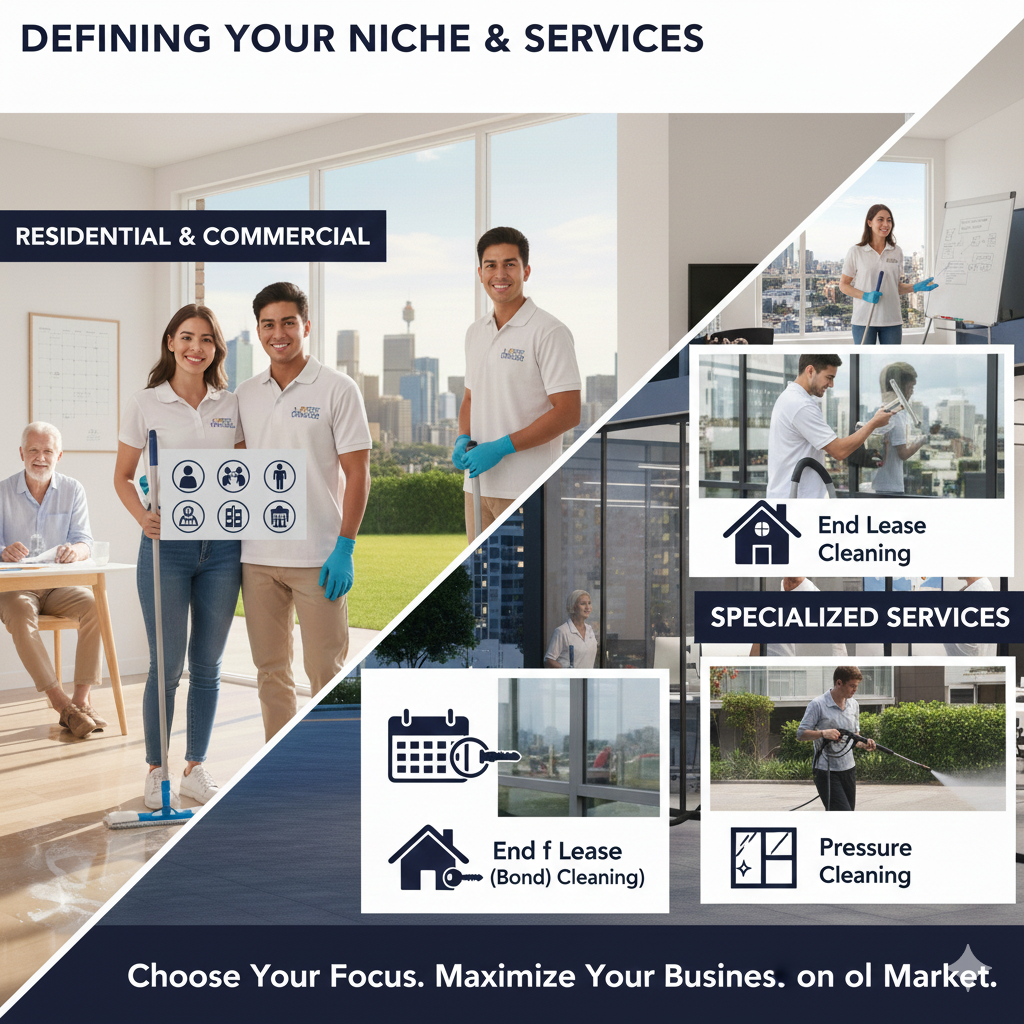
Selecting a specific target market is one of the most important decisions you will make when Starting Your Business. In the Australian cleaning industry, success often comes to those who find a local gap—whether that is a need for eco-friendly cleaning or high-end residential care.
Residential Cleaning
This niche focuses on private homes, apartments, and Airbnb turnovers.
- Regular house cleans: These are scheduled weekly or fortnightly cleaning tasks such as vacuuming, mopping, and dusting.
- Deep cleaning: A thorough, top-to-bottom refresh of a property, focusing on hard-to-reach areas and heavy sanitization.
- “Spring Cleaning”: A comprehensive seasonal service designed to rejuvenate living spaces by removing deeply embedded dirt and clutter.
Commercial Cleaning
Catering to businesses often leads to more profitable, long-term cleaning contracts.
- Offices: Providing office cleaning after hours is a popular entry point for many commercial cleaners.
- Medical Facilities: These environments require highly specialized cleaning solutions and strict adherence to hygiene standards to prevent infection.
- Industrial Warehouses: Cleaning large-scale commercial spaces, factories, and plants requires heavy-duty equipment and safety training.
Specialized Services
Offering specialty work can significantly increase your hourly rate and set you apart from general competitors.
- End of Lease (Bond) Cleaning: There is a high demand for this in the Australian rental market. It involves a detailed vacate clean to ensure tenants receive their bond back from property managers.
- Window Cleaning: Professional window cleaners ensure streak-free glass for both retail stores and residential properties.
- Carpet Cleaning: Using a professional carpet cleaner or steam equipment to remove allergens and tough stains from fibres.
- Pressure Washing: Effective for building exteriors, driveways, and parking lots to remove grime and enhance curb appeal.
For more industry-specific guidelines and support, you can visit the National Australian Cleaners Association (NACLA).
Equipment, Supplies, and Transport
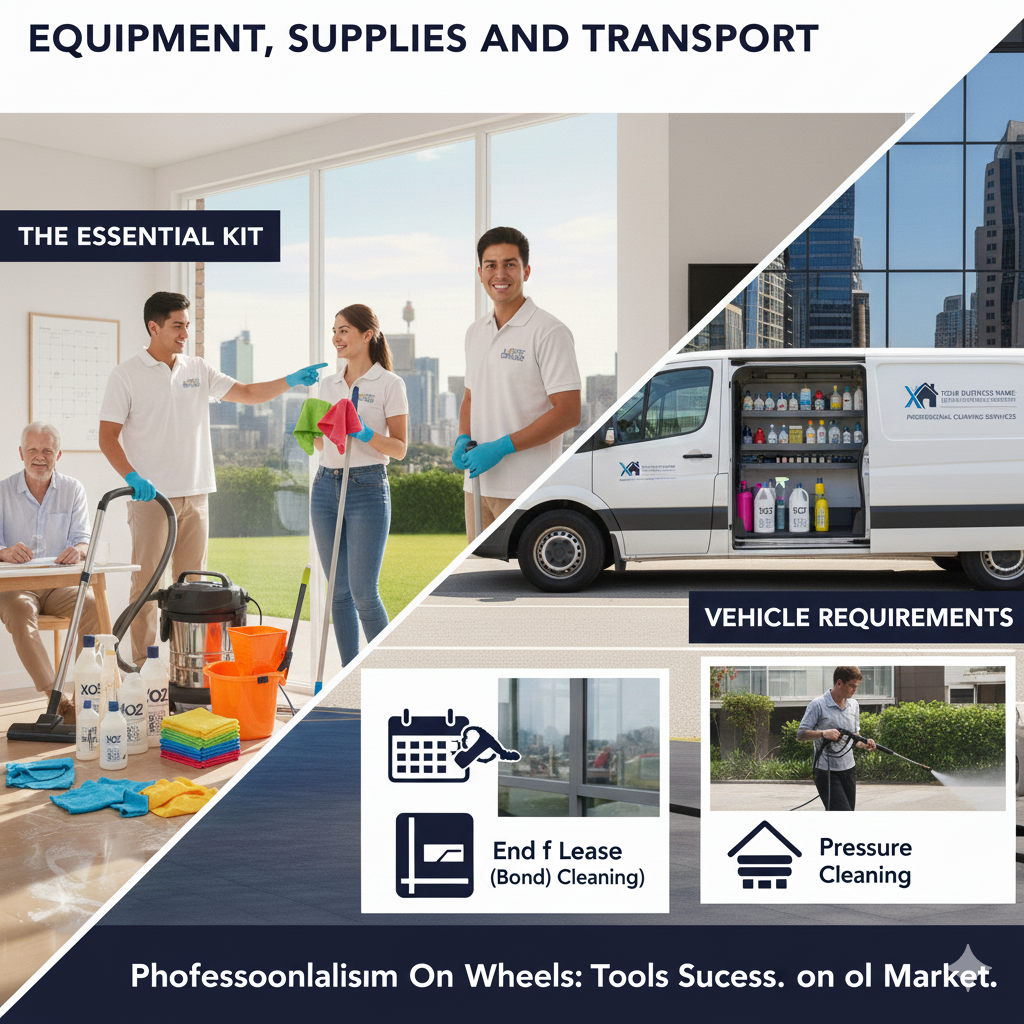
To deliver a high-quality service, a small business owner must invest in the right tools from day one. Having professional-grade cleaning supplies not only makes the job easier but also builds trust with your potential customers.
The Essential Kit
Building your inventory starts with the basics. Every professional setup should include:
- Vacuum cleaner: Investing in a quality vacuum with HEPA filtration is non-negotiable for allergy-sensitive clients.
- Microfiber Cloths and Mops: These are far more effective than traditional sponges for trapping dust and bacteria.
- Cleaning Solutions: Your kit should include a dedicated glass cleaner, a powerful bathroom cleaner, and a neutral floor cleaner for timber or tile surfaces.
- Eco-friendly cleaning: Many Australians prefer green products. Using purpose cleaners that are biodegradable can be a major selling point for your cleaning company.
- Consumables: Don’t forget to stock up on trash bags and paper towels to ensure you leave every property looking pristine.
The Professional Edge: Color-Coding
To maintain professional standards, many experts—including those at XO2—recommend a color-coded system. Using specific colored cloths for specific areas (e.g., red for bathrooms, blue for general surfaces) prevents cross-contamination. This level of care shows potential clients that you take hygiene seriously.
Vehicle Requirements
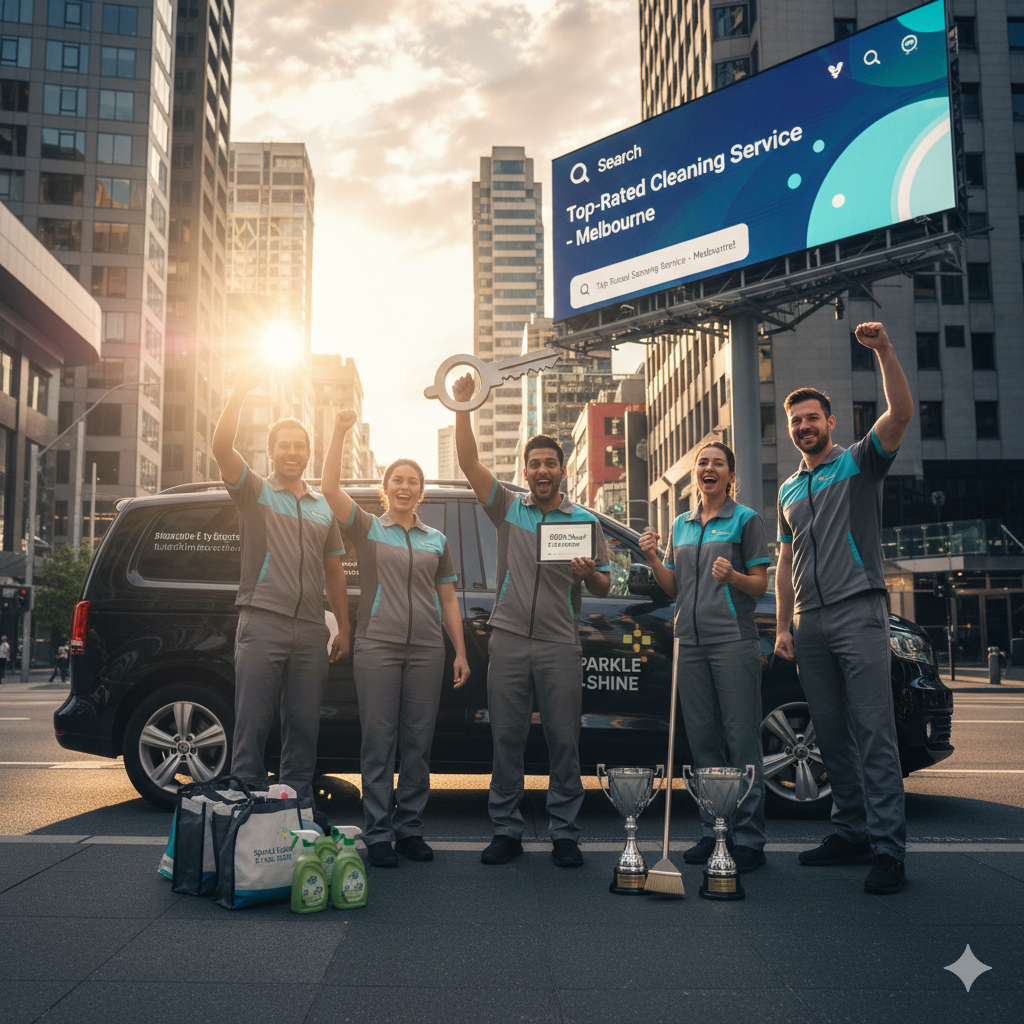
Your transport is a mobile billboard for your new business. Whether you choose a compact car or a dedicated van, it must be clean and organized. A well-maintained vehicle that easily fits all your basic supplies and specialized equipment like a carpet cleaner projects an image of reliability and professionalism to the public.

Setting Your Pricing & Packages
Establishing a robust pricing strategy is the backbone of your cash flow and overall business needs. In the Australian market, you must balance competitive rates with the reality of the Cleaning Award [MA000022], which sets the legal minimum for hourly rate pay.
Hourly vs. Flat Rate: Choosing Your Model
Deciding how to charge is a pivotal part of your business model.
- Hourly Rate: This “pay-as-you-go” approach offers maximum flexibility. It is the best way to handle regular cleaning or light maintenance where the client might want to rotate cleaning tasks week to week. It ensures the potential clients only pay for the exact time worked, though there is a risk of “cost creep” if a job takes longer than expected.
- Flat Rate (Fixed Price): This model is ideal for deep cleaning, end of lease cleaning, or large commercial cleaning services. It provides potential customers with price certainty and a clear checklist of what is included. While less flexible, it allows the cleaning company to reward efficiency—as you get faster, your profit margin increases.
The Quote Process: Why Site Visits Matter
Providing an accurate estimated quote without seeing the property is an “inexact science” that often leads to undercharging.
- Accuracy: A site visit allows you to assess flooring types, space density (like “cubicle farms” in office buildings), and the current state of cleanliness.
- Expectations: Meeting commercial clients on-site helps you understand their specific business goals and hygiene standards, especially in high-stakes environments like medical facilities.
- Professionalism: Taking the time for an on-site inspection demonstrates a level of detail that helps win cleaning contracts.
Creating a Service Agreement
A formal cleaning services agreement is a legally binding document that protects your own business from “scope creep” and payment disputes.
- Payment Methods & Terms: Clearly state your payment methods (e.g., direct deposit or credit card) and whether payments are due upfront or within a 7-day window.
- Cancellation Policy: To protect your income and staff wages, include a clause for late cancellations. Many Australian companies charge a fee—sometimes up to 100% of the cleaning work—if less than 24–48 hours’ notice is given.
- Lock-out Fees: Ensure the small business owner is compensated if a cleaner arrives but cannot gain access to the property.
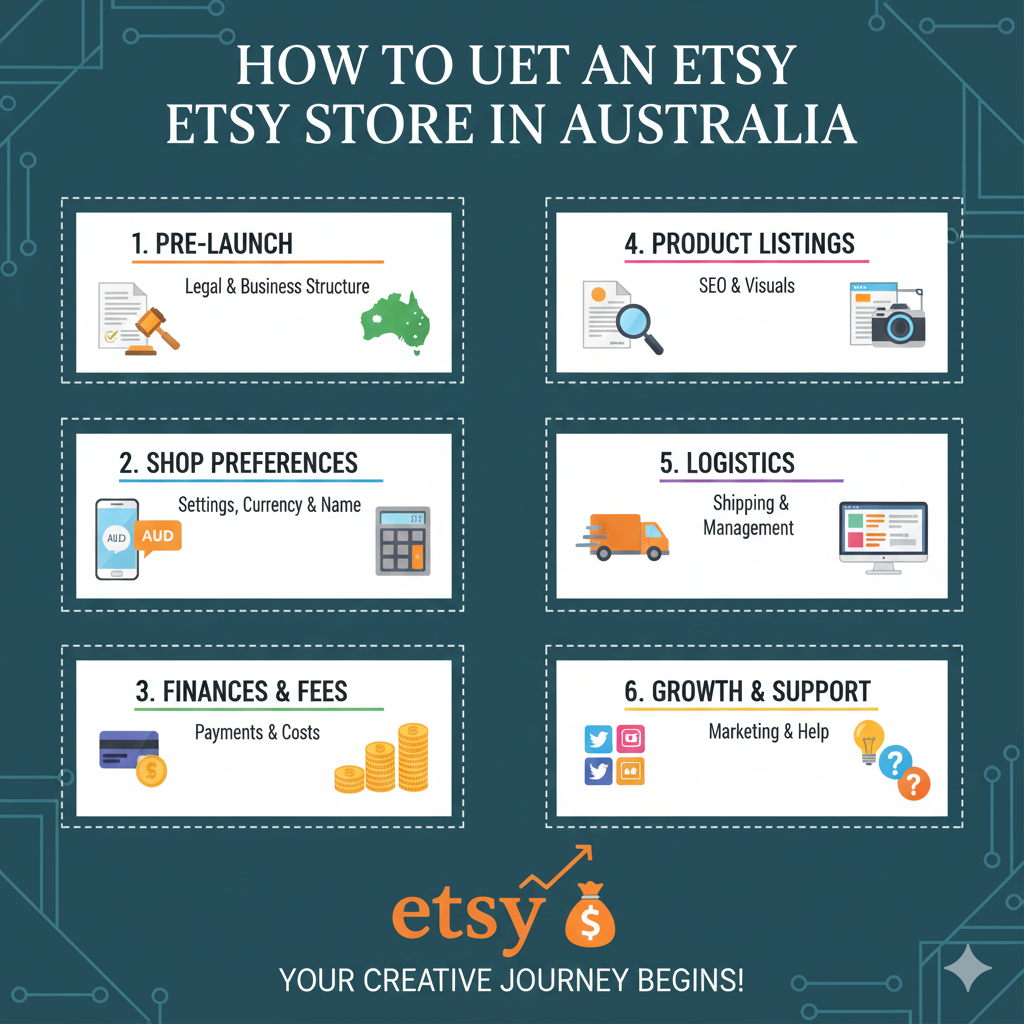
Pro Tip: If you are looking to diversify your income, you might consider selling cleaning-related products online. Learning How To Set Up An Etsy Store in Australia can be a great way to sell specialized eco-friendly cleaning kits or DIY cleaning solutions to a global audience. You can find a detailed guide at TrendBlogo.

Marketing & Building a Client Base
To build a successful business, your marketing strategy must be multi-channel, combining digital precision with local community engagement. For a new business, the goal is to create a reliable pipeline of new clients while maintaining high visibility in your specific service areas.
Digital Presence: Your 24/7 Shopfront
In the modern cleaning industry, your online reputation is often the deciding factor for potential customers.
- Google Business Profile: This is the most critical tool for appearing in local searches. Ensure your profile is fully optimized with your phone number, operating hours, and high-quality photos of your team and work. This is also the hub for collecting 5-star reviews, which provide essential social proof.
- A Basic Website: Your business website doesn’t need to be complex, but it must be professional and mobile-friendly. It should clearly list your types of cleaning services and include a strong call-to-action (CTA) like a “Get a Quote” button.
- Social Media: Platforms like Facebook and Instagram are perfect for sharing “before and after” transformations. Being active on social media helps humanize your cleaning company and allows you to engage directly with your local community.
Local SEO: Dominating Your Suburbs
To compete in major cities like Melbourne, Sydney, or Adelaide, you must master local search engine optimisation (SEO).
- Suburb-Specific Landing Pages: Instead of just targeting a whole city, create pages for specific suburbs (e.g., “End of Lease Cleaning in Parramatta” or “Office Cleaning in St Kilda”).
- Local Keywords: Naturally integrate location-based keywords into your website’s headings, page titles, and meta descriptions.
- Consistent NAP: Ensure your Name, Address, and Phone (NAP) details are identical across your website, Google My Business, and all online directories.
Word of Mouth & Physical Marketing
Traditional marketing tactics remain incredibly effective for residential services.
- Flyers & Business Cards: Distribute high-quality flyers in your target neighborhoods. A professional business card handed out at local community events or placed in local cafes can lead to unexpected cleaning jobs.
- Referral Discounts: Happy clients are your best advocates. Encourage word of mouth by offering a “refer-a-friend” discount (e.g., “$25 off your next clean”).
- Branded Vehicles: Your car or van is a mobile billboard. Using a professional wrap with your logo and phone number can generate leads while you are simply driving between jobs.
Portals: Finding Your Initial Jobs
When you are just starting and haven’t built an online presence yet, lead-generation platforms are a good idea to get your first few cleaning tasks.
- Airtasker: This is a popular platform in Australia for finding one-off cleaning jobs. It allows you to build a profile, showcase your skills, and collect reviews that you can later leverage on your own site.
- Hipages: Another excellent tool for connecting with local homeowners looking for reliable house cleaning services.
Operations & Maintaining Quality
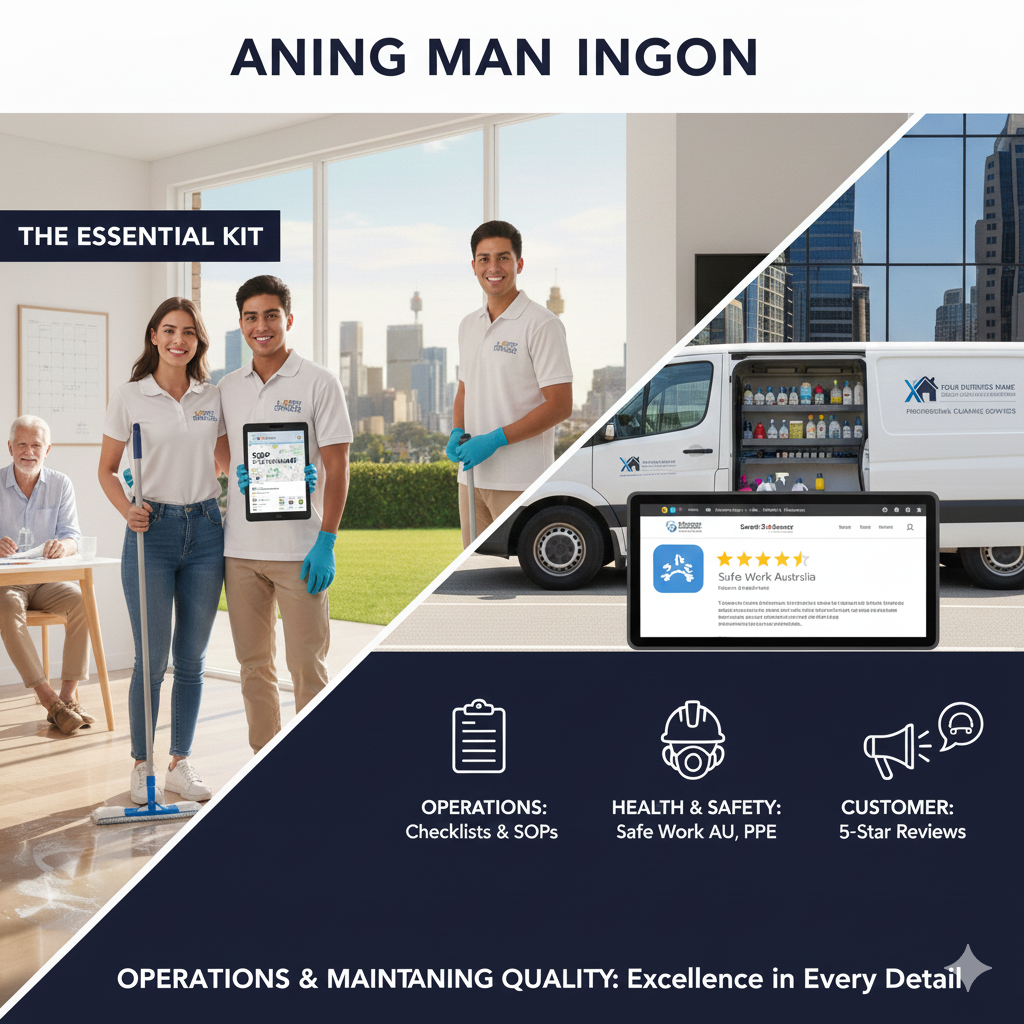
Once your cleaning company is operational, the focus shifts to consistency and safety. Maintaining a high standard of service is the best way to ensure long-term success and a healthy profit margin.
Checklists and Standard Operating Procedures (SOPs)
Consistency is what separates a professional cleaning service business from an amateur one.
- Cleaning Checklist: Every team member should follow a detailed cleaning checklist for every job. This ensures that no cleaning tasks, such as dusting skirting boards or sanitizing door handles, are overlooked.
- Quality Control: Implementing a quality control system involves periodic inspections of the cleaning work.
- Efficiency: Standardized procedures help you manage your time better, allowing you to complete more cleaning jobs without sacrificing quality.
Health & Safety: Safe Work Australia Guidelines
Safety is paramount in the cleaning industry, both for you and your clients.
- Chemical Handling: Always follow the manufacturer’s instructions for cleaning chemicals and cleaning solutions. Ensure you have Safety Data Sheets (SDS) for all purpose cleaners used on-site.
- PPE (Personal Protective Equipment): Using correct safety equipment, such as gloves, masks, and non-slip shoes, is a mandatory part of safe work practices in Australia.
- Equipment Maintenance: Regularly inspect your cleaning equipment, including your vacuum cleaner and carpet cleaner, to prevent electrical hazards and ensure peak performance.
Customer Feedback & Reputation Management
In the age of social media, your reputation is your most valuable asset.
- Handling Complaints: View negative feedback as an opportunity to improve your business goals. Address issues immediately and offer a re-clean if necessary to maintain customer satisfaction.
- Requesting Reviews: After a successful regular cleaning or deep cleaning, encourage clients to leave a review on your Google Business Profile.
- Referral Program: Grow your new business by implementing a referral program that rewards existing clients for word of mouth recommendations.
Conclusion & Next Steps
Navigating how to start cleaning business in Australia may seem like a daunting task, but by breaking it down into manageable steps, any entrepreneur can build a successful business. Throughout this guide, we have explored the essential pillars of the cleaning industry, from selecting a profitable target market to securing the necessary business registration and Australian Business Number.
Summary of Key Takeaways
The journey begins with choosing a robust business model—whether you opt for an independent cleaning company or a franchise. Ensuring you have the right cleaning supplies, such as a quality vacuum and professional cleaning chemicals, sets the stage for high-quality service. Legally, don’t overlook the importance of public liability insurance and police checks to build trust with potential customers. Finally, a strong online presence backed by local SEO will ensure your business website remains visible to those searching for reliable help.
Encouragement to Start Small and Scale
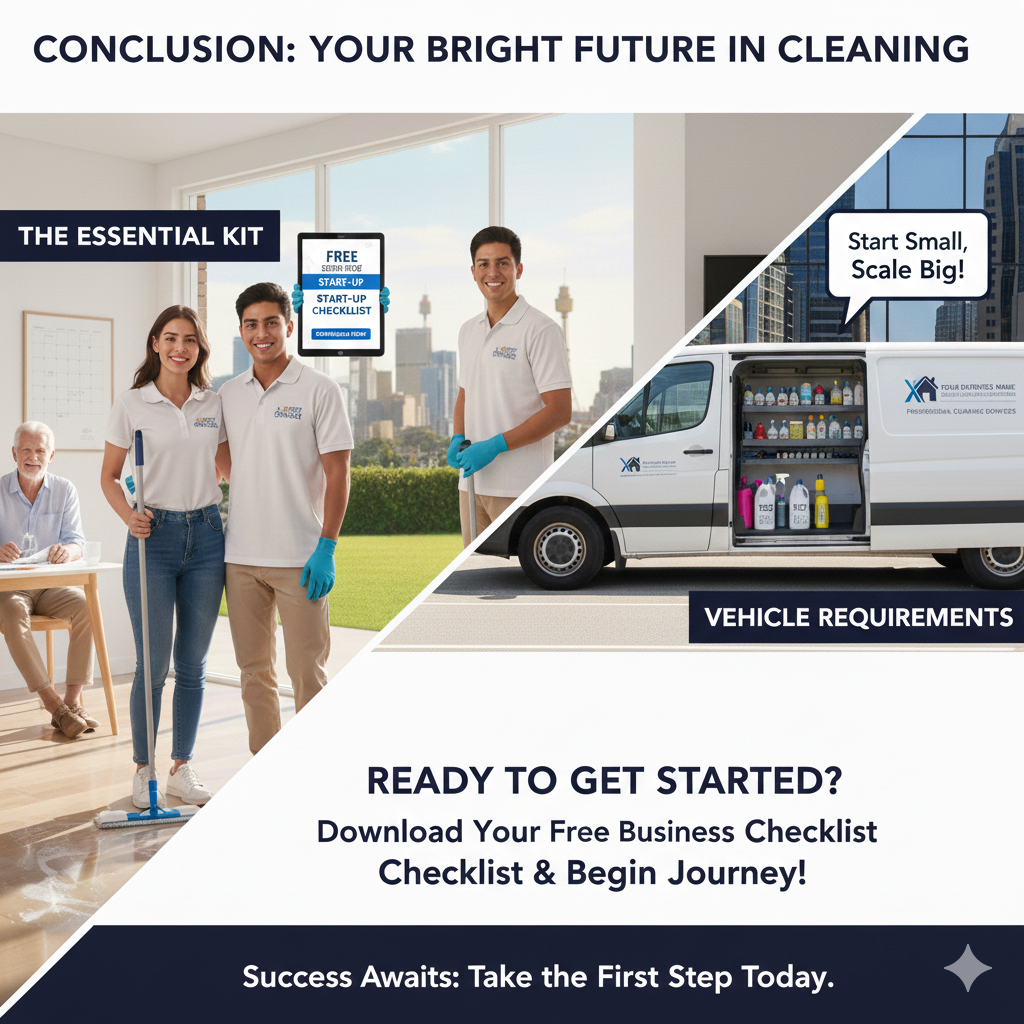
You don’t need a massive team to get started. Many of the most profitable ventures began as a simple side hustle or a sole trader operation. Focus on perfecting your cleaning work for your first client and let word of mouth do the heavy lifting. As your cash flow stabilizes and your profit margin grows, you can gradually hire employees and expand into broader commercial cleaning services. The beauty of this industry is its infinite scalability.
Call to Action (CTA)
Ready to turn your vision into a reality?
- Download our Cleaning Checklist: Ensure every job meets professional standards from day one.
- Contact us for a Consultation: If you need help choosing a domain name or setting up your marketing strategy, our team is here to guide you.
Don’t let your business goals sit on the shelf. Pick up the phone, secure your company name, and take that first step toward becoming a leader in the Australian cleaning market today!