


How To Set Up An Etsy Store In Australia: Full Guide
Learning How To Set Up An Etsy Store In Australia is an exciting journey for any Australian maker looking to share their craft with the world. Whether you are a hobbyist testing the waters or an entrepreneur looking to scale a full-time venture, understanding the local landscape and tax requirements is key to long-term success.
Table Of Content
- Introduction: Getting Started with your Etsy Business
- The Opportunity: Why New Sellers Choose an Etsy Account
- Why Etsy? Leveraging a Global Online Business Platform
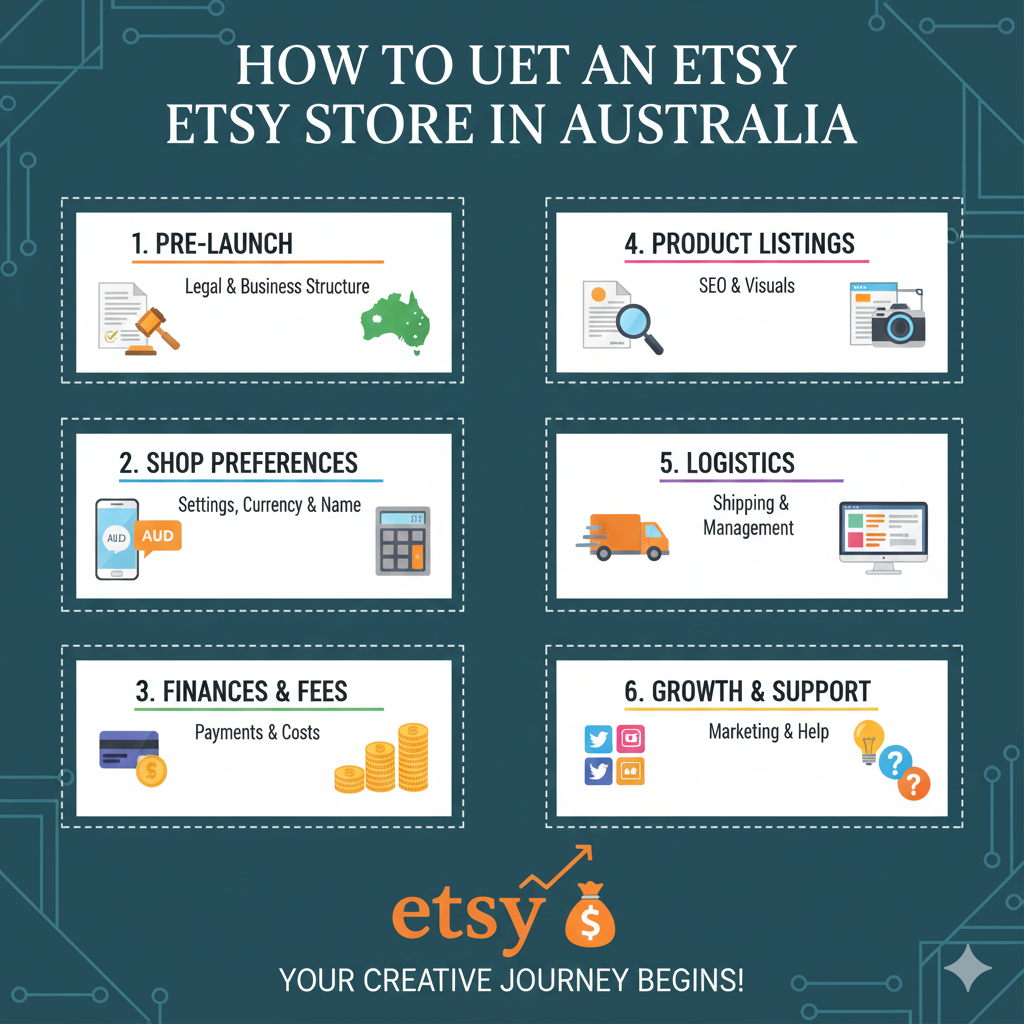
- Pre-Launch: Legal Requirements & Business Structure
- Choosing a Business Structure: Sole Trader vs. Company
- Registration: Your ABN and Tax Obligations
- Protecting Your Brand: IP Australia and Trademarks
- Legal Compliance: Consumer Law and Safety Standards
- Setting Up Your Shop Preferences
- The Basics: Using your Email Address to sign up
- Shop Settings: Selecting AUD and Validation
- Choosing a Shop Name: Best Practices
- Financial Setup: Etsy Fees & Payments
- Etsy Payments: Accepting Multiple Payment Methods
- Understanding Costs: The Essential Fee Breakdown
- Additional Costs: Subscriptions and Marketing
- Creating Product Listings and SEO
- Listing Details: Writing Effective Descriptions and Using Search Terms
- Visuals: Professional Branding and High-Quality Images
- SEO Strategy: Reaching Your Target Audience
- Logistics: Shipping and Shop Management
- Set Up Shipping: Profiles and Pricing
- Delivery Partners: Using Australia Post and Printing Labels
- Customer Incentive: The Power of Free Shipping
- Management Tools: Navigating the Shop Manager
- Policies and Customer Service
- Trust & Safety: Building a Secure Foundation
- Service Excellence: Managing Time and Expectations
- Support: Accessing the Help Center and Beyond
- Marketing and Growth
- Powerful Tools: Scaling Your Small Business
- Strategic Planning: Pricing and Continuous Learning
- Conclusion: Next Steps for Business Owners
- Key Takeaways for Success
- Final Encouragement: Your Path Forward

Introduction: Getting Started with your Etsy Business
Learning how to get started with your Etsy business is the first step toward turning your creative passion into a professional reality. This process involves more than just opening an account; it’s about laying a solid foundation for your brand to grow in the competitive online marketplace.
The Opportunity: Why New Sellers Choose an Etsy Account
For many new sellers, the dream begins with a single Etsy account. The platform has become the go-to destination for those wanting to sell handmade items, unique vintage items, and essential craft supplies. The beauty of starting on Etsy.com lies in the accessibility it offers; you don’t need a massive budget to launch your own Etsy store. Instead, you can focus on your passion—whether that is creating handmade goods or sourcing rare vintage items—while the platform handles the technical heavy lifting. This is why so many business owners in Australia prefer this route to test their products in a global marketplace.
Why Etsy? Leveraging a Global Online Business Platform
When launching an online business, one of the biggest hurdles is driving traffic. By choosing to build an Etsy business rather than starting your own website from scratch, you are leveraging a massive, pre-existing audience of potential customers. While having a standalone site is great for long-term branding, the Etsy shop ecosystem provides immediate visibility that a brand-new online business often lacks. For a small business, this ‘built-in’ traffic is invaluable. It allows you to focus on your product listings and excellent customer service rather than worrying about the complexities of web hosting. Additionally, if you need to source specific components or wholesale materials to fulfill your creative vision, you can learn How To Buy From Alibaba In Australia to find reliable manufacturing partners right out of the gate.
Pre-Launch: Legal Requirements & Business Structure
Choosing a Business Structure: Sole Trader vs. Company
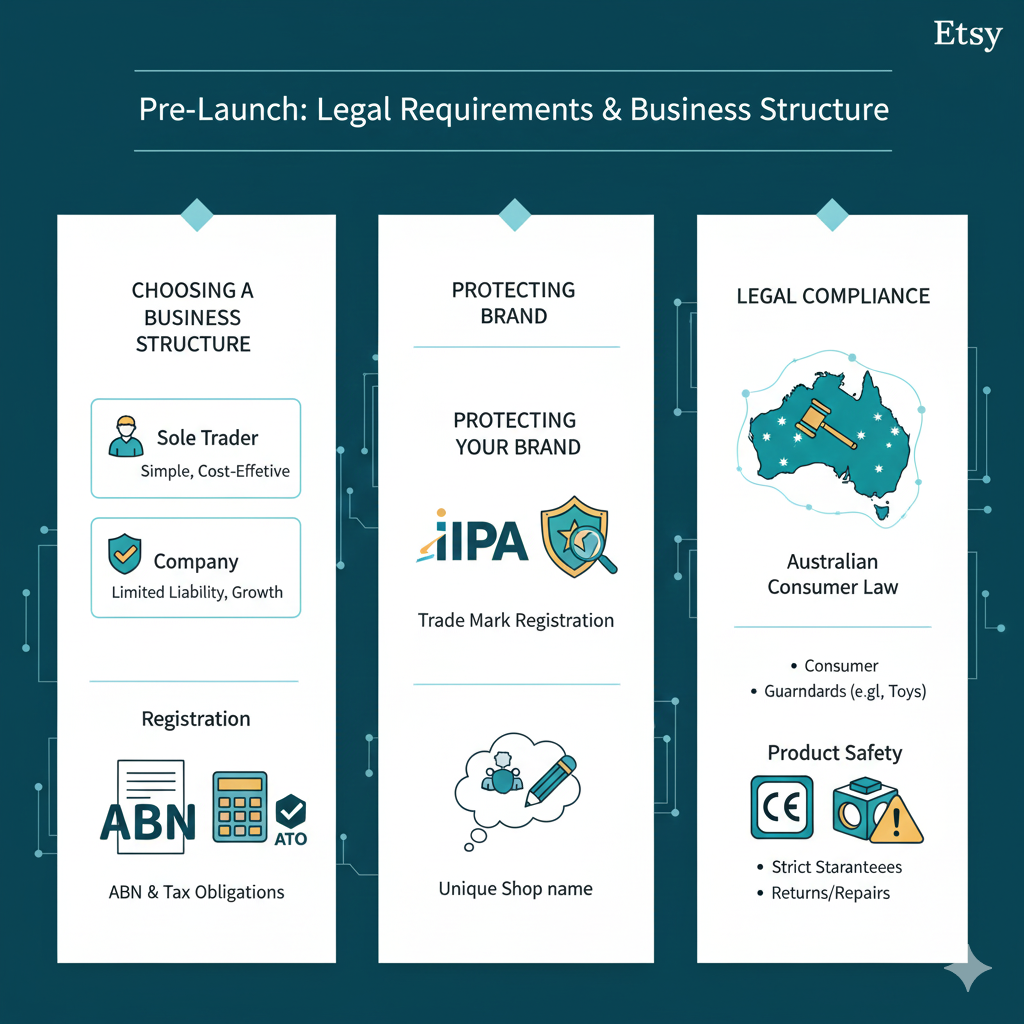
Before you list your first item, you must decide on a business structure and ensure you have your bank details and any required business license ready for registration. Most Australian creatives start as a sole trader because it is the simplest and most cost-effective way to operate. However, as your small business grows, you might consider registering as a company to benefit from limited liability, which protects your personal assets from business debts. This is a critical step in ensuring your setup meets your specific business needs and legal requirements.
Registration: Your ABN and Tax Obligations
A vital part of your checklist is obtaining an Australian Business Number (ABN). Even if you are just starting, an ABN is essential for validation. It ensures you meet your tax obligations with the ATO. Whether you sell handmade goods or digital downloads, correct registration helps you manage your online business professionally. If you are unsure about the specifics, consult a law firm. A specialist in Employment Law can also help if you plan to hire staff. These steps ensure your legal needs are fully covered from day one.
Protecting Your Brand: IP Australia and Trademarks
Your brand name is one of your most valuable assets. To prevent others from using a similar name, you should look into Trade Mark Registration through IP Australia. It is wise to Consider trademark registration early on to secure your identity in the global marketplace. This step, combined with choosing a unique shop name, builds long-term value for your Etsy business.
Legal Compliance: Consumer Law and Safety Standards
Operating in Australia means you must adhere to the Australian Consumer Law. This includes providing consumer guarantees regarding the quality of your products and offering returns or repairs if something goes wrong. Additionally, you must ensure your items meet strict Product Safety standards, especially if you sell toys or children’s clothing. Following these best practices not only keeps you compliant with Australian law but also builds trust with new customers.
Setting Up Your Shop Preferences
The Basics: Using your Email Address to sign up
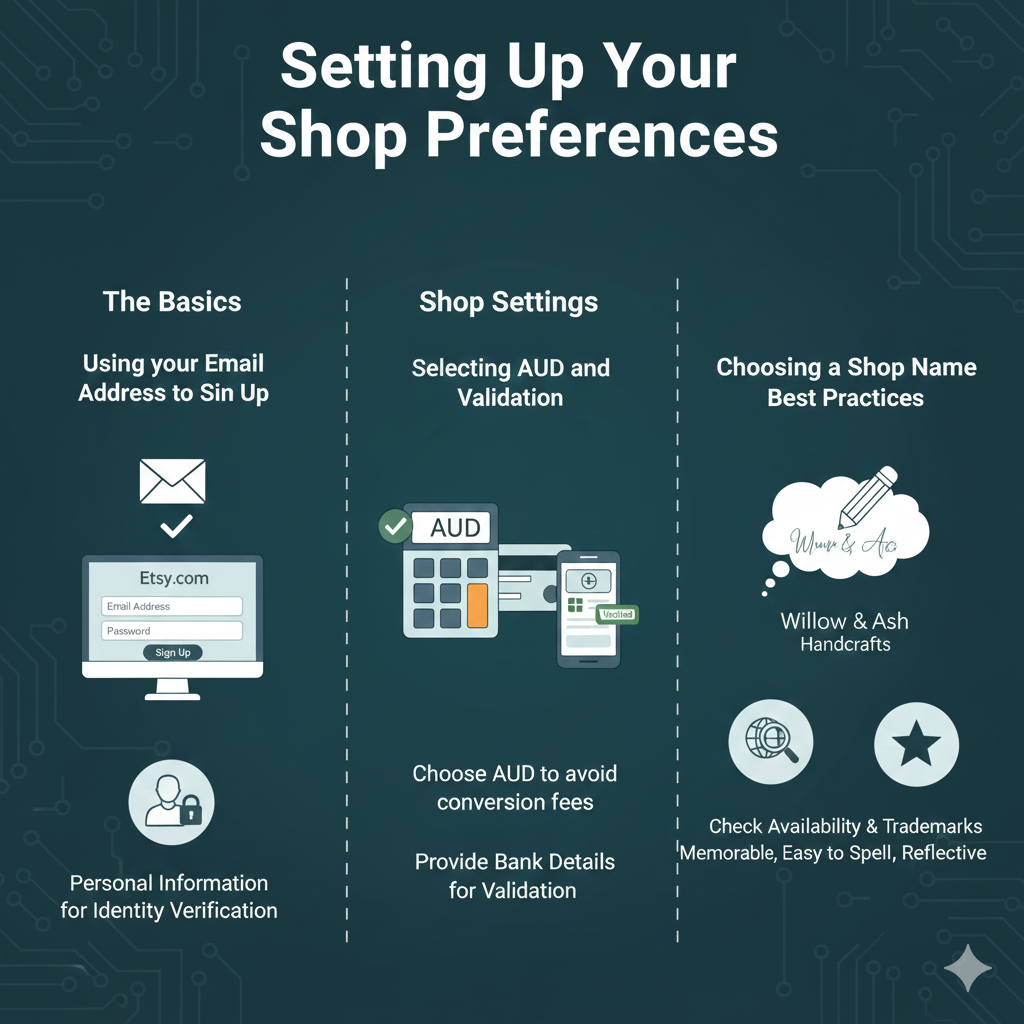
To begin your journey, the first practical step is to register on Etsy.com. You will need a valid Email Address to create your account. During this initial phase, Etsy will ask you for some personal information to verify your identity. This is a standard procedure for all business owners on the platform to ensure security. Once your Email Address is confirmed, you can officially move from being a browser to a creator, ready to manage your online business.
Shop Settings: Selecting AUD and Validation
When configuring your shop preferences, one of the most important technical steps is choosing your shop currency and setting up your payment options. As a seller in Australia, you should select AUD (Australian Dollars) to avoid unnecessary currency conversion fees later on. During this setup, Etsy will require you to provide specific details for validation purposes. This link connects your Etsy shop to a legitimate Australian identity and bank account. It is crucial for the payment system to function correctly and offer various payment options to your customers.
Choosing a Shop Name: Best Practices
Your shop name is the heart of your brand. It should be memorable, easy to spell, and reflective of what you sell—be it handmade items or craft supplies. When selecting a shop name, check that it isn’t already in use or trademarked by another online business. A great shop name helps potential customers find you easily through search engines. Think of it as your digital storefront sign; it needs to be professional yet inviting to attract new customers.
Financial Setup: Etsy Fees & Payments
Etsy Payments: Accepting Multiple Payment Methods
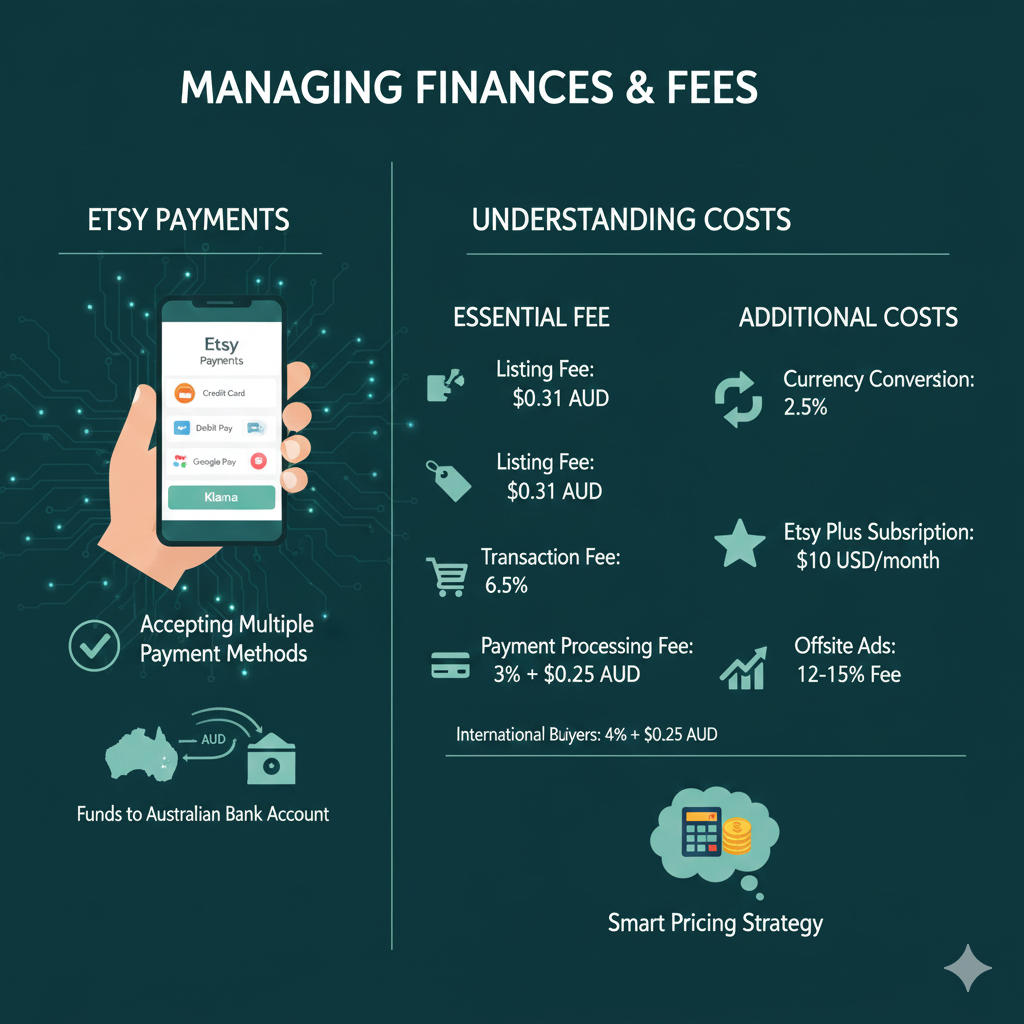
Managing your finances is a smooth process once you enroll in Etsy Payments. This integrated payment system is the primary way you get paid. It allows you to accept many payment methods from global customers. Once enabled, your Etsy shop can process credit cards, debit cards, and digital wallets like Apple Pay and Google Pay. For local buyers, it even supports Klarna installments. Etsy deposits these funds directly into your Australian bank account in AUD. This provides a secure, professional experience for both you and your potential customers.
Understanding Costs: The Essential Fee Breakdown
While starting is easy, it is important to understand the selling fees that apply to every transaction. There are three mandatory costs to keep in mind:
- Listing Fee: Every time you add a product to the marketplace, you are charged a flat listing fee of approximately $0.31 AUD ($0.20 USD). These Etsy listings stay active for four months or until the item sells.
- Transaction Fee: When you make a sale, Etsy takes a 6.5% transaction fee on the total order amount, which includes the product price and the shipping price you set.
- Payment Processing Fee: For using Etsy Payments, a domestic payment processing fee of 3% + $0.25 AUD is deducted from the final sale price. If you sell to international buyers, this processing rate slightly increases to 4% + $0.25 AUD.
Additional Costs: Subscriptions and Marketing
As you scale your online business, you might encounter optional or situational costs. If your shop’s listing currency differs from your bank account currency, a 2.5% currency conversion fee will apply. Advanced tools are available through an Etsy Plus subscription for $10 USD a month. This offers perks like listing credits and Etsy Ads credits. Finally, Etsy uses Offsite Ads to promote your items across the web. You only pay a fee if a shopper clicks an ad and makes a purchase. This fee is either 12% or 15%, depending on your annual revenue. Managing these costs effectively is part of a smart pricing strategy to protect your profit margins.
Creating Product Listings and SEO
Listing Details: Writing Effective Descriptions and Using Search Terms
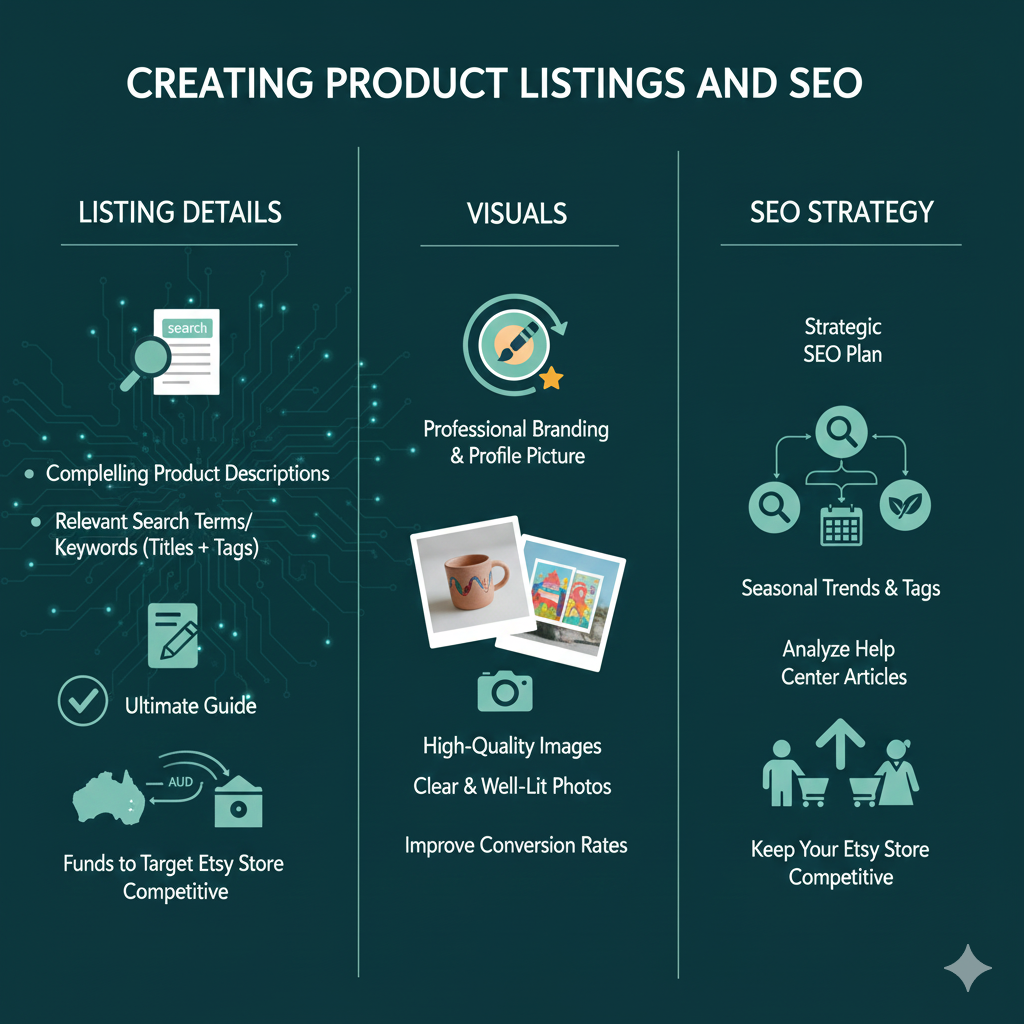
Once you lay the foundation of your Etsy shop, focus on your product listings. This is the next step in our Ultimate Guide. When you enter listing details, write compelling product descriptions. These should speak directly to the needs of your potential customers. Beyond just being descriptive, your product name should incorporate relevant search terms that people actually type into the search bar. Think about how a buyer searches for your handmade goods or digital products. Use specific keywords in your titles and tags to increase visibility. This is one of the most effective best practices to ensure buyers find your items among millions of others.
Visuals: Professional Branding and High-Quality Images
A picture is worth a thousand words, especially in an online business. Your Etsy shop‘s visual appeal starts with a professional profile picture that represents your brand’s personality. When it comes to the items themselves, whether you are selling physical handmade items or digital downloads, high-quality images are non-negotiable. Clear, well-lit photos help build trust and show off the quality of your original designs. Good visuals not only attract clicks but also significantly improve your conversion rates by giving new customers the confidence to complete their purchase.
SEO Strategy: Reaching Your Target Audience
Mastering SEO is a continuous process for any Etsy business. To truly scale, you must move beyond basic setup and implement a strategic SEO plan to reach potential customers. Consistently apply best practices to maintain high visibility. Refresh your tags based on seasonal trends and analyze related articles in the Help Center. Your goal is to bridge the gap between your unique creations and new customers. They are searching for exactly what you offer. Effective SEO ensures that your own Etsy store remains competitive and visible in an ever-growing marketplace.
Logistics: Shipping and Shop Management
Set Up Shipping: Profiles and Pricing
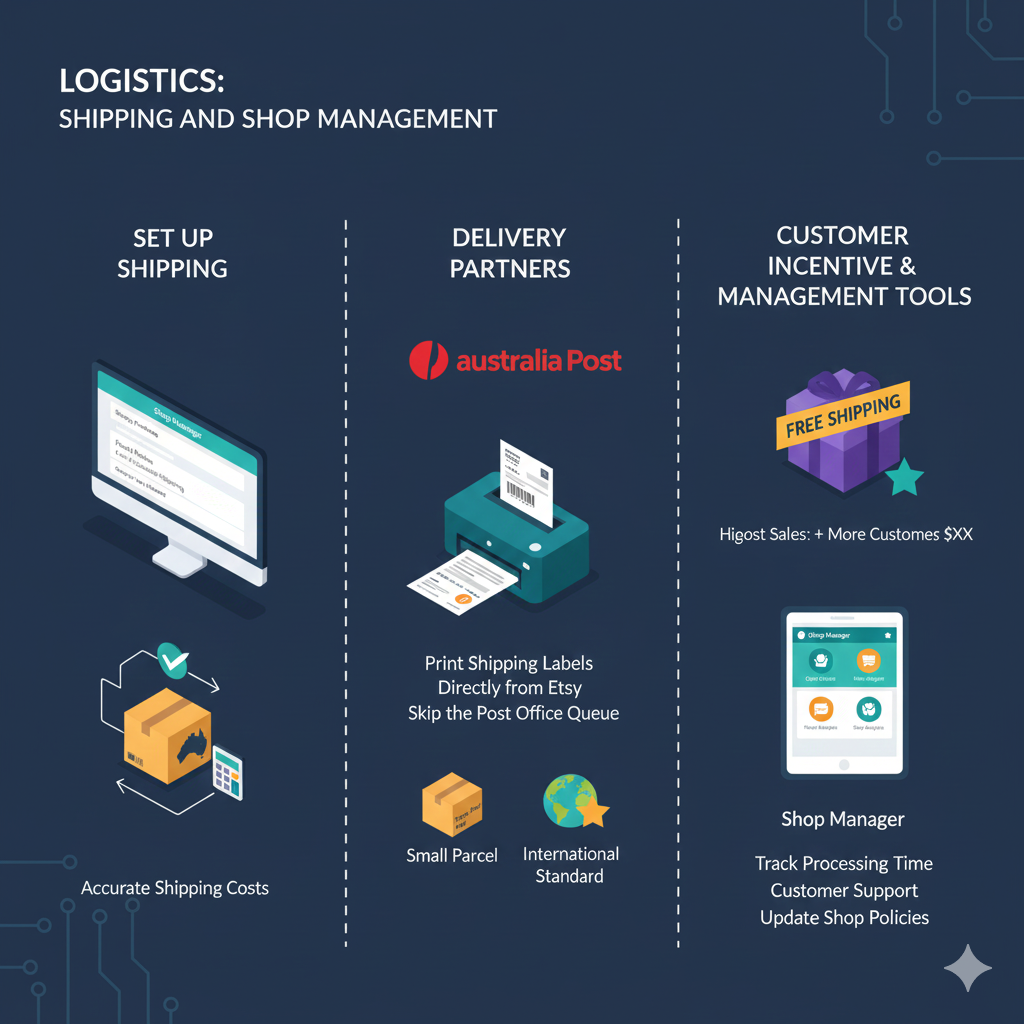
Mastering your logistics is a major part of the Ultimate Guide to running an Etsy shop. To keep things organized, you should Set Up Shipping by Creating a shipping profile within your Shop Manager. This allows you to apply the same settings to multiple Etsy listings at once, saving you significant time. When determining shipping price, you have the choice between fixed rates or using calculated shipping, which automatically estimates shipping costs based on the buyer’s location and the item’s weight. Accurately calculating shipping costs ensures you don’t undercharge and protects your profit margins.
Delivery Partners: Using Australia Post and Printing Labels
For sellers in Australia, the most common delivery partners include Australia Post. You can streamline your workflow by printing shipping labels directly from your Etsy account. By using Australia Post postage labels, the system automatically marks the order as shipped and sends tracking info to the buyer. This means you can often skip the queue at the post office, as you’ve already handled the shipping labels at home. Whether you are sending a small parcel via Parcel Post or using International Standard for global reach, these tools are built into the Shop Management dashboard to make your life easier.
Customer Incentive: The Power of Free Shipping
Managing your Shipping Listings effectively is crucial for conversion, and a great customer incentive to boost sales is setting up free shipping. Statistics show that shoppers are much more likely to complete a purchase when they see the word “free” at checkout. Use a smart pricing tool to maintain your profit margins. You can also manually adjust prices to include shipping fees. Offer various shipping options to attract more buyers. Providing free shipping on orders over a certain amount can help your shop rank higher. This attracts even more potential customers.
Management Tools: Navigating the Shop Manager
Your central hub for everything is the Shop Manager. This Shop Management dashboard provides a clear overview of your open orders, messages from customers, and shop analytics. Navigating the Shop Manager effectively allows you to stay on top of your processing time and respond quickly to customer support inquiries. From here, you can manage your billing details, update your Shop policies, and access Related articles in the Help Center whenever you need guidance.
Policies and Customer Service
Trust & Safety: Building a Secure Foundation
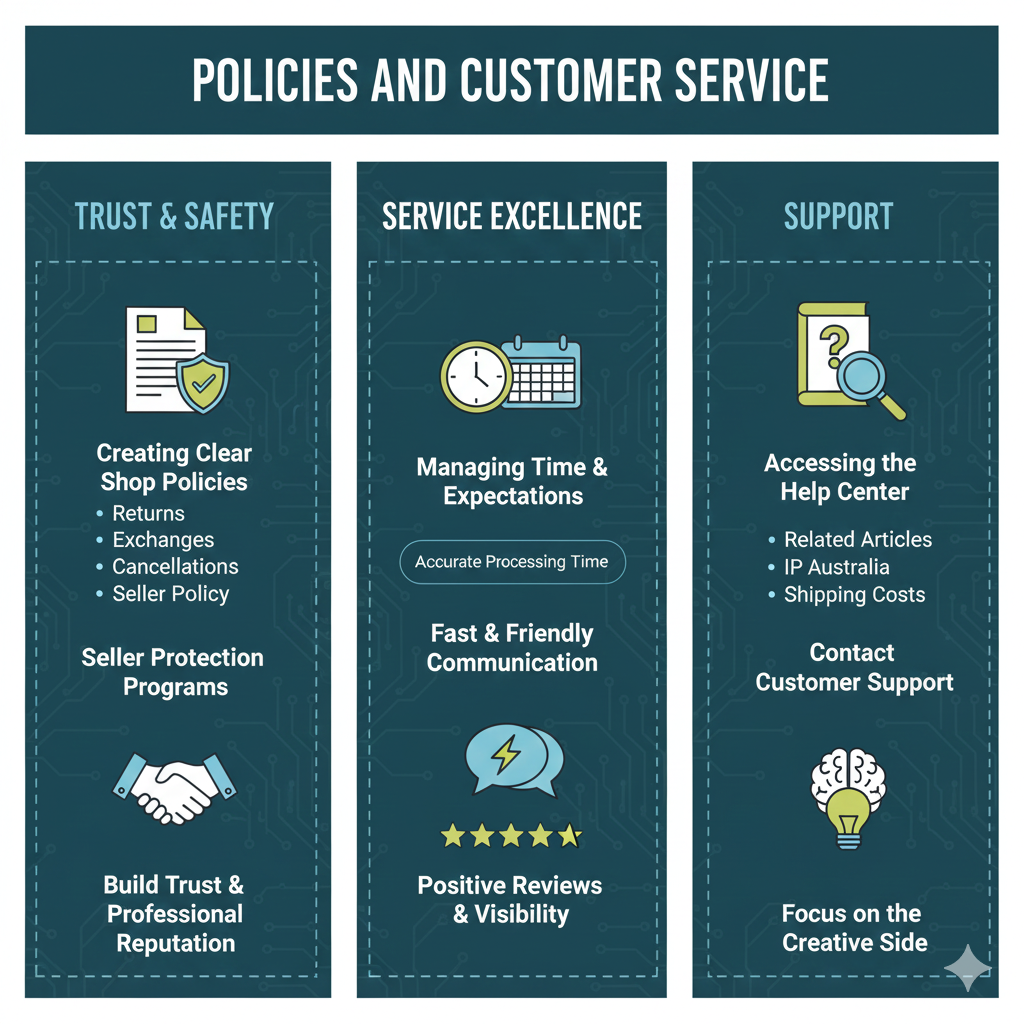
A cornerstone of any successful Etsy shop is the establishment of clear rules. To build a reliable brand, you must focus on Trust & Safety by Creating clear Shop policies. These policies should outline your approach to returns, exchanges, and cancellations, ensuring they align with the broader Seller Policy provided by the platform. By clearly stating your terms, you not only protect yourself but also gain access to seller protection programs that help resolve disputes fairly. This transparency is vital for new sellers looking to establish a professional reputation from the very first day of getting started.
Service Excellence: Managing Time and Expectations
To stand out in the competitive Australian market, providing excellent customer service is essential. This starts with honesty regarding your processing time for orders. If a handmade item takes three days to create, ensure that your listing details accurately reflect this to manage buyer expectations. Fast and friendly communication is a hallmark of best practices in an online business. When you prioritize the experience of your potential customers, you are much more likely to receive positive reviews, which significantly boosts your visibility and attracts even more new customers over time.
Support: Accessing the Help Center and Beyond
Even the most experienced business owners occasionally need a helping hand. Whether you are dealing with a technical glitch or have questions about tax obligations, the Help Center is your first line of defense. It contains a wealth of Related articles that cover everything from IP Australia trademarks to complex shipping costs. If you cannot find the answer there, you can contact customer support directly to address your specific business needs. Utilizing these resources ensures that your Etsy business continues to run smoothly, allowing you to focus on the creative side of your own Etsy store.
Marketing and Growth
Powerful Tools: Scaling Your Small Business
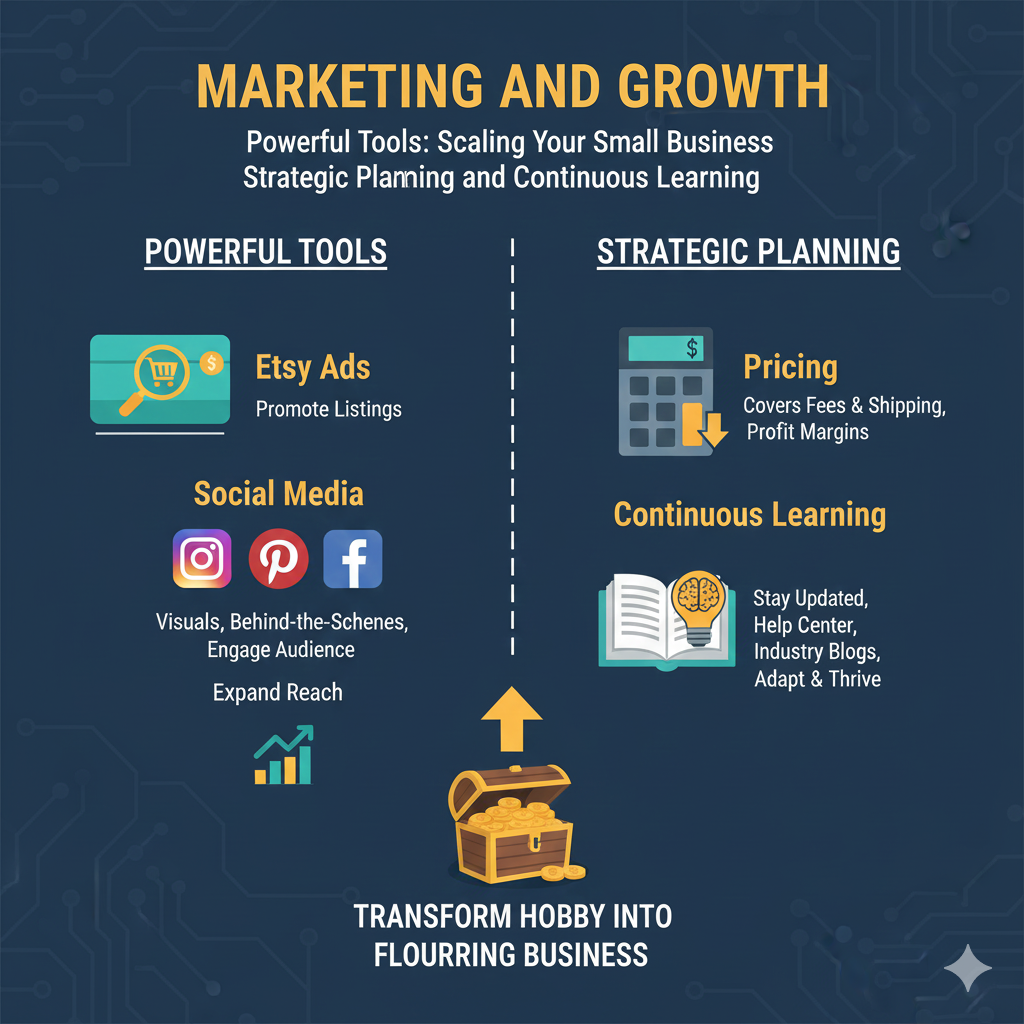
Once your Etsy shop is fully functional, the next phase involves actively promoting your creations. To scale your small business, you need to leverage Powerful Tools for marketing. Etsy Ads are an excellent starting point, allowing you to pay to promote your Etsy listings directly within the platform’s search results and other high-traffic areas. Beyond Etsy, utilizing Social media platforms like Instagram, Pinterest, and Facebook is crucial. Sharing visually appealing images of your handmade items, behind-the-scenes content, and engaging with your audience can significantly expand your reach to potential customers far beyond Etsy’s ecosystem.
Strategic Planning: Pricing and Continuous Learning
Effective Strategic Planning is key to sustainable growth. Your pricing strategy needs to be carefully considered, ensuring it covers your shipping costs, selling fees, and allows for healthy profit margins. Don’t just pick a number; research similar handmade items and vintage items to position your products competitively. Moreover, the world of e-commerce is constantly evolving, so staying updated with Related articles from the Help Center and industry blogs is vital. Continuous learning about new features, changes in Australian Consumer Law, or effective search terms will ensure your online business remains agile and responsive to market demands. This proactive approach helps you adapt and thrive, transforming a hobby into a flourishing Etsy business.
Conclusion: Next Steps for Business Owners
Key Takeaways for Success
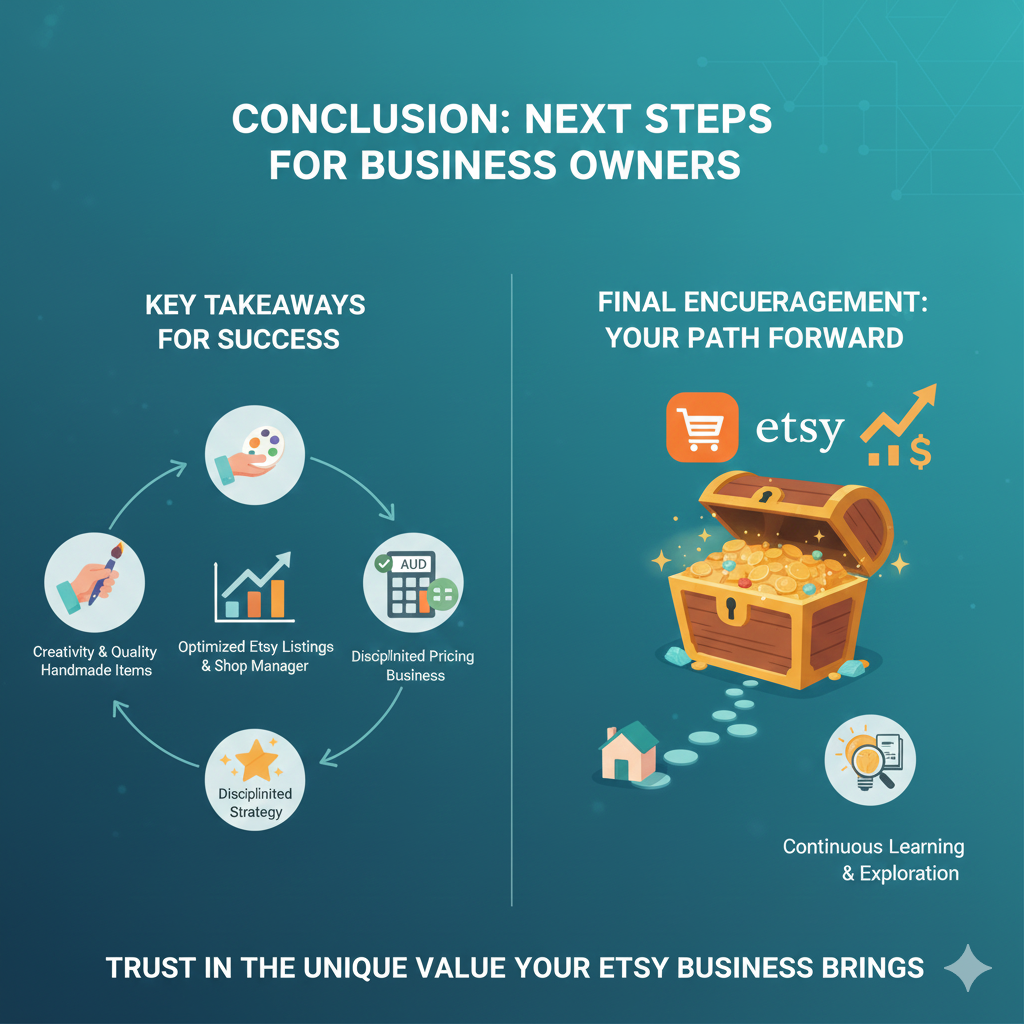
As you reach the end of this journey, remember that becoming one of the successful business owners on the platform requires both creativity and consistency. The transition from having an idea to managing your own Etsy store is a significant achievement. Your primary focus should now be on maintaining the quality of your handmade items, staying active within your Shop Manager, and ensuring your Etsy listings are always optimized for search. Success doesn’t happen overnight, but by staying disciplined with your pricing strategy and keeping your potential customers at the heart of everything you do, you are well on your way to building a sustainable online business.
Final Encouragement: Your Path Forward
Following this Ultimate Guide has provided you with the technical and strategic foundation needed to thrive. Whether you are selling vintage items, craft supplies, or original designs, the tools are now in your hands. Don’t be afraid to experiment with Etsy Ads or refine your shipping price as you learn more about your market. For more in-depth strategies on growing your brand, you can explore professional resources on digital marketing to further scale your reach. Stay persistent, keep learning through Related articles, and trust in the unique value your Etsy business brings to the global marketplace.