



How Many Calories are in an Almond Croissant?
Introduction
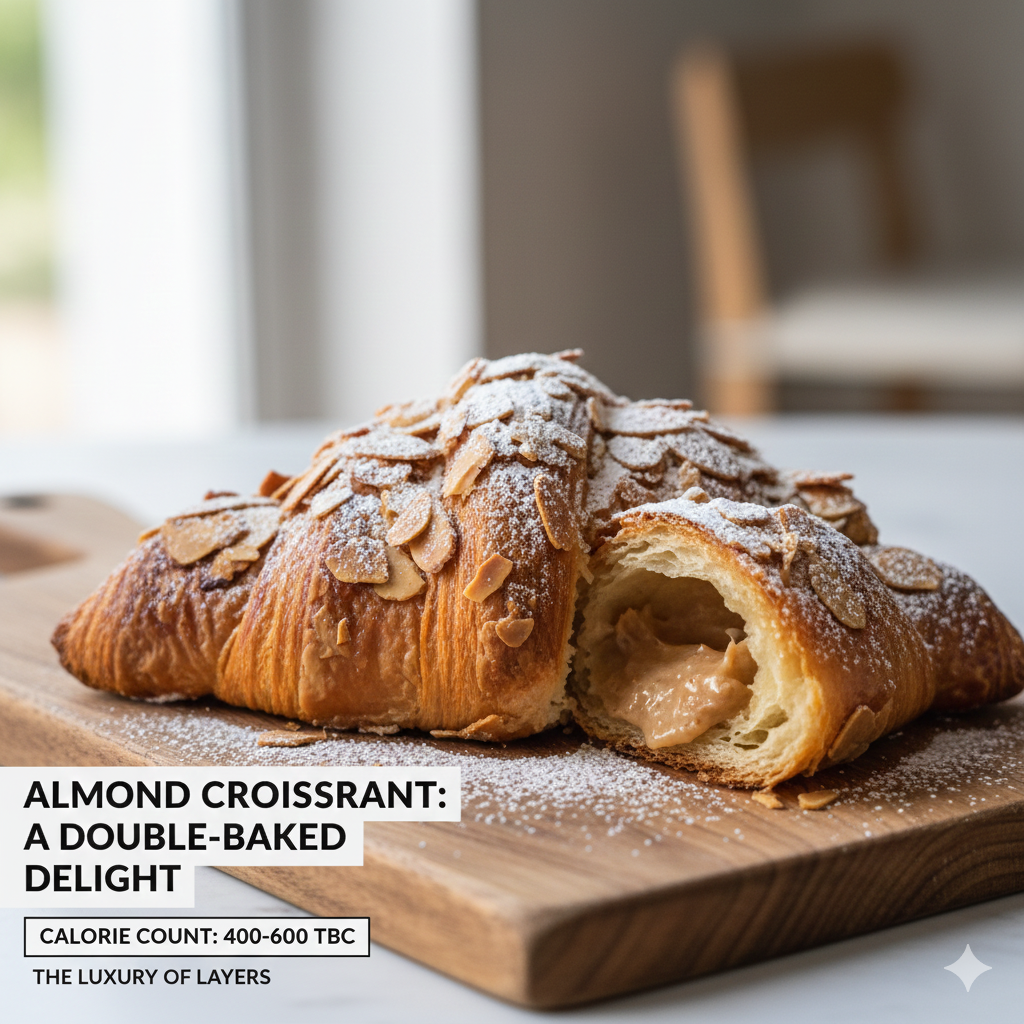
When it comes to the ultimate morning treat, few pastries can rival the sheer decadence of the almond croissant. Known in traditional French patisseries as a “double-baked” luxury, this pastry is a masterpiece of texture and flavor. But for those mindful of their daily diet, a common question arises: how many calories in almond croissant are we actually consuming?
Table Of Content
- Introduction
- The “Double-Baked” Luxury: How It’s Made
- Balancing the Indulgence: Calories and Nutritional Context
- Nutritional Information
- Nutrition Facts
- Total Fat and Saturated Fat
- Trans Fat
- Total Carbohydrate & Dietary Fiber
- Total Sugars and Protein
- Ingredients: What’s Inside the Almond Filling?
- Comparison: Almond vs. Butter Croissant vs. Chocolate Croissant
- Butter Croissant
- The Comparison: Almond vs. Chocolate
- Health & Weight Loss: Can You Indulge?
- Calorie Burn Time: How to Offset the Indulgence
- FAQ (Frequently Asked Questions)
- How many net carbs are in an almond croissant?
- Is there Vitamin C or Vitamin D in these pastries?
- Are there any hidden ingredients in store-bought versions?
- How should I store my croissant to keep the almond toppings crunchy?
- Conclusion
The “Double-Baked” Luxury: How It’s Made
The journey of an almond croissant begins with a classic Butter Croissant. While a standard pastry is already rich, a second bake transforms the almond version into a decadent masterpiece. Bakers typically slice the pastry open and fill the center with a lush almond cream or almond paste, eventually topping the crust with sliced almonds and a dusting of powdered sugar. Because of this additional almond filling, the calorie count is significantly higher than its plain counterpart.
Balancing the Indulgence: Calories and Nutritional Context
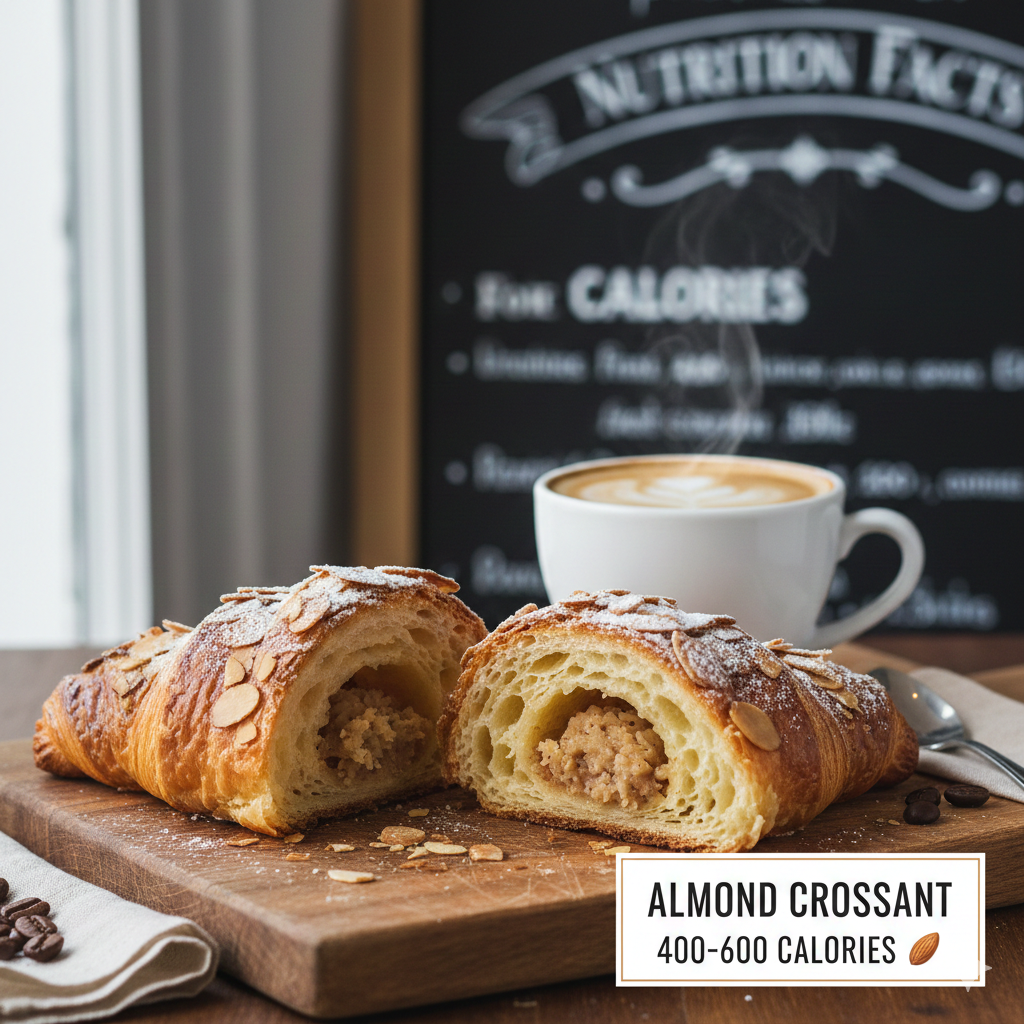
On average, a bakery-standard almond croissant contains between 400 and 600 calories. This density comes from a combination of high-quality Wheat Flour, premium butter, and the protein-rich almond toppings. When considering your calorie needs, it is helpful to look at the Nutritional Information to understand how this indulgence fits into your calorie diet. While it is a high-energy food, the inclusion of Tree Nuts provides a bit more substance than a purely sugar-based dessert, like a Chocolate Croissant.
Understanding the Nutrition information of your favorite treats helps in maintaining a balanced lifestyle. Whether you are focused on weight loss or simply following general nutrition advice, knowing that this pastry is a rich serving of food allows you to enjoy it mindfully. In the following sections, we will break down the full Nutrition Facts, including the Total Fat, Saturated Fat, and Total Carbohydrate content, so you can savor every flaky bite with confidence.
Nutritional Information
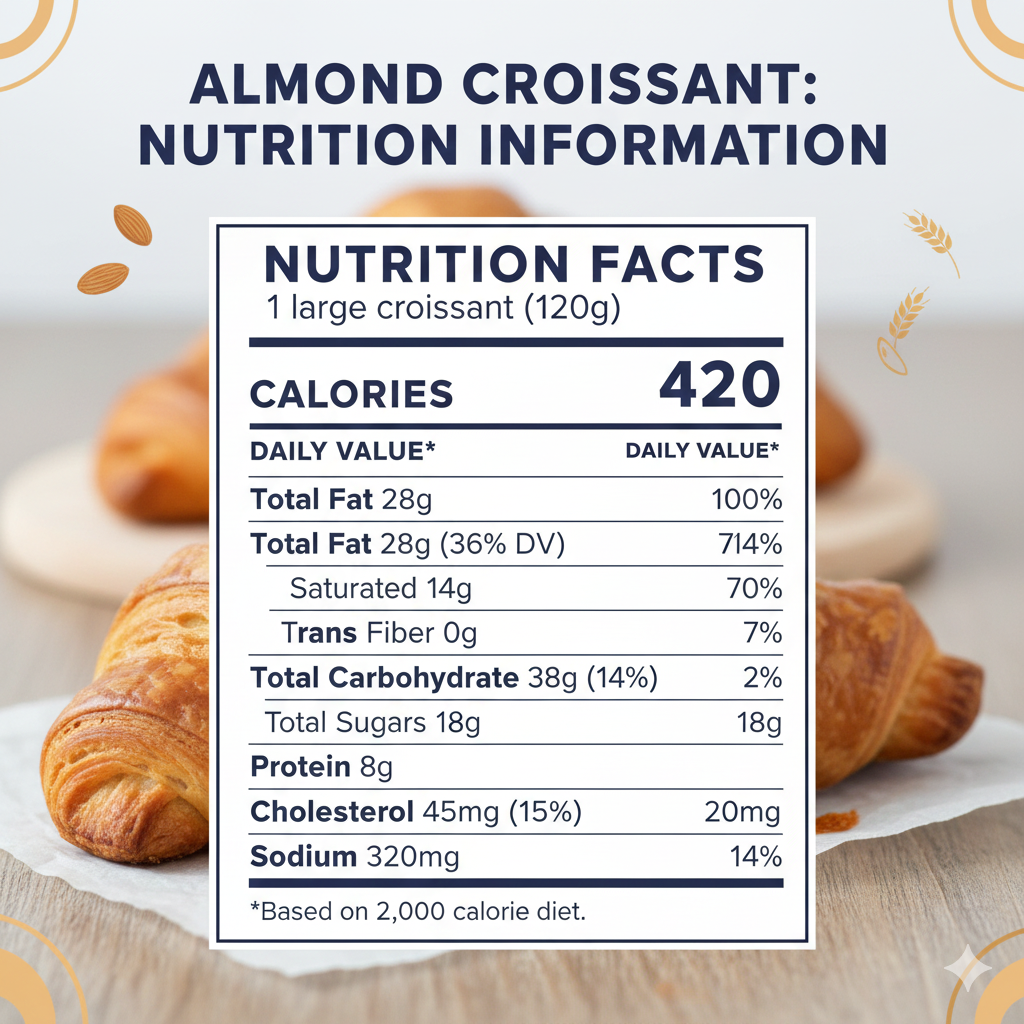
To truly understand the impact of this pastry on your daily intake, looking at a detailed breakdown of its components is essential. Below is the Nutrition information for a typical large (100g) artisanal almond croissant. These figures represent an average serving of food and may vary based on the specific bakery’s recipe.
Nutrition Facts
| Nutrient | Amount per Serving |
| Total Fat | 45g |
| Total Carbohydrate | 40g |
| Dietary Fiber | 3g |
| Total Sugars | 11g |
| Protein | 16g |
| Net Carbs | 37g |
Total Fat and Saturated Fat
The richness of an almond croissant primarily comes from its high fat content. A single serving can contain around 45g of Total Fat. A significant portion of this is Saturated Fat, which typically accounts for 13g to 15g per pastry. This comes largely from the high-quality butter used during the lamination process and the almond paste within the filling.
Trans Fat
While many modern bakeries strive to keep their pastries clean, it is important to note the Trans Fat content. In traditional French baking using pure butter, trans fats are minimal to non-existent; however, some commercial versions may contain trace amounts depending on the oils used in the Wheat Flour dough preparation.
Total Carbohydrate & Dietary Fiber
With approximately 40g of Total Carbohydrate, this pastry is a significant source of energy. However, unlike a plain roll, the inclusion of ground almonds adds about 3g of Dietary Fiber. If you are monitoring your intake, the Net Carbs (Total Carbs minus Fiber) come out to roughly 37g, making it a heavy but satisfying treat.
Total Sugars and Protein
The sweetness of the pastry comes from the Total Sugars (approx. 11g) found in the almond cream and the powdered sugar topping. What sets this pastry apart is its Protein content. Because of the egg whites and almond meal used in the frangipane, a single croissant can provide up to 16g of protein, which is much higher than most sweet breads.
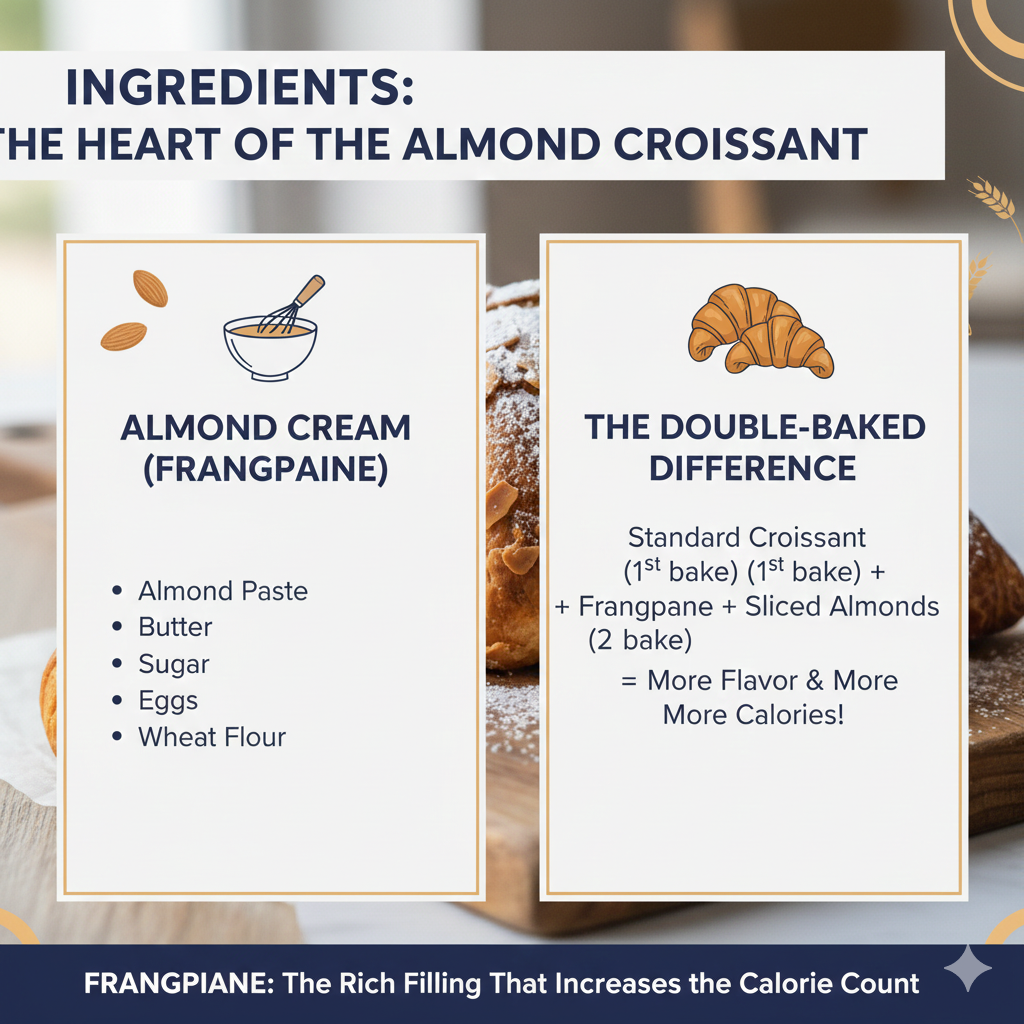
This section takes a closer look at the artisanal craftsmanship that goes into every bite, focusing on the rich components that define the interior of this pastry.
Ingredients: What’s Inside the Almond Filling?
What truly transforms a simple pastry into this “double-baked” masterpiece is the filling, known as frangipane. This rich, velvety cream is the primary reason why the calorie count is higher here than in a standard butter roll. Traditionally, the process begins with high-quality Wheat Flour, which provides the structure for the dough. To ensure the dough remains strong and rises perfectly, bakers often use flour treated with a small amount of Ascorbic Acid as a natural dough conditioner.
The magic, however, happens in the center. The filling is a dense mixture of almond meal, butter, and a hint of sweetness. While we have already discussed the presence of almond-based ingredients in the Nutrition Facts, it is important to understand the role of egg whites in this mixture. They act as a binding agent, creating a light yet stable texture that holds the filling together during the second bake. This combination is what boosts the Protein levels, making the pastry feel much more substantial than other sweets.
Compared to a standard pastry, this almond-rich center significantly increases the energy density. To finish the look, the pastry is topped with powdered sugar, which caramelizes slightly in the oven to create a sweet crust. Unlike a simple glazed donut, the complexity of the Wheat Flour layers paired with the nutty interior makes it a unique indulgence.
Every gram of Wheat Flour and every bit of Protein contributes to that signature satisfaction that fans of this French classic know so well. For those interested in the artisanal process behind these layers, you can explore how traditional bakeries perfect the lamination technique for French pastries to achieve that iconic flakiness.
Comparison: Almond vs. Butter Croissant vs. Chocolate Croissant
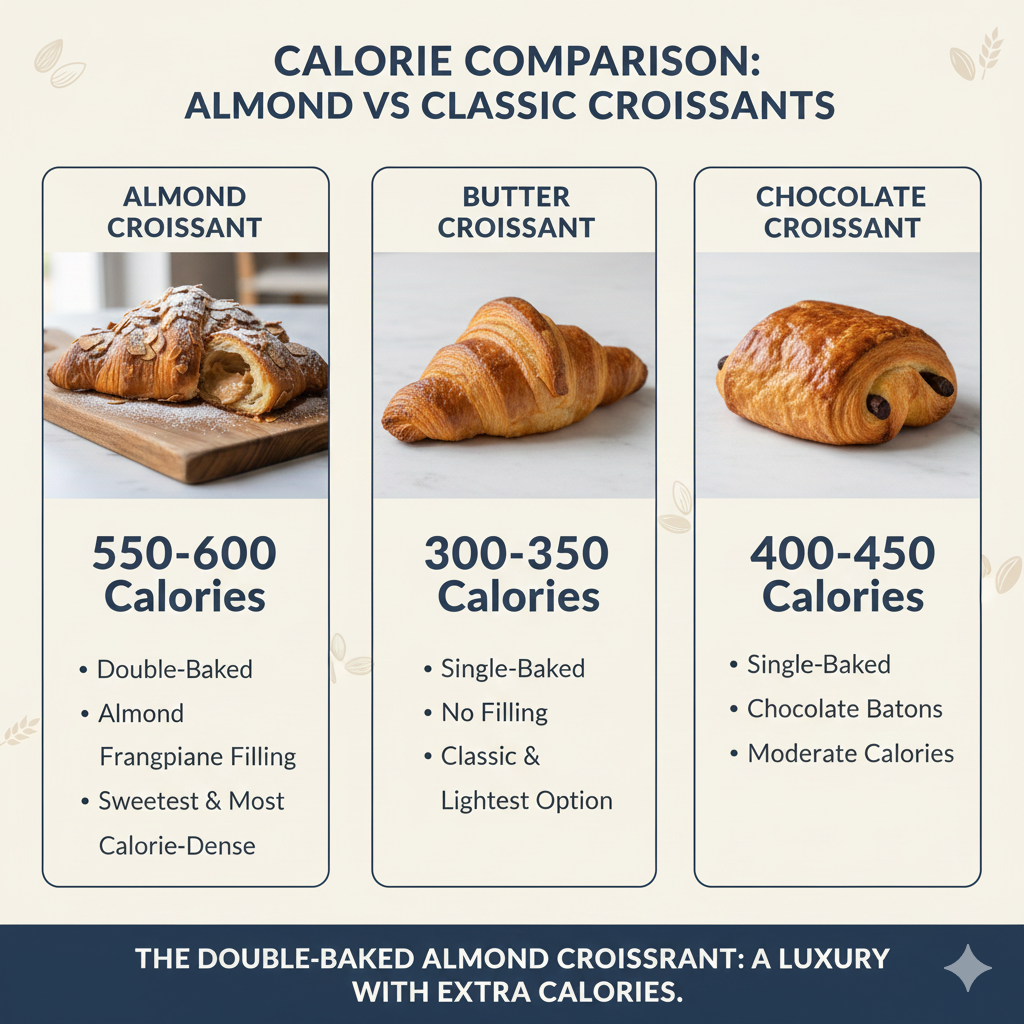
Choosing between different types of pastries at the bakery can be a delightful dilemma, but if you are tracking your intake, it helps to see how they stack up. When we analyze how many calories in almond croissant exist compared to others, the results are quite revealing.
Butter Croissant
The foundation of any great pastry is the classic Butter Croissant. Made with layers of Wheat Flour and laminated butter, this plain croissant is the lightest option on the menu. A standard Serving Size usually contains about 250 to 300 calories. Because it lacks a heavy filling, it remains lower in both fat and sugar. However, even in this simpler form, the dough often contains Ascorbic Acid to ensure the perfect flaky rise.
The Comparison: Almond vs. Chocolate
While a chocolate-filled variety (often called pain au chocolat) adds a few decadent bars of chocolate, it usually caps out at around 350 to 450 calories. So, why is the almond version the most calorie-dense of the three?
The reason lies in the “double-baked” process. Unlike a plain croissant, the almond version is essentially a full pastry that has been enhanced with even more energy-dense ingredients. By adding a thick layer of almond flour, sugar, and butter inside and outside, the density skyrockets. Furthermore, the Protein content increases due to the nuts, but so does the overall fat and sugar count. This combination of a pre-existing buttery base plus the rich frangipane topping is what makes it a heavy-hitter in the pastry world.
Health & Weight Loss: Can You Indulge?
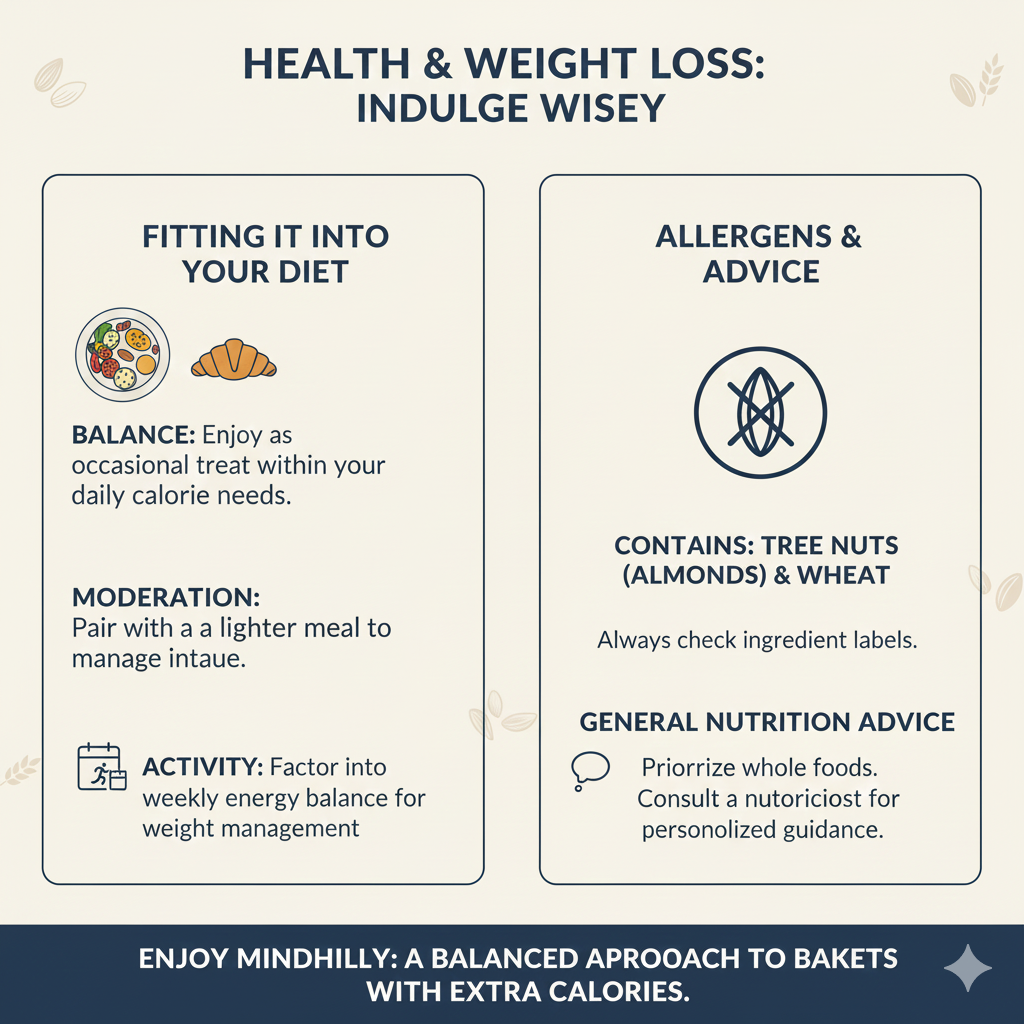
A common misconception is that you must entirely avoid pastries if you are focused on weight loss. However, successful long-term health is usually about balance rather than total restriction. While an almond croissant is calorie-dense, it can certainly fit into a healthy lifestyle if you account for your specific calorie needs. Most general nutrition advice suggests that as long as you are hitting your nutrient goals throughout the rest of the day, an occasional indulgence won’t derail your progress.
To fit a 600-calorie pastry into your daily diet, consider it a “planned pleasure.” For example, if you know you’ll be visiting your favorite bakery, you might choose a lighter, Plant-based meal for lunch or dinner to stay within your limits. Many people find success by using a meal plan to ensure they aren’t over-consuming throughout the week. If you are a 30-year-old female, for instance, your energy requirements will differ significantly from a professional athlete’s, so it is all about context.
Beyond calories, it is vital to be aware of allergens. This pastry heavily features Tree Nuts (in the form of almond flour) and Wheat, making it unsuitable for those with specific sensitivities. For those who can enjoy it, the experience is often worth the extra effort. If you find yourself frequently tempted, using a Calorie Counter app or a similar exercise log can help you visualize how that delicious treat fits into your overall movement for the day.
Calorie Burn Time: How to Offset the Indulgence
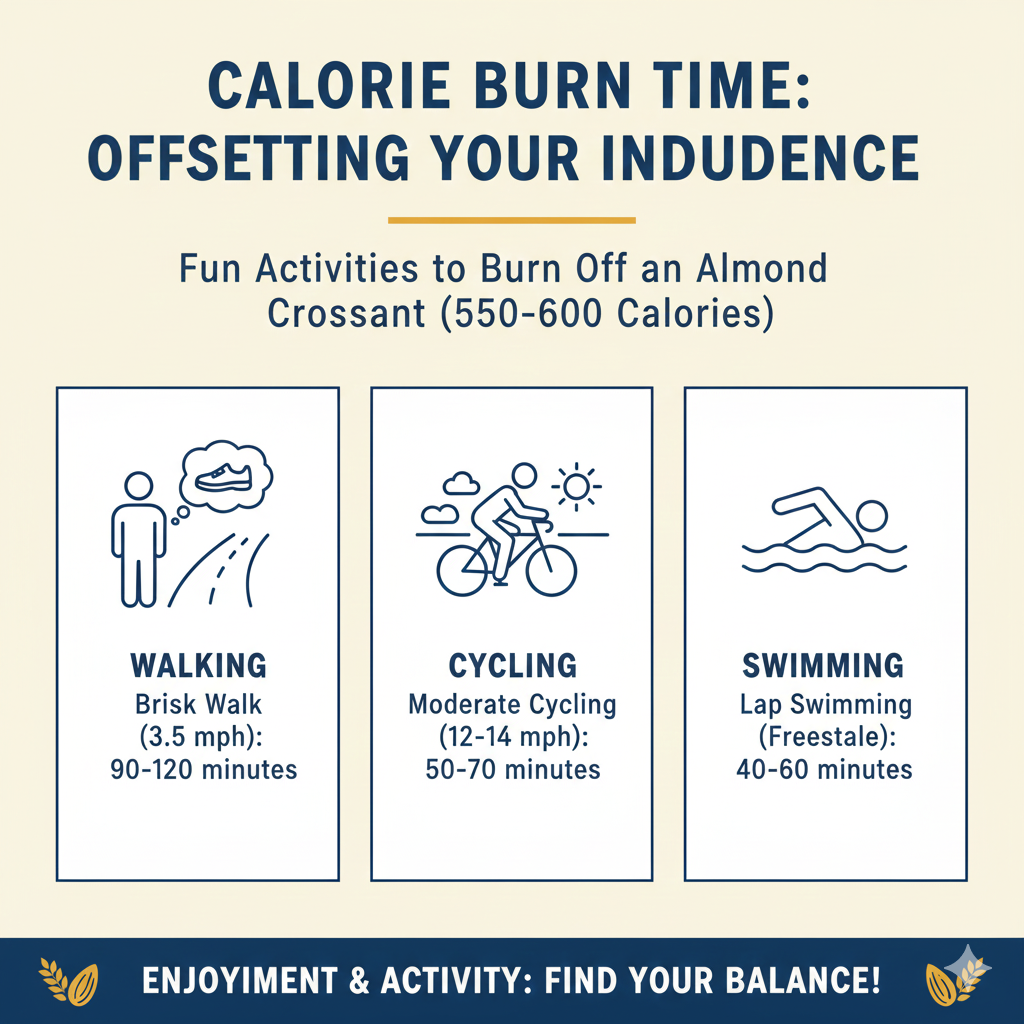
After savoring a delicious almond croissant, you might wonder about the Calorie Burn Time required to balance out those high serving Calories. Depending on the size and the amount of almond flour used in the recipe, a single pastry can contribute a significant percentage to your Daily Value Total Fat. To offset an average 600-calorie treat, an individual may need to walk at a brisk pace for approximately two hours or enjoy a vigorous one-hour swim.
If you like to keep a detailed exercise log, tracking these moments of indulgence is easy with modern tools. You can visit the App Store to Download App options like the Download MyNetDiary Free App. These MyNetDiary Diet Apps Seemlessly help you calculate how a Butter Croissant, a tray of Cinnamon Rolls, or even a plain croissant fits into your active lifestyle.
While we often focus on the energy density, many high-quality pastries made from enriched Wheat are not entirely devoid of nutrients. The Wheat Flour used in traditional baking often contains Reduced Iron, Thiamine Mononitrate, and Folic Acid. Additionally, the almonds provide a source of Vitamin E, while some fortified ingredients might contribute small amounts of Vitamin C and Vitamin D. Bakers may also use Malted Barley Flour, Corn Starch, and a hint of Natural Flavor to ensure the pastry maintains its perfect texture when served at room temperature.
Whether you are picking up a quick treat from Trader Joe or a local bakery, it is helpful to use Professional Connect features within health apps to access food databases for the most accurate tracking. Even with these minor health benefits, the Calorie Burn Time reminds us that this “double-baked” luxury is best enjoyed as a special reward.
FAQ (Frequently Asked Questions)
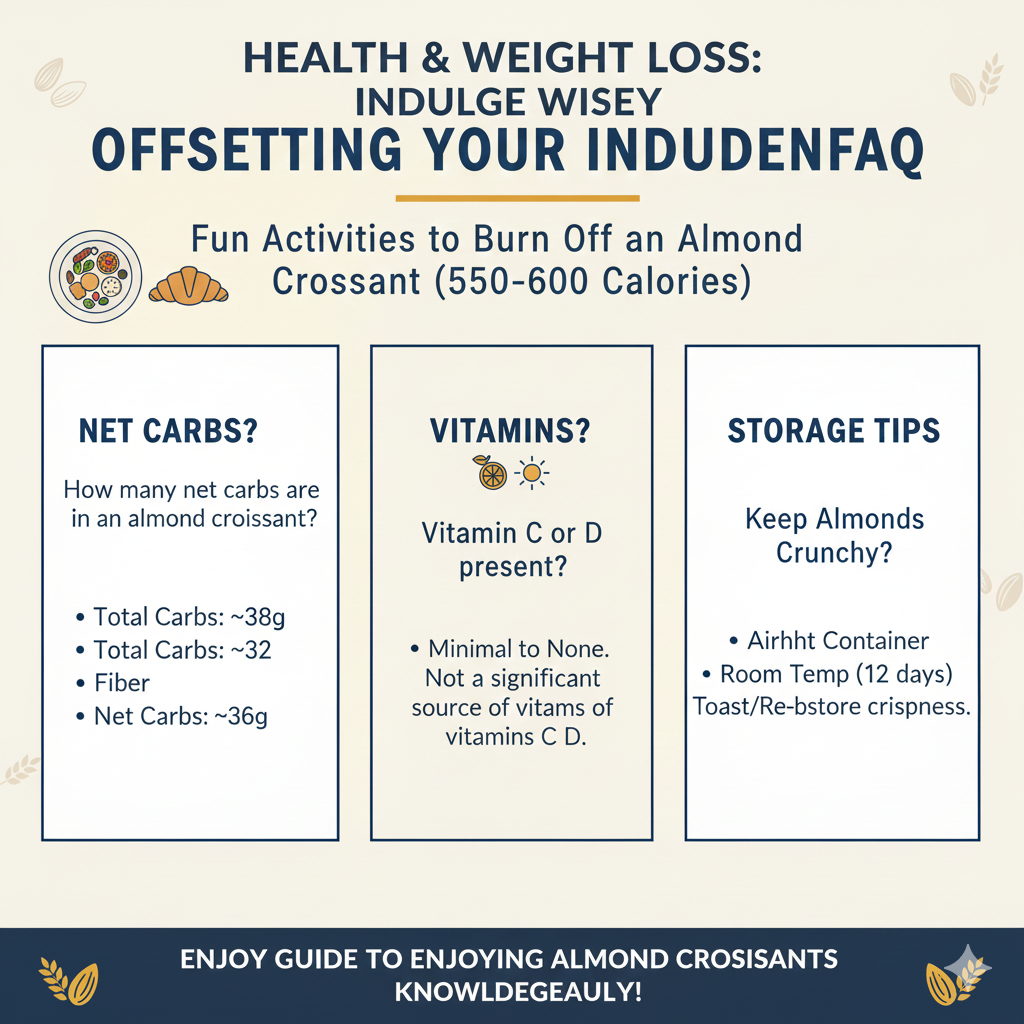
How many net carbs are in an almond croissant?
On average, an almond croissant contains about 37g of net carbs. While the Wheat Flour provides the bulk of the carbohydrates, the fiber from the almonds helps slightly lower the net count. If you are comparing this to other bakery items like Cinnamon Rolls, you’ll find that the almond version is often higher in fat but provides more sustained energy due to the nut content.
Is there Vitamin C or Vitamin D in these pastries?
Generally, traditional pastries are not significant sources of these vitamins. However, because the dough is made from enriched Wheat, it often includes nutrients like Reduced Iron, Thiamine Mononitrate, and Folic Acid. While you won’t find much Vitamin C or Vitamin D, the almonds do offer a boost of Vitamin E, which provides some antioxidant health benefits.
Are there any hidden ingredients in store-bought versions?
Commercial versions, such as those found at Trader Joe, might include a few extra ingredients to maintain freshness. You may see Corn Starch used to thicken the filling or Ascorbic Acid to keep the dough light. Occasionally, a touch of Natural Flavor is added to enhance the nutty aroma.
How should I store my croissant to keep the almond toppings crunchy?
To keep the pastry at its best, store it at room temperature in a paper bag. Avoid plastic, which traps moisture and makes the crust soggy. If you are using a health app to track your treats, remember that most websites require the use of cookies to save your preferences. Features like Professional Connect can further help you access food databases to get the most accurate nutritional data for your specific brand.
Conclusion
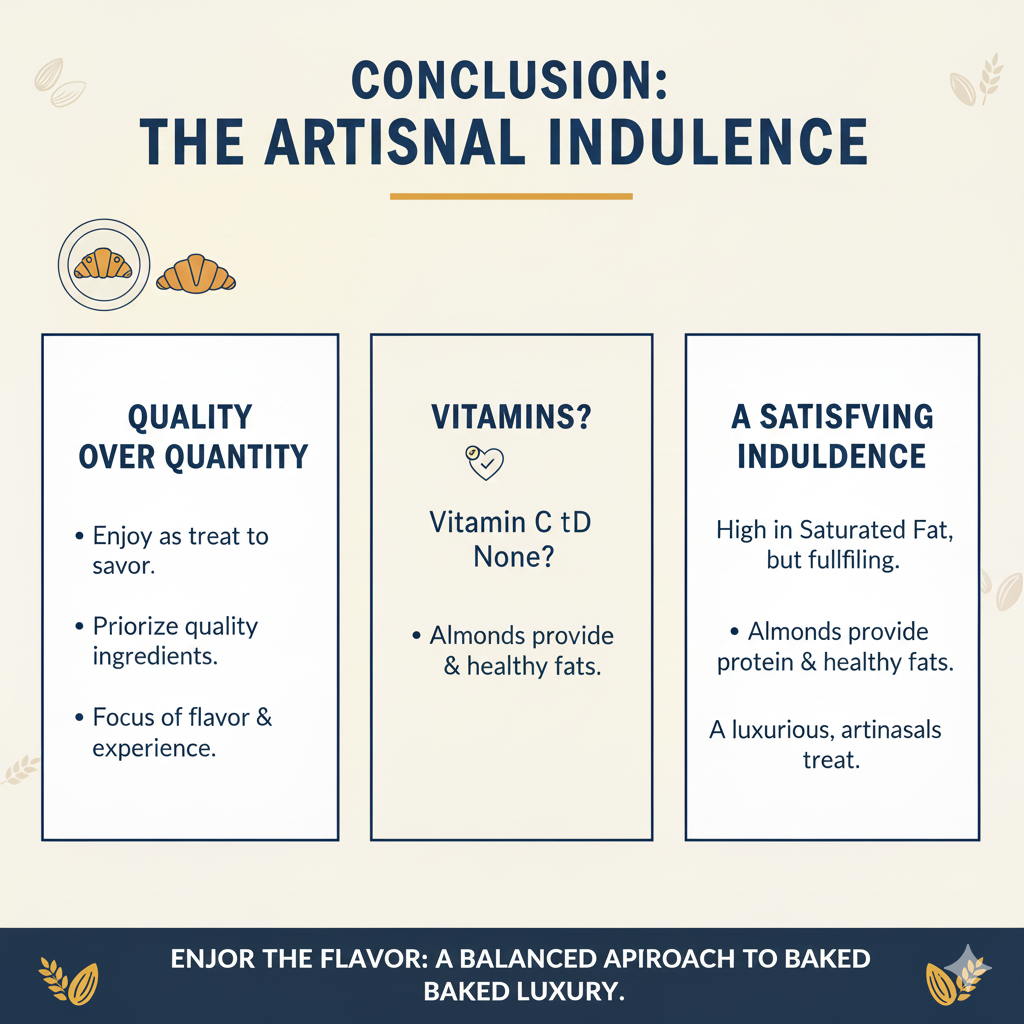
When evaluating how many calories in almond croissant are reasonable for your lifestyle, it is helpful to shift the focus from strict restriction to informed enjoyment. An almond croissant is undeniably a calorie-dense choice, largely due to being a “double-baked” delicacy packed with almond paste and butter. While it is high in Saturated Fat, it is also a uniquely satisfying artisanal treat that offers more Protein and Vitamin E than many other sugar-heavy snacks.
Ultimately, the key to including such a rich serving of food in a healthy daily diet is prioritizing quality over quantity. Choosing a single, high-quality pastry made with real Wheat Flour and authentic almond cream provides a much more rewarding experience than consuming processed alternatives. By keeping an eye on your calorie needs and perhaps planning a bit of extra Calorie Burn Time, you can savor every buttery, flaky layer without guilt. Treat it as a celebration of craftsmanship—a moment of pure indulgence that fits perfectly into a balanced, joyful life.