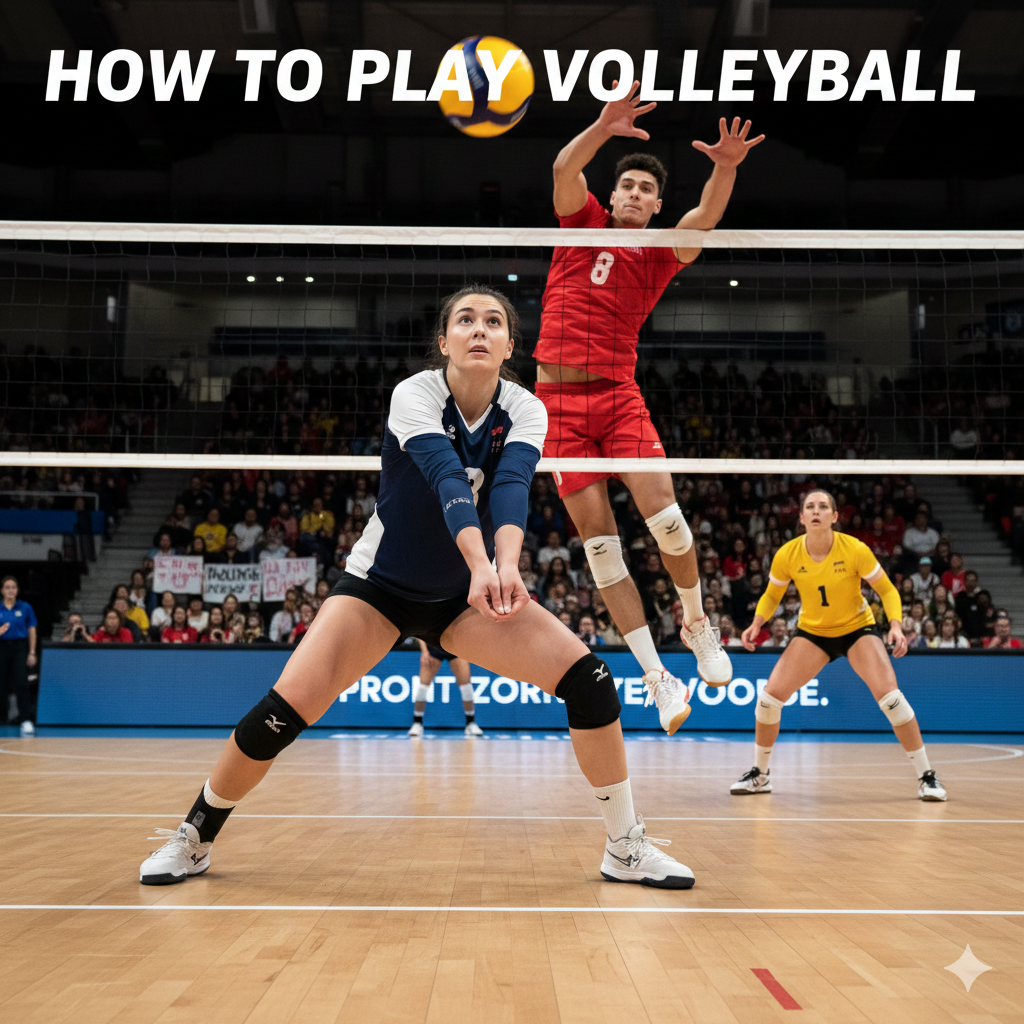



How to Play Volleyball: Rules, Skills, and Positions
To begin our comprehensive guide on how to play volleyball, we must first look back at where this dynamic sport began. Understanding its roots helps players appreciate the coordination and discipline required on the court today.
Table Of Content
- Introduction: The Evolution of the Game
- The Origins: From Mintonette to the Modern Era
- A Global Phenomenon: Expanding Across Borders
- The Core Appeal: A Sport for Everyone
- The Playing Area and Equipment
- Court Dimensions: Navigating the Space
- The Net: The Centerpiece of the Game
- Essential Gear: Safety and Performance
- The Attack Line: Front Zone vs. Back Court
- Basic Rules of Volleyball & Scoring Format
- Team Composition: The First Team on the Court
- Rally Scoring: The Fight for the Next Point
- Match Structure: Sets and the Fifth Set
- Violations to Avoid: Staying Within the Rules
- Mastering Volleyball Skills (The Three Contacts)
- The First Contact: Serve Receive and the Forearm Pass
- The Second Touch: Setting the Stage
- The Attack: The Vertical Jump and Strike
- Defensive Skills: Blocking and Digging
- Player Positions and Specializations
- Front Row Players: The Offensive Powerhouse
- The Back Row: Defensive Specialists
- Serving Roles: Starting the Attack
- Rotation: The Flow of the Game
- Advanced Gameplay and Strategies
- Precision Ball Control: Offensive and Defensive Tactics
- Team Coordination and Professional Standards
- Specific Skills: Refining Your Techniques
- How to Improve: Drills and Club Play
- Practice Routines: Sharpening Specific Skills
- Finding Opportunities: From Casual to Club Play
- Diverse Formats: Beach and Snow Volleyball
- How to Create the Perfect Volleyball Court
- Conclusion
Introduction: The Evolution of the Game

The Origins: From Mintonette to the Modern Era
Exploring the History of Volleyball takes us back to the late 19th century in the United States. It was here that William G. Morgan, an instructor at a YMCA, sought to create a game that was less strenuous than basketball but still physically engaging. He originally named the sport “Mintonette,” designing it as a tool for physical education to improve the health and teamwork of his students. Over time, the name was changed to reflect the nature of the play—the act of volleying the ball back and forth over a net.
A Global Phenomenon: Expanding Across Borders
What started as a local recreational activity soon transformed into a worldwide sensation. The game of volleyball quickly expanded across North America and beyond, eventually gaining recognition from major international governing bodies. This growth led to its inclusion in prestigious global competitions such as the Olympic Games, the World Cup, and the World Championships. Today, millions of people play volleyball in various formats, making it a cornerstone of International Volleyball culture.
The Core Appeal: A Sport for Everyone
The primary reason this activity has endured is its universal accessibility. It is a premier team sport that caters to every level of play, from backyard gatherings to the high-stakes environment of professional leagues. Whether you are a beginner picking up a ball for the first time or an elite athlete training for the next Asian Games, the joy of the sport remains the same. It offers a great way to stay active while fostering deep social connections among volleyball players.
To truly understand the mechanics of the sport, one must first become familiar with the environment where the action happens. The layout of the floor and the quality of your gear play a massive role in how you perform during a volleyball game.
The Playing Area and Equipment
Court Dimensions: Navigating the Space
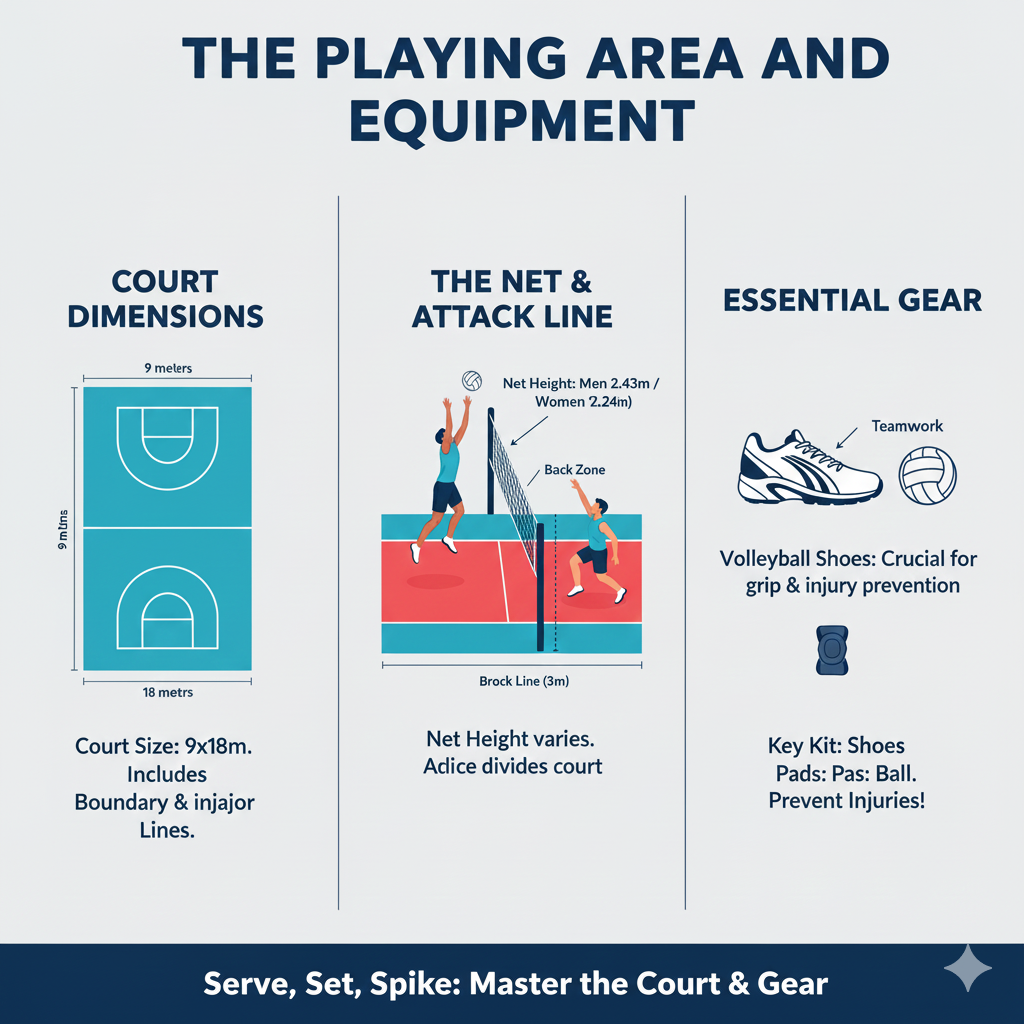
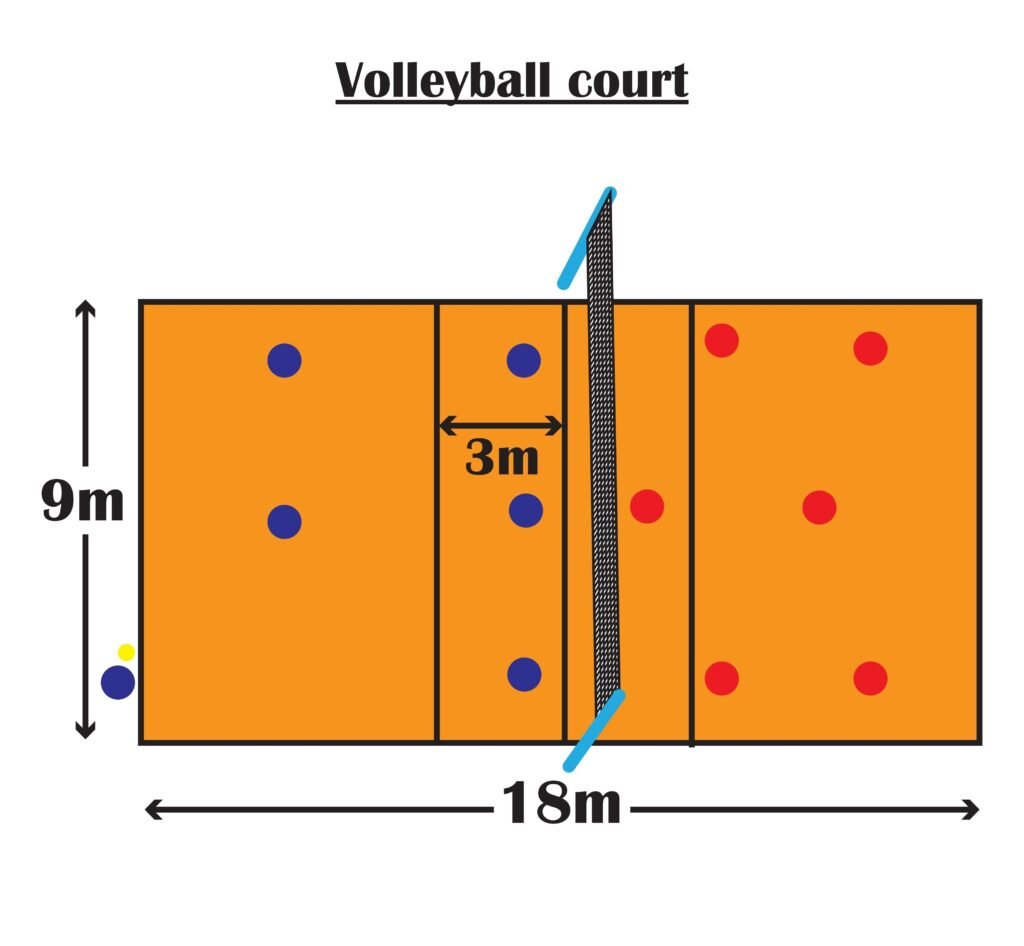
The standard court size is a rectangle measuring 18 meters by 9 meters. This area is enclosed by the boundary line, which determines whether a ball is “in” or “out.” Specifically, the lines at the far ends of the court are known as the end line. When a player prepares to serve, they must stand behind this line in the service area. Understanding these markings is vital for every volleyball team to ensure they stay within the legal playing area during intense rallies.
The Net: The Centerpiece of the Game
Dividing the court into two equal halves is the volleyball net. The standard net height is a critical factor that changes based on the competition; for men, it is set at 2.43 meters, while for women, it is 2.24 meters. This barrier is what volleyball players must clear when sending the ball toward the opponent’s court. A sturdy, well-tensioned net is essential for fair gameplay, as it prevents the ball from simply rolling over and ensures that every volleyball match is a true test of skill.
Essential Gear: Safety and Performance
While the ball is obvious, the most critical piece of personal equipment is a pair of high-quality volleyball shoes. These are specifically designed to provide the lateral support and traction needed for quick movements and high jumps. Investing in proper footwear is the best way to prevent common volleyball injuries, such as ankle sprains or knee strain. Beyond shoes, players should ensure they have comfortable athletic wear that allows for a full range of motion of the entire body.
The Attack Line: Front Zone vs. Back Court
One of the most important markings on the floor is the attack line, located 3 meters from the net. This line creates the front zone, an area reserved for FRONT ROW PLAYERS to jump and attack the ball. Navigating this space is a core part of the rules of the game. Players positioned in the back court cannot jump and hit the ball from inside this 3-meter line if the ball is completely above the net height. Understanding this distinction is a basic skills requirement that separates a beginner from a better player.
To truly enjoy the game of volleyball, every player must grasp the fundamental rules of the game. These guidelines ensure that the gameplay remains fair and structured, whether you are playing in a local league or at a high level.
Basic Rules of Volleyball & Scoring Format
Team Composition: The First Team on the Court
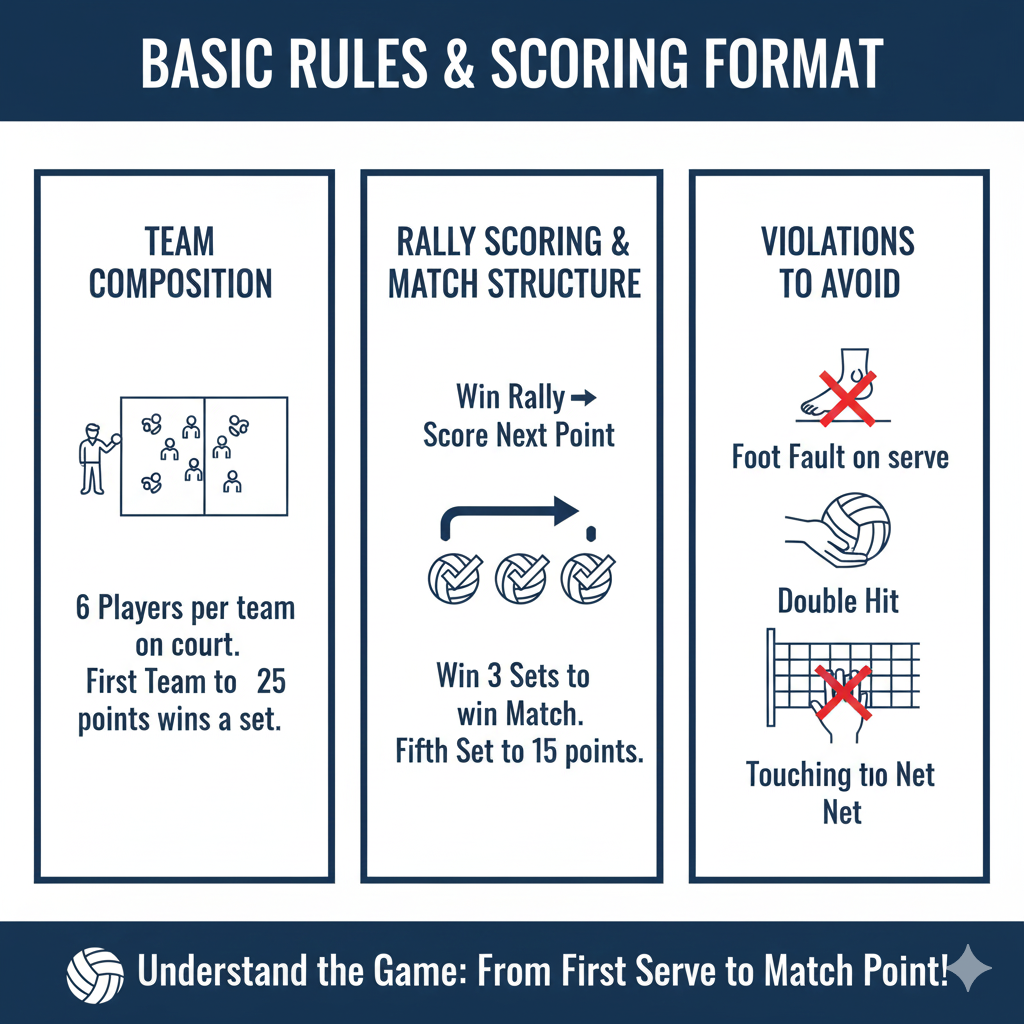
The number of players allowed on the court at any given time is six per side. This group, often referred to as the first team, must work in total harmony to cover the playing area. While there may be other players on the bench ready to substitute, the six active volleyball players are responsible for every movement on their side of the net. Proper coordination among these six is the only way to effectively defend against the opposing team.
Rally Scoring: The Fight for the Next Point
Modern volleyball utilizes a scoring format known as rally scoring. In this system, a point is awarded to the winning team of every single rally, regardless of which serving team started the play. This means that every next point is critical, as a single mistake can immediately change the momentum of the volleyball match. This fast-paced system keeps the energy high and ensures that no one on the court can afford to lose focus for even a second.
Match Structure: Sets and the Fifth Set
A standard volleyball match is usually played as a “best-of-five” series. A team wins a set by reaching 25 points first, provided they have a two-point lead. If the competition is tied at two sets each, the players enter a fifth set. This deciding round is shorter, typically played only to 15 points, and represents the most intense part of the entire game. During this final push, the receiving team must be exceptionally sharp to ensure they can side-out and regain control.
Violations to Avoid: Staying Within the Rules
To keep the game moving, players must avoid common technical violations. A Foot Fault occurs if the server steps on or over the end line before making contact with the ball. Once the ball is in play, the receiving team must avoid a double hit, which happens if a single player touches the ball twice in succession. Adhering to these basic rules of volleyball is essential for maintaining a clean level of play and avoiding unnecessary point deductions.
To excel at how to play volleyball, a player must develop a high degree of technical proficiency in the “Three Contacts.” These specific skills are the foundation of every successful rally, allowing a volleyball team to transition smoothly from defense to an aggressive offense.
Mastering Volleyball Skills (The Three Contacts)
The First Contact: Serve Receive and the Forearm Pass
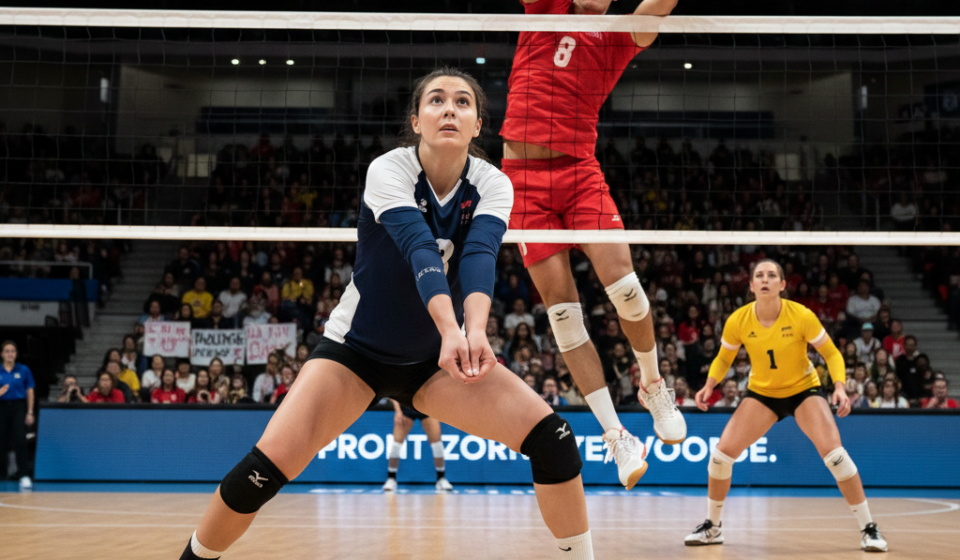
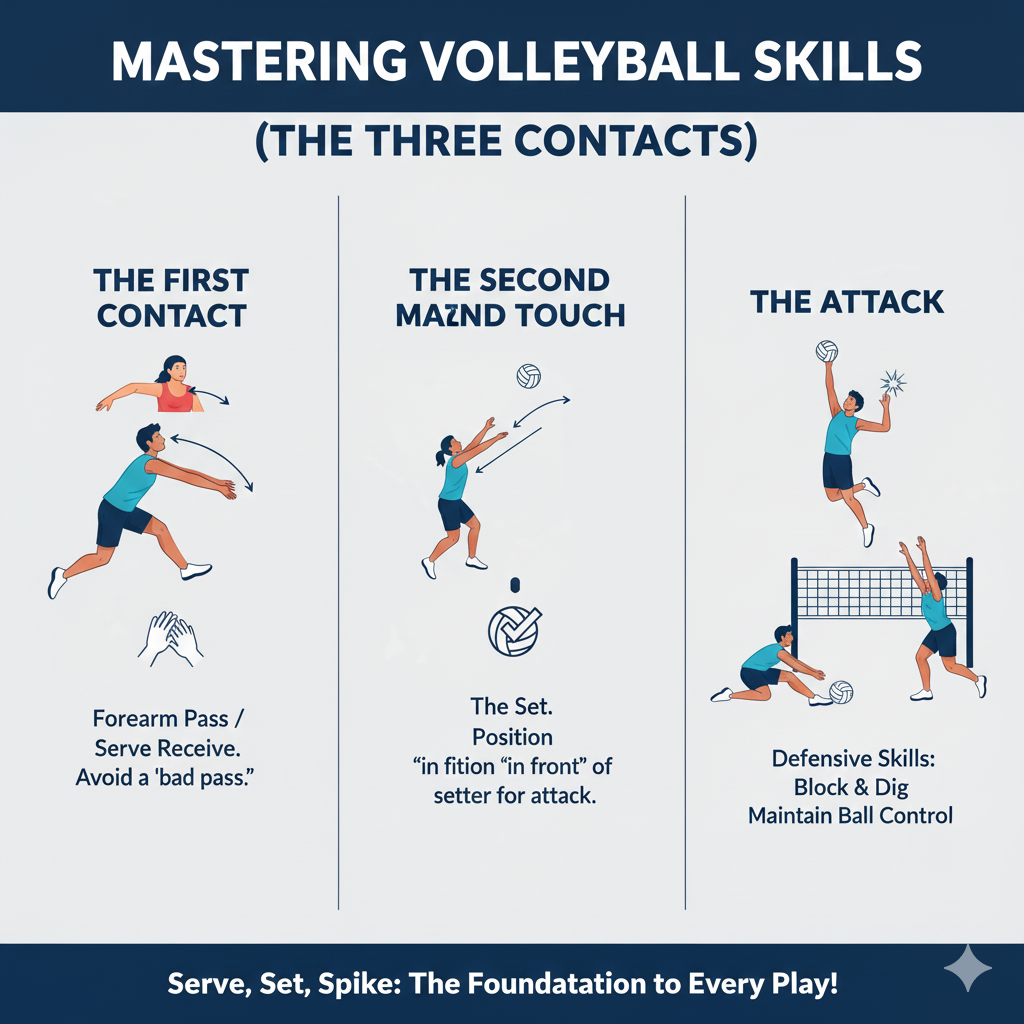
The first contact is the most critical step in establishing a play. Usually, this occurs during a serve receive, where the receiving team must handle the ball coming from the serving team. To avoid a bad pass that could end the rally prematurely, players utilize the forearm pass. By locking the elbows and creating a flat platform, volleyball players can direct the ball with precision. Mastering this ensures that the ball stays on your side of the net and reaches the target accurately.
The Second Touch: Setting the Stage
The second touch is traditionally handled by the setter. The goal for this second ball is to loft it high and steady into a position directly in front of the setter or out to the wings. High-level gameplay depends on the setter’s ability to use their fingertips to redirect the ball, giving the hitters the best possible chance to score. Proper positioning here is a great way to keep the opposing team guessing where the attack will come from.
The Attack: The Vertical Jump and Strike
Once the ball is set, it is time for the attack. This requires the hitter to use their entire body, combining a synchronized approach with a powerful vertical jump. By reaching the peak of their leap, the hitter can strike the ball downward into the opponent’s court. Whether it is a fast strike in the middle of the court or a high-arching shot from the front row, the objective is to find a gap in the defense that the other players cannot reach.
Defensive Skills: Blocking and Digging
While the offense scores points, defensive skills win championships. The first line of defense is blocking, where FRONT ROW PLAYERS jump at the net to deflect the ball back. If the ball gets past the block, the back-row must step in for “digging.” These players must stay low to the ground to maintain ball control against a hard-driven spike. Effective defensive play ensures the rally continues, giving your team another opportunity to win the next point.
In a professional volleyball game, success depends on how well individual volleyball players execute their specific roles. Each member of a volleyball team has a unique responsibility that contributes to the overall gameplay.
Player Positions and Specializations
Front Row Players: The Offensive Powerhouse
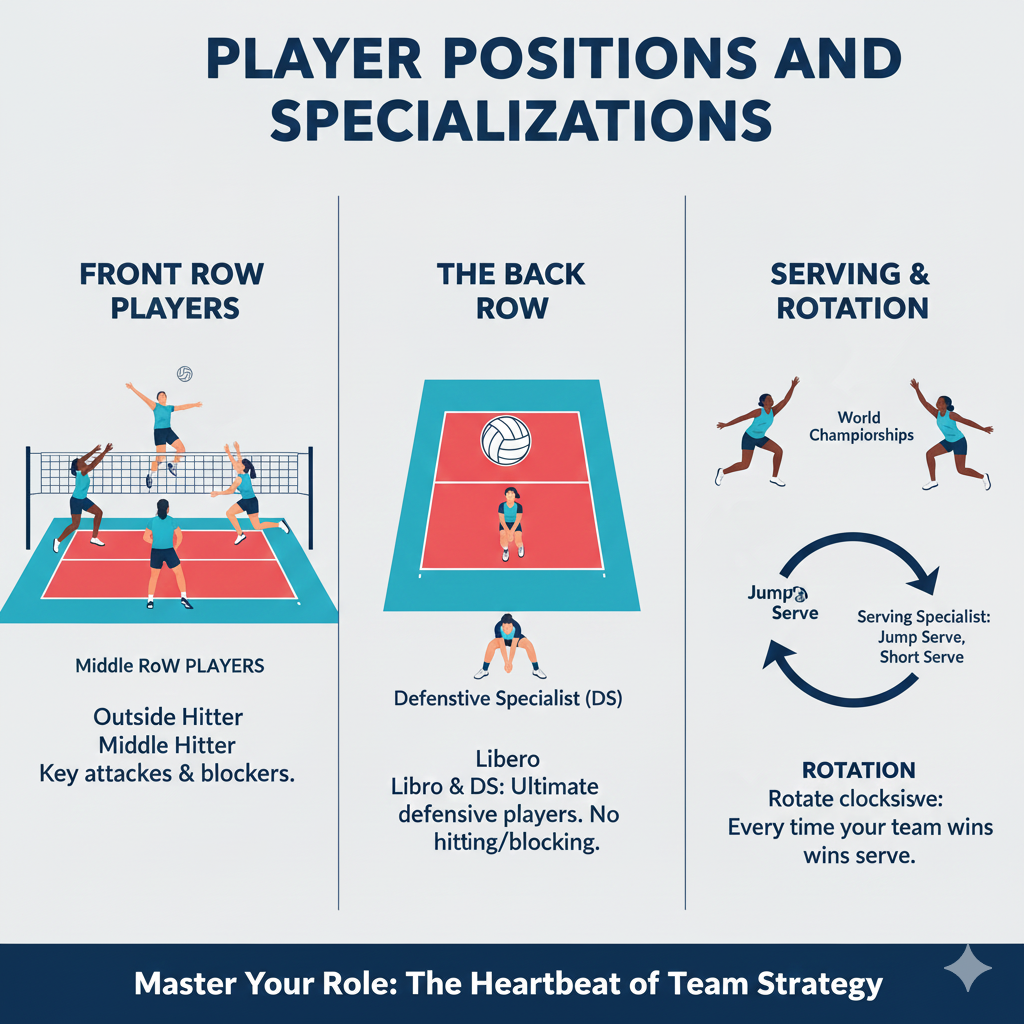
The front court is where the majority of scoring happens. There are three primary roles for FRONT ROW PLAYERS:
- Outside Hitter: Usually the most consistent attacker, hitting from the left side. They must excel in both defensive play and explosive scoring.
- Middle Blocker: This player is the first line of defense at the net. They focus on blocking the opposing team and must be quick to move across the net. When attacking, they often hit quick sets in the middle of the court.
- Opposite Hitter: Operating on the right side, the opposite hitter often acts as a backup setter if the primary setter is unavailable. They are crucial for both attacking and blocking against the opponent’s strongest hitters.
The Back Row: Defensive Specialists
While the front row focuses on power, the back row focuses on precision. A back row player must be agile and ready to keep the ball alive.
- Libero: A unique defensive player who wears a different colored jersey. They can substitute for any back row player without a formal substitution and specialize in serve receive.
- Defensive Specialist: Often referred to as a DS, this defensive specialist excels in back-court defense and digging. They are the backbone of the team’s defensive structure, ensuring the ball never touches their side of the net.
Serving Roles: Starting the Attack
The serve is the only time a player has total ball control. While every player must serve, teams often utilize a serving specialist. These players enter the match specifically to deliver high-pressure serves. They might use a powerful jump serve to overwhelm the defense or a tricky short serve that lands just over the net, catching the opposing team off guard.
Rotation: The Flow of the Game
To ensure fairness, players must rotate clockwise every time they win a side-out. You will move through various spots, including the right front and other front zone positions. Maintaining the correct rotation is part of the basic rules of volleyball; failing to do so results in a point for the opponent. This movement ensures that every player experiences both the front row and the back court throughout the entire game.
To reach a higher level of competition, players must move beyond basic mechanics and focus on advanced gameplay and tactical awareness. Mastering these nuances is what separates a casual participant from a truly better player.
Advanced Gameplay and Strategies

Precision Ball Control: Offensive and Defensive Tactics
At an advanced stage, ball control becomes the primary weapon. On the offensive side, hitters no longer just swing for power; they focus on hitting a sharp angle to bypass the block and land the ball in the deep corners of the opponent’s court. Defensively, the team must be prepared for the opposing team to attack the middle of the court. This requires the middle blocker and the libero to read the hitter’s body movements and adjust their positioning before the contact is even made.
Team Coordination and Professional Standards
Success in International Volleyball depends on flawless coordination and synchronization. Top-tier organizations, such as USA Volleyball, emphasize the importance of “transitioning”—the fluid movement of volleyball players from a defensive stance to an offensive approach. This level of team coordination ensures that even if there is a bad pass, the setter can still find an outside hitter or middle blocker to keep the rally alive. For those interested in seeing these strategies in action, you can follow the FIVB (International Volleyball Federation) to watch how professional teams manage court coverage.
Specific Skills: Refining Your Techniques
Becoming an elite athlete involves constantly refining your volleyball techniques. This includes increasing your vertical jump for a more dominant presence at the net and perfecting the timing of your ball contacts. Developing these specific skills requires dedication to both physical training and studying the rules of the game. By focusing on the small details—like the flick of a wrist during a jump serve or the footwork during serve receive—you can significantly raise your overall level of play.
To reach a higher level of proficiency, consistent and purposeful practice is essential. Whether you are a beginner or looking to join a first team, refining your technique through structured routines is the best way to see progress.
How to Improve: Drills and Club Play

Practice Routines: Sharpening Specific Skills
Utilizing targeted volleyball drills is the most effective method for developing ball control and muscle memory. For instance, practicing rapid-fire ball contacts against a wall can improve your reaction time, while repetitive forearm pass exercises help eliminate a bad pass during a high-pressure volleyball match. To become a better player, you should also focus on drills that enhance your vertical jump and agility. Consistency in these volleyball techniques ensures that you are ready for the fast-paced nature of real gameplay.
Finding Opportunities: From Casual to Club Play
Once you have mastered the basic skills, the next step is transitioning from casual park games to more structured environments like club play or local leagues. Joining a volleyball team allows you to experience the tactical side of the game of volleyball, such as learning how to coordinate with other players and maintaining proper rotation. This shift to a more competitive level of play will challenge your defensive skills and force you to adapt to the strategies used by a strong opposing team.
Diverse Formats: Beach and Snow Volleyball
Volleyball is a versatile team sport that isn’t limited to the hardwood. Many beach volleyball players enjoy the added challenge of moving in the sand, which requires immense leg strength and different body movements. Beyond the beach, Snow volleyball has emerged as an exciting winter variant, gaining popularity in North America and Europe. Each format offers a unique great way to enjoy the sport and keep your specific skills sharp year-round, regardless of the surface.
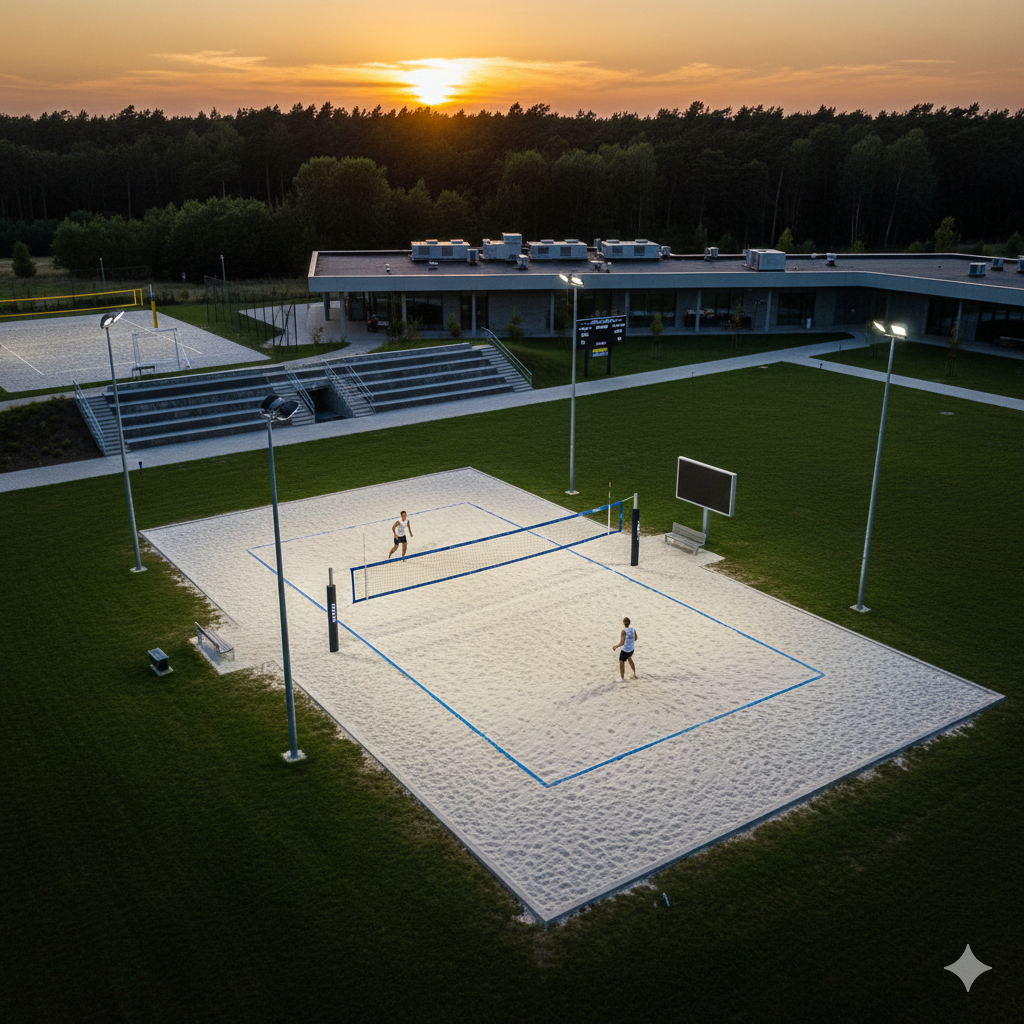
How to Create the Perfect Volleyball Court
If you want to practice at home, knowing How to Create the Perfect Volleyball Court is a huge advantage. Start by leveling the playing area and marking the boundary line and end line clearly. Ensure you have a high-quality volleyball net set at the correct net height—2.43m for men and 2.24m for women. Don’t forget to mark the attack line 3 meters from the net to define the front zone. Having your own court is a great way to practice your jump serve or short serve whenever you like.

Conclusion
In summary, learning how to play volleyball is a rewarding journey that blends physical athleticism with strategic depth. From its humble origins in the United States to becoming a staple of International Volleyball, the sport has proven to be a great way to build teamwork and fitness. By mastering the basic rules of volleyball and the specific skills like the forearm pass and jump serve, you have laid the foundation to become a better player.
The best way to truly improve is to step onto the court and start playing. Whether you are aiming for a higher level of competition or just looking for a fun team sport, the key is to stay active and keep practicing your volleyball drills. As you spend more time in the front zone or defending the back row, the rhythm of the entire game will become second nature.
We encourage you to join the massive global community of volleyball players. From local courts in New Zealand to professional arenas across North America, there is a place for everyone in this sport. So, grab your volleyball shoes, head to the nearest playing area, and enjoy the thrill of the match. Your journey toward mastering ball control and winning the next point starts today!