



The Ultimate SEO Beginner’s Guide for Australia
Introduction
Embarking on a digital marketing path can feel overwhelming, but mastering a seo beginner guide for australia is the first step toward achieving long-term SEO success. For Australian small businesses, establishing a strong online presence is no longer just an option; it is a necessity to reach potential customers who are searching for services every single day. This Beginner’s Guide is designed to demystify the process and help small business owners understand how to navigate the complex world of the Australian market.
Table Of Content
- Introduction
- What is SEO?
- Why Australia is Unique
- The Goal: From Invisible to Page 1
- Understanding the Australian Search Landscape
- https://www.google.com/search?q=Google.com.au vs. https://www.google.com/search?q=Google.com: Why Local Signals Matter
- The Power of the “.com.au” Domain
- Mobile-First in Oz: Searching on the Go
- Australian Keyword Research: Speaking the Local Language
- Identifying “Aussie” Keywords
- Location-Based Keywords: The “Service + City” Formula
- Tools for Beginners
- On-Page SEO: Optimizing Your Content
- High-Quality Content: Humans First, Bots Second
- Title Tags & Meta Descriptions: The “Click Me” Factor
- Header Tags (H1, H2, H3): Structuring for Success
- Internal Linking: Connecting the Dots
- Technical SEO Basics
- Site Speed: Why a Slow Site Loses Customers
- SSL Certificates (HTTPS): Security as a Ranking Signal
- Mobile-Friendliness: Ensuring a Great Experience on All Devices
- Off-Page SEO: Building Authority in Australia
- Backlinks 101: Quality Over Quantity
- Earning Australian Backlinks
- Social Proof: Beyond the Website
- Measuring Success (The “Aussie” ROI)
- Google Search Console: Monitoring Clicks from Aussies
- Google Analytics 4 (GA4): Tracking Conversions
- Setting Realistic Expectations: The 3–6 Month Rule
- Conclusion & Next Steps
- The 90-Day Plan: Your Path to Success
- Final Tip: Consistency is Key
- Call to Action (CTA)

What is SEO?
At its core, Search Engine Optimisation (or search engine optimization) is the practice of enhancing web pages to make them more attractive to search engines like Google. By focusing on SEO basics, a business can improve its website’s visibility and drive more organic traffic without relying solely on Google Ads. It involves a mix of Content Creation, technical adjustments, and building authority so that when someone types in search queries, your site is what they find. Essentially, SEO work is about ensuring that your website content answers the questions your target audience is asking.
Why Australia is Unique
The Australian market presents a specific set of opportunities and challenges. Unlike other regions, there is a massive dominance of https://www.google.com/search?q=Google.com.au, making it vital for Australian businesses to cater to local algorithms. One of the most critical ranking factors here is “Local Intent.” Australians often search for services “near me,” which is why Local SEO is a cornerstone of any successful SEO journey. Whether it is a local café or a real estate agency, appearing in front of nearby customers requires a strategy that prioritizes local relevance and geographical proximity.
The Goal: From Invisible to Page 1
The ultimate objective of any SEO efforts is to move a business from the shadows of the internet to the first page of the search engine results pages (SERPs). For many local businesses, the difference between being invisible and appearing on Page 1 is a significant increase in website traffic and foot traffic. By using the right keywords and focusing on search engine rankings, you can capture the search intent of your users and turn casual browsers into loyal local customers. The journey toward better search rankings starts with a solid foundation and a commitment to providing valuable content.
Understanding the Australian Search Landscape
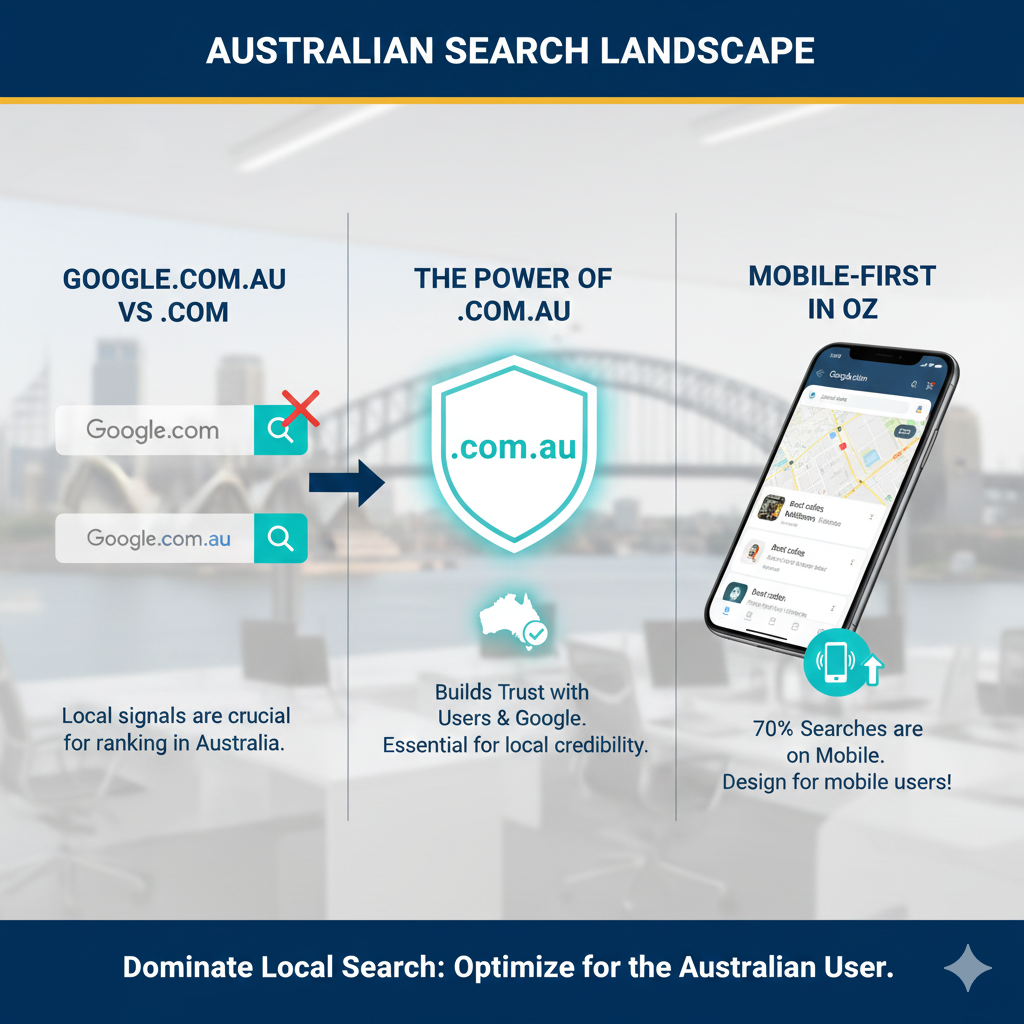
When you start your SEO journey, it is crucial to understand that the Australian market has its own unique characteristics. While the world uses Google, in Australia, the specific destination is almost always https://www.google.com/search?q=Google.com.au.
https://www.google.com/search?q=Google.com.au vs. https://www.google.com/search?q=Google.com: Why Local Signals Matter
You might wonder why we focus so heavily on the local version of search engines. The reason is that Google prioritizes results that are most relevant to the user’s location. For Australian businesses, this means that ranking well requires specific local signals that tell search engines your business is physically located in and serves the Australian community. If you only optimize for the global https://www.google.com/search?q=Google.com, you might miss out on the highly targeted organic traffic from your own backyard. Local signals like your business information, including your business name, address, and phone number, help search engines understand your relevance to a local search volume.
The Power of the “.com.au” Domain
One of the most effective ways to build trust with both search engines and your target audience is by using a .com.au domain. For many Australian small businesses, this domain extension acts as an immediate badge of authenticity. It signals to Google that you are a legitimate entity within the Australian market, which can positively impact your search engine rankings. Furthermore, Aussie users are more likely to click on a link that looks familiar and local, which can improve your click-through rates compared to a generic .com address. It’s a simple but powerful first step in your SEO tactics.
Mobile-First in Oz: Searching on the Go
In Australia, the way people access the internet has shifted dramatically toward mobile devices. Whether someone is looking for a local cafe or a plumber, they are likely doing it from their smartphone while on the move. This makes mobile-friendliness a non-negotiable part of your SEO efforts. Google now uses mobile-first indexing, meaning it primarily looks at the mobile version of your web pages to determine your search rankings. If your site isn’t optimized for smaller screens, you risk a high bounce rate as users quickly leave for a more accessible competitor. Ensuring fast load times and a responsive Web Design is essential for capturing that “near me” user intent.
Australian Keyword Research: Speaking the Local Language
Success in the Australian market requires more than just a general list of terms; it requires “speaking Aussie.” To attract potential customers, your website content must reflect the specific language and search intent of the local population.
Identifying “Aussie” Keywords
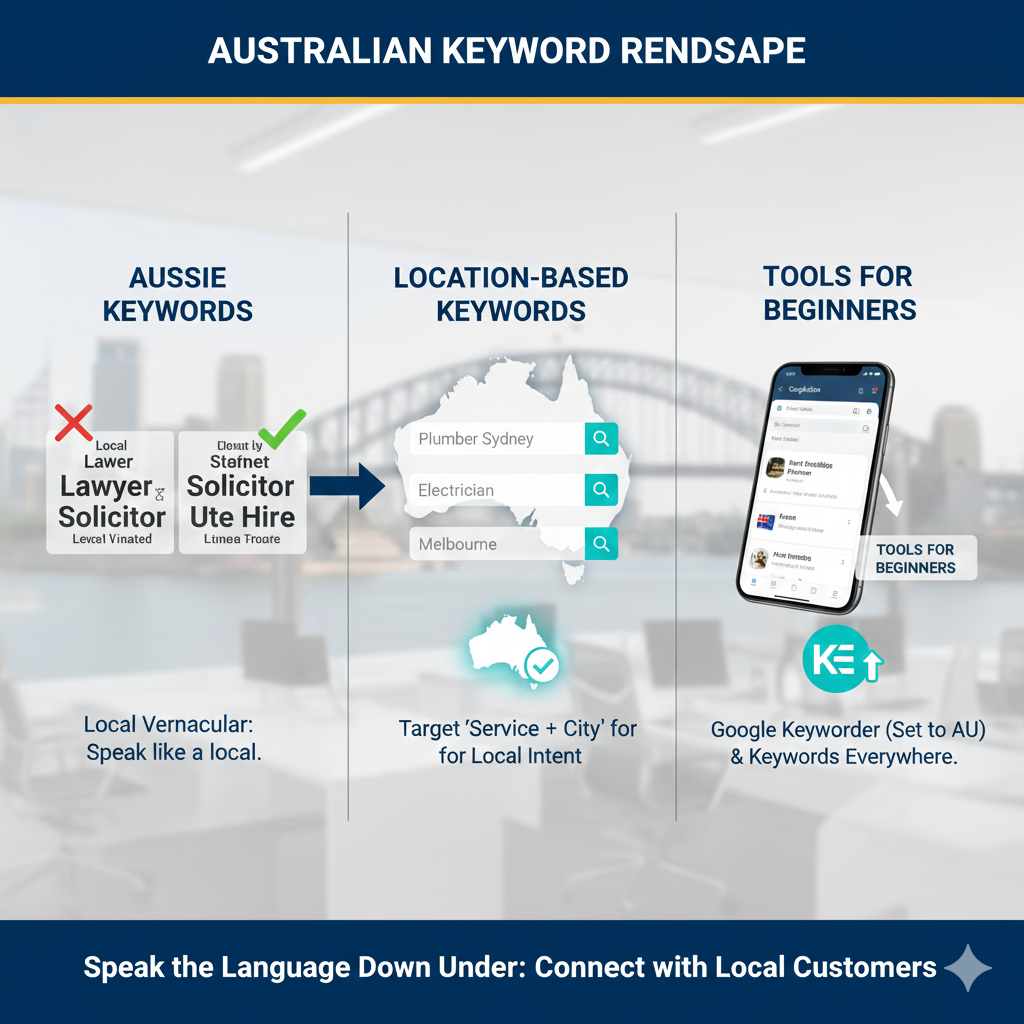
When performing keyword research, it is essential to tailor your content to the local vernacular. For instance, an Australian looking for legal help is more likely to search for a “solicitor” than a “lawyer.” Similarly, using terms like “uppedy” versus “elevated” can change how search engines perceive your relevance to a local audience. By selecting relevant keywords that match how locals actually speak, you ensure your SEO efforts resonate with the target audience.
Location-Based Keywords: The “Service + City” Formula
For local businesses, the most effective target keywords often follow a “Service + City” or “Service + Suburb” pattern. Instead of just targeting “Plumber,” you should focus on local keywords like “Plumber Sydney” or “Accountant Parramatta”. These long-tail keywords often have a lower search volume compared to broad terms, but they boast much higher conversion rates because the user has a clear, immediate need in a specific area. Use keywords like these in your page titles and meta descriptions to signal your geographical relevance to both users and search engines.
Tools for Beginners
You don’t need to be one of the top SEO experts to find great data. There are several keyword research tools designed for beginners:
- Google Keyword Planner: This is one of the best Free tools available. When using it, ensure you set the location filter specifically to “Australia” to get accurate search volume data for the local region.
- Keywords Everywhere: This tool helps you identify the primary keyword for your topic by showing data directly in your search browser.
- Google Search Console: Once your site is live, use this to see which search queries are already driving website traffic to your web pages.
On-Page SEO: Optimizing Your Content
Once you have identified your relevant keywords, the next step in your SEO success journey is implementation. On-page optimization ensures that both users and search engines clearly understand what your web pages are about.
High-Quality Content: Humans First, Bots Second
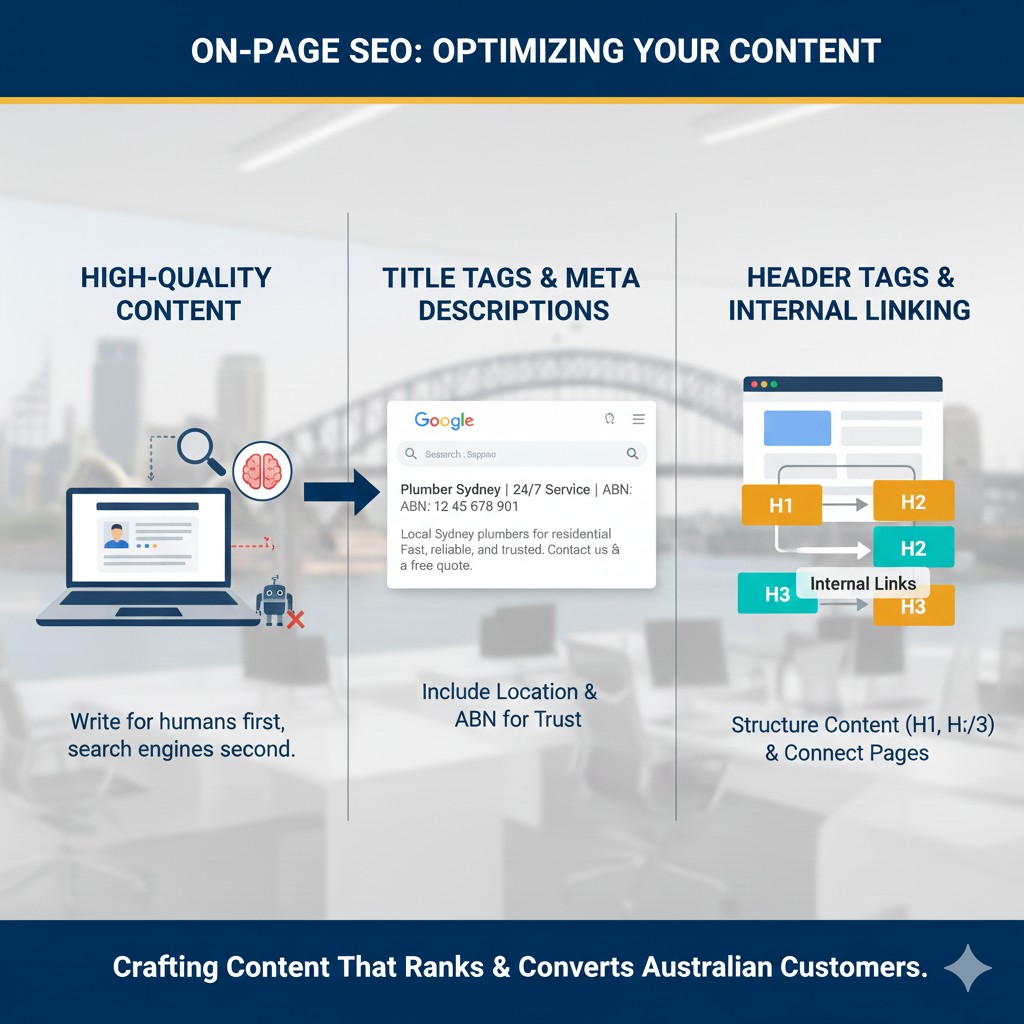
The golden rule of Search Engine Optimisation is to write for your audience. While it is tempting to use Keyword stuffing to trick the algorithm, this actually harms your keyword rankings and pushes readers away. Instead, focus on creating valuable content that solves a problem or answers a question. Google rewards new content that provides a great user experience, as this leads to higher conversion rates and better SEO success. Remember, if your blog posts don’t satisfy the reader, they won’t stay on your site, regardless of how many keywords you use.
Title Tags & Meta Descriptions: The “Click Me” Factor
Your meta title and meta descriptions are often the first thing a potential customer sees in the search engine results pages.
- Title Tags: Every page needs unique title tags that include your primary keyword. For an Aussie business, including your city and even your ABN in the footer or nearby can build trust and signal local legitimacy.
- Meta Descriptions: Think of this as your “mini-advert.” A well-crafted description can drastically improve your click-through rates. Don’t forget to include a clear call to action and utilize meta tags correctly to help search engines categorize your information.
Header Tags (H1, H2, H3): Structuring for Success
A clear site structure is vital for readability. Using headers like H1 for your main topic and H2 or H3 for subtopics helps users navigate your SEO Guide easily. It also allows search engines to scan your site efficiently to determine your search engine rankings. Well-organized headers prevent issues like duplicate content and make your information more accessible on mobile devices.
Internal Linking: Connecting the Dots
Internal linking is the process of connecting one page of your website to another. By adding internal links from your popular blog posts to your main service pages, you spread domain authority throughout your site. This simple SEO work helps users find more of your online presence and encourages them to spend more time on your site, which is a positive signal for search engine optimization.
Technical SEO Basics
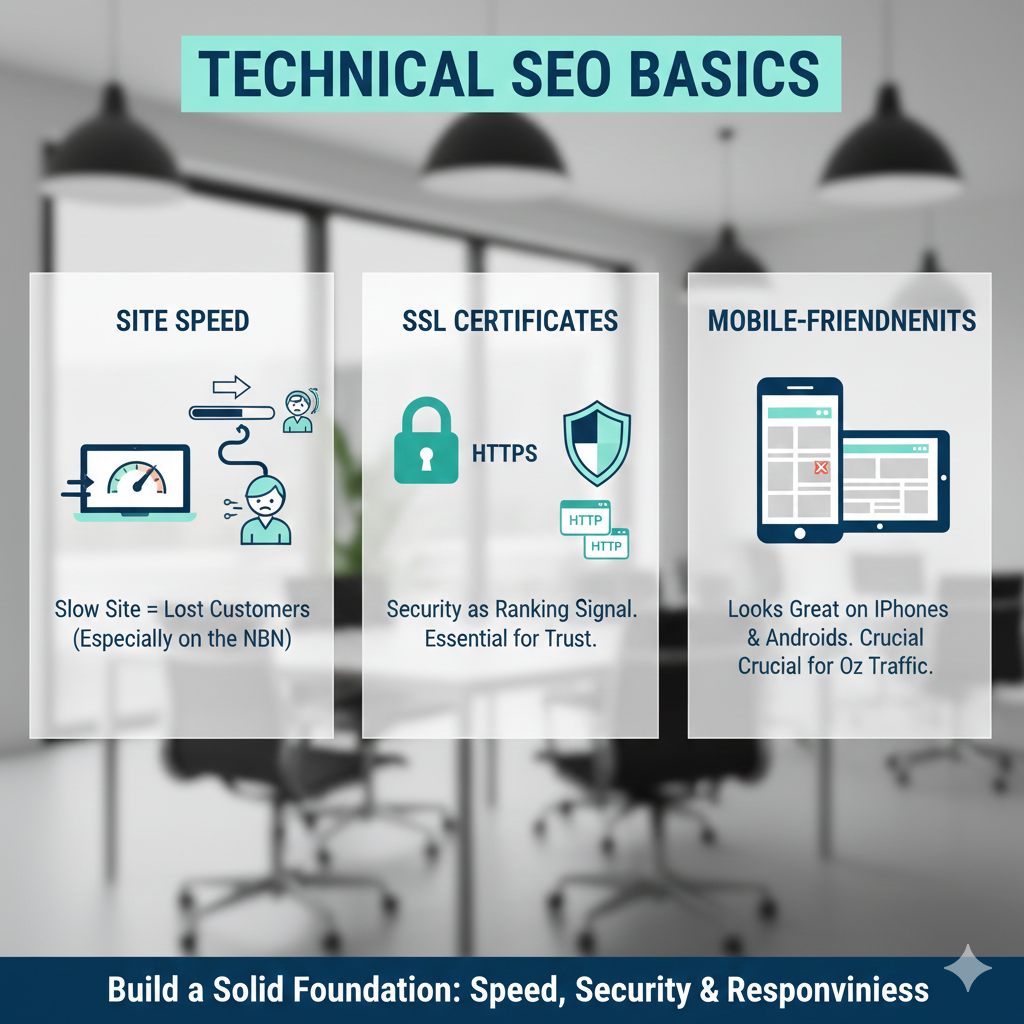
While content is king, the infrastructure supporting that content is equally important. Technical SEO involves optimizing your site’s backend so that search engines can crawl and index your site without any hiccups. This is a critical part of your SEO Guide to ensuring long-term visibility.
Site Speed: Why a Slow Site Loses Customers
In the age of the NBN, Australians expect lightning-fast browsing. If your website speed is lagging, you are likely losing potential customers before they even see your offer. A slow site speed doesn’t just frustrate users; it is a major factor in Core Web Vitals, which Google uses to measure user experience. To keep your organic traffic from bouncing, you must optimize your images and server response times. Improving your load times is one of the most effective SEO tactics to improve your search engine optimization and keep people on your web pages longer.
SSL Certificates (HTTPS): Security as a Ranking Signal
Security is no longer optional. Having an SSL certificate (which turns your URL from HTTP to HTTPS) is a significant ranking factors signal for Google. Beyond the technical benefits, it helps build trust with your visitors, especially for Australian businesses handling sensitive data or sales. When users see the padlock icon in their browser, they feel safer engaging with your online presence.
Mobile-Friendliness: Ensuring a Great Experience on All Devices
As we mentioned earlier, most Aussies search via mobile devices. Your site must look and function perfectly on both iPhones and Androids. Achieving true mobile-friendliness means your text is readable without zooming, and buttons are easy to tap. A site that is difficult to use on a phone will negatively impact your search rankings and overall SEO success. You can use various SEO tools to test your site’s responsiveness and ensure you are meeting the expectations of your target audience.
Off-Page SEO: Building Authority in Australia
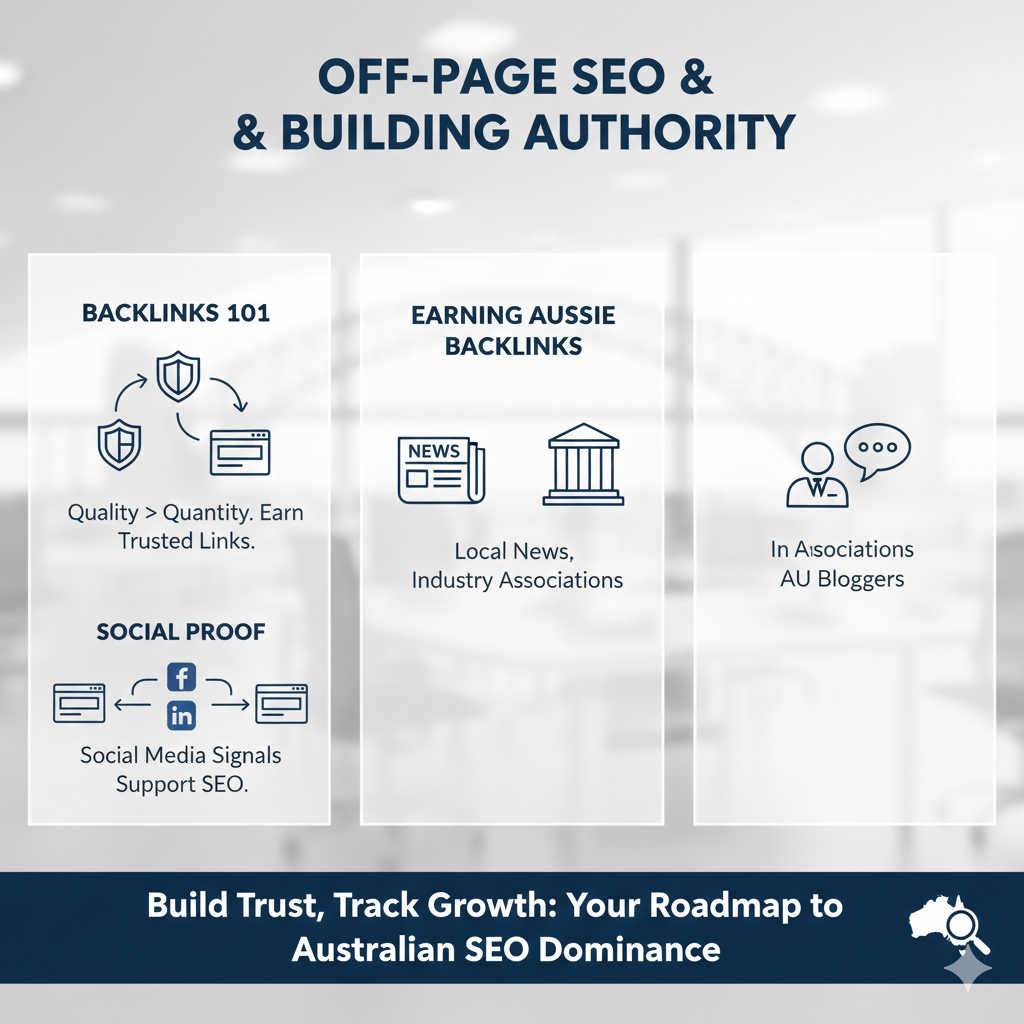
While on-page and technical factors are essential, Off-Page SEO is what truly builds your reputation in the eyes of search engines. In the competitive Australian market, authority is currency.
Backlinks 101: Quality Over Quantity
Think of a backlink as a vote of confidence from one website to another. However, not all votes are equal. For long-term SEO success, high-quality backlinks from reputable sources are worth far more than hundreds of low-quality links. In fact, pursuing unnatural link volume can lead to penalties. Instead, focus on a strategic link building campaign that prioritizes relevance. One link from a major Australian industry body can do more for your domain authority than a dozen links from unrelated international sites.
Earning Australian Backlinks
To rank specifically for local keywords, you need “local” authority. You can achieve this by:
- Local News and PR: Getting mentioned in your local news publications provides a powerful geographical signal to Google.
- Industry Associations: Links from official Australian trade organizations help build trust and verify your business legitimacy.
- Guest Blogging: Partnering with Australian bloggers to create high-quality blog posts can introduce your brand to a new target audience while earning a valuable link.
- Local Directories: Ensure you are listed in reputable local directories like the Yellow Pages and True Local.
Social Proof: Beyond the Website
While social media likes and shares aren’t direct ranking factors, they provide essential “social proof.” When your content is shared widely, it increases your website’s visibility and drives organic traffic. These social signals support your overall SEO efforts by showing search engines that your brand is active and trusted by real people in the community.
Measuring Success (The “Aussie” ROI)
In business, what gets measured gets managed. Tracking your progress allows you to refine your SEO tactics and ensure you are capturing the right search intent from your local customers.
Google Search Console: Monitoring Clicks from Aussies
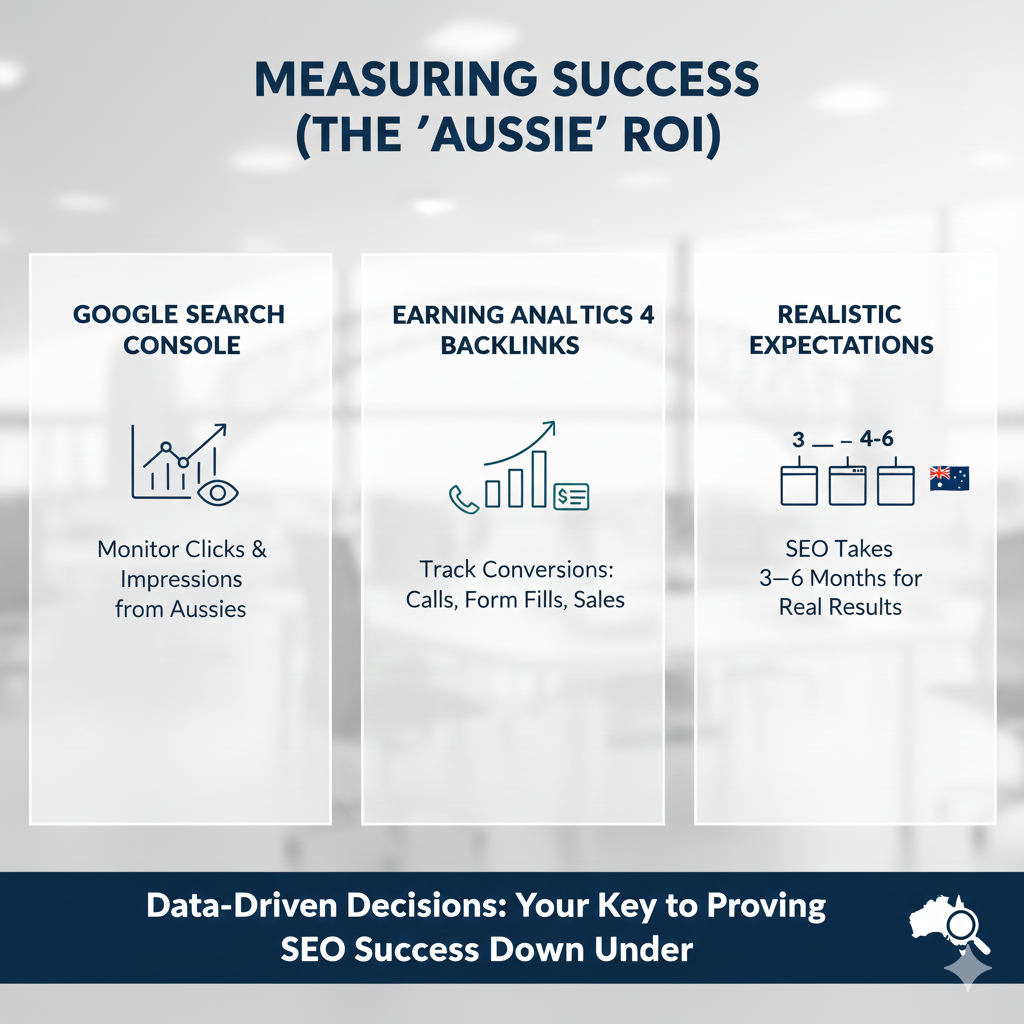
This is one of the most powerful Free tools provided by Google. By using it, you can monitor exactly how many people are seeing your site in the search engine results pages. It allows you to track your keyword rankings for specific terms like your business name or services. Most importantly, you can filter the data to see how many Australians are clicking through to your web pages, giving you a clear picture of your website’s visibility across the country.
Google Analytics 4 (GA4): Tracking Conversions
While clicks are great, sales are better. GA4 helps you track conversion rates—whether that’s a phone call, a form fill, or an online sale. For small business owners, understanding the journey from a search query to a loyal customer is key to SEO success. You can see which blog posts or landing pages are driving the most Lead Generation and adjust your website content accordingly to provide more valuable content.
Setting Realistic Expectations: The 3–6 Month Rule
It’s important to remember that Search Engine Optimisation is not an overnight process. For most Australian small businesses, it takes roughly 3 to 6 months to start seeing significant movement in search rankings. Google needs time to crawl your site, recognize your Technical SEO improvements, and acknowledge your growing domain authority. Patience is a virtue in any SEO journey, but the long-term rewards of consistent organic traffic are well worth the wait.
For a deeper dive into current industry benchmarks, you can check out this guide on Google’s Search Quality Evaluator Guidelines to see what the search engine giant considers high-quality work.
This final section of the guide focuses on turning theory into action and ensuring your business stays on the right track for long-term growth.
Conclusion & Next Steps
The journey toward digital visibility is rarely a sprint; it is a strategic effort that requires a dedicated approach. For Australian small businesses, following a structured Beginner’s Guide is the most reliable way to compete with larger brands and capture the attention of a local audience. By focusing on both the visible and invisible parts of your site, you set a foundation for lasting results.
The 90-Day Plan: Your Path to Success
To make this process manageable, here is a quick checklist for your first three months:
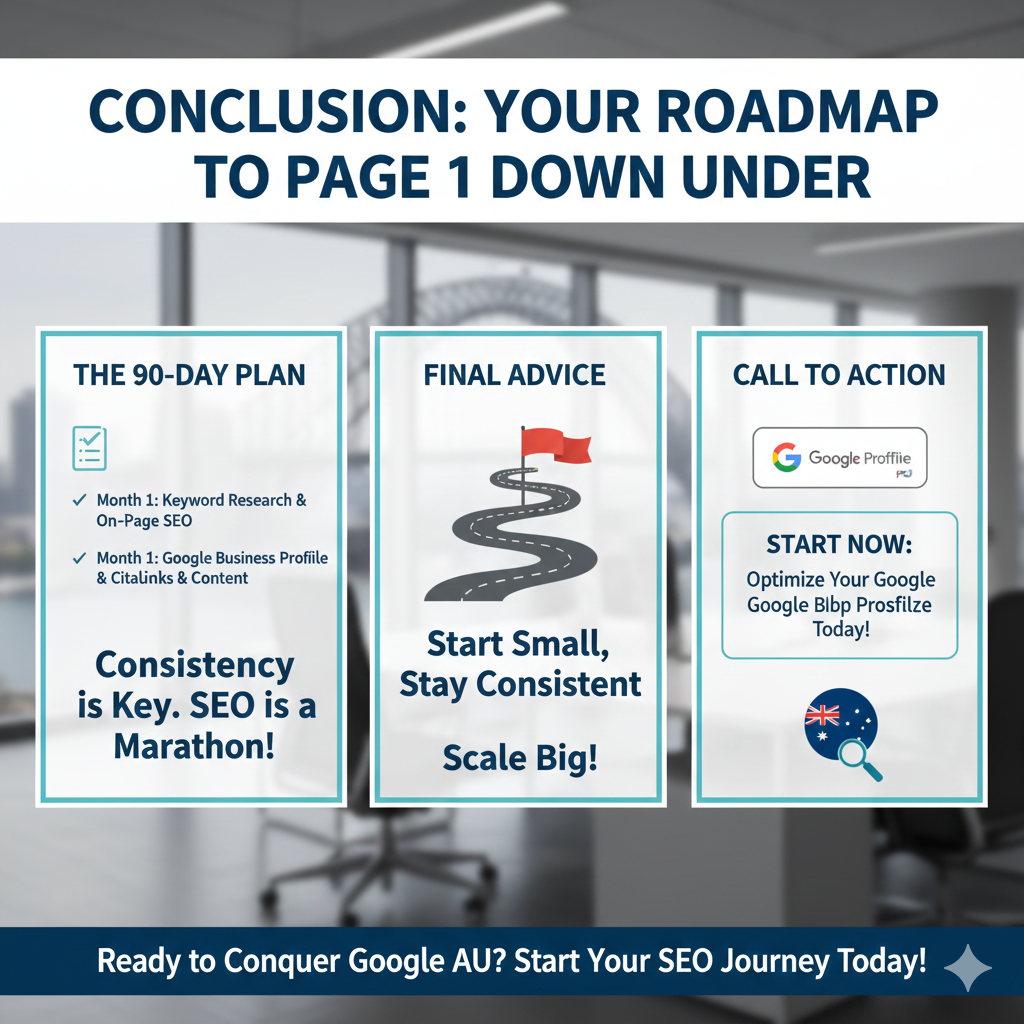
- Month 1: Foundations. Start with SEO basics. Use search engines to run a Free SEO Audit on your site. Focus on fixing your homepage and improving your website speed to meet the latest Core Web Vitals standards. Finally, claim and secure your Google Business Profile and ensure your business hours are accurately listed.
- Month 2: Optimization. Dive deep into content. Use keyword research tools to find highly relevant keywords and long-tail keywords. Update your title tags, meta descriptions, and meta title for every page. Set up a strong Internal linking structure with clear internal links to guide users. At this stage, you should also consider adding Schema Markup to help your snippets stand out on the first page.
- Month 3: Authority. Shift your focus to Off-Page SEO and link building. Work on gaining local citations to help local businesses like yours gain credibility. It is also helpful to study recent case studies to keep up with the latest SEO trends and see what is working for others in your industry.
Final Tip: Consistency is Key
If there is one thing to remember from this SEO Guide, it is that consistency is the engine of growth. Search engine optimization is a marathon, not a sprint. Success comes to those who continuously refine their site, monitor their performance, and consistently engage with their local customers. Even if you find the technical side challenging, simple daily improvements will eventually lead to significant gains in your rankings.
Call to Action (CTA)
Ready to put your business on the map? Start today by fully optimizing your Google Business Profile. It is one of the fastest ways to boost your Local SEO and start gathering those essential positive reviews. If you find yourself feeling overwhelmed, you can always consult with SEO experts to help refine your Web Design or site speed for maximum impact.
For more tips on mastering the digital landscape and staying ahead of the curve, feel free to visit TrendBlogo.